
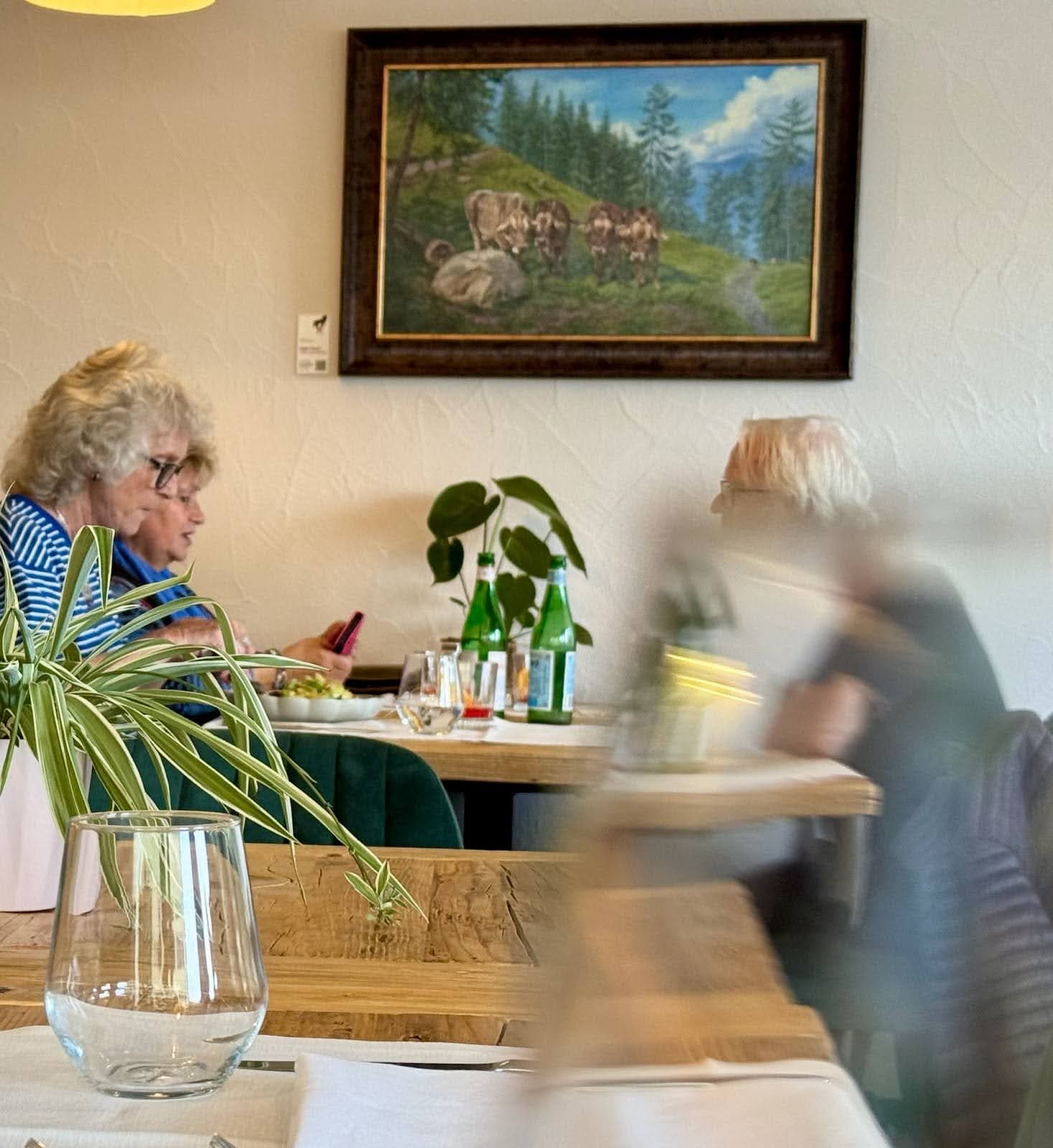
Walk into any restaurant that stays with you after the meal, and you'll notice something beyond the food. The light, the layout, the texture of the walls — and almost always, the art. A well-chosen piece can anchor a room, reinforce your brand, and give guests something to talk about. Get it wrong and it either disappears into the background or, worse, feels off.
The good news is that finding great restaurant wall art doesn't require a big budget, an interior designer, or a gallery connection. It requires knowing where to look — and what to look for. This guide covers both.
Why Art Matters for Your Restaurant Decor
Restaurant decor ideas come and go, but art has stayed central for a simple reason: it communicates something words can't. A framed print tells guests about your taste. An original painting signals confidence and intention. A thoughtfully curated collection makes your space feel considered rather than assembled.
There's also a practical dimension. Research consistently shows that the physical environment influences how long guests stay, how much they spend, and critically what they say about the experience afterwards. Distinctive dining room wall art has a way of ending up in Instagram photos without anyone asking. That's free marketing.
For fine dining restaurants in particular, artwork is part of the premium signal. Guests paying top prices expect every detail to feel intentional. For cafés and casual spots, art can create the sense of personality and locality that chains simply can't replicate.
How to Choose Restaurant Wall Art That Matches Your Brand
Before you buy anything, get clear on what your space is actually saying — and what you want it to say. Ask yourself:
- What three words describe your restaurant's personality? (Warm and rustic? Minimal and modern? Vibrant and local?)
- Who is your typical guest, and what environments do they find appealing?
- What's your colour palette — walls, furniture, lighting — and what will complement rather than compete?
- Do you want the art to feel location-specific (local scenes, local artists), or more universal?
Scale matters enormously. A small canvas on a large wall disappears. An oversized piece in a narrow corridor overwhelms. As a rule of thumb, artwork should fill roughly two-thirds of the wall space it occupies. Don't be afraid of large format pieces — they're often the ones that make a room.
Consistency of style doesn't mean everything has to match. But there should be a logic to the collection — similar palette, a shared mood, or a deliberate contrast that feels purposeful. When in doubt, less is more. Three well-chosen pieces beat a wall covered in mismatched frames.
Where to Buy Artwork for Restaurants: Online and Local Options
There's no single right answer here — the best source depends on your budget, your aesthetic, and how involved you want to be in the curation process. Here's an honest overview of the main options.
Art Fairs: The Best Place to Discover Original Works in Person
If you've never bought original art before, a fair is the best place to start. You can see scale, texture, and colour in person — all of which are impossible to judge from a screen. Two fairs worth knowing:
Affordable Art Fair runs in multiple cities including London, and as the name promises, it's designed to make original art accessible. Prices typically range from a few hundred to a few thousand pounds — realistic for a restaurant owner thinking seriously about their walls. The selection is wide and the atmosphere is deliberately approachable, not intimidating.
The Other Art Fair takes a different approach: it's run by the artists themselves, with no gallery markup in between. That makes it one of the best places to meet the people behind the work, understand their practice, and often negotiate directly — including potentially commissioning something specific for your space.
The limitation of fairs is that they're periodic events, not always timed to when you need art, and the discovery process takes time. Come prepared with your wall measurements and photos of the space.
Online Platforms: Wide Selection, Delivered to Your Door
Saatchi Art is one of the largest artist-direct platforms online, meaning you're buying from the artist rather than through a gallery. This keeps prices more honest and gives you access to an enormous range of styles and price points. The filtering tools are good enough to narrow down by colour, size, and medium, which makes it practical even if you're not an expert buyer.
HENI occupies a different space. It specialises in high-quality fine art prints — reproductions of works by well-known artists — at prices that are genuinely more accessible than you might expect given the names involved. If you want your restaurant walls to carry recognisable, culturally resonant imagery and you have a space where fine art prints would feel appropriate rather than out of place, HENI is worth exploring.
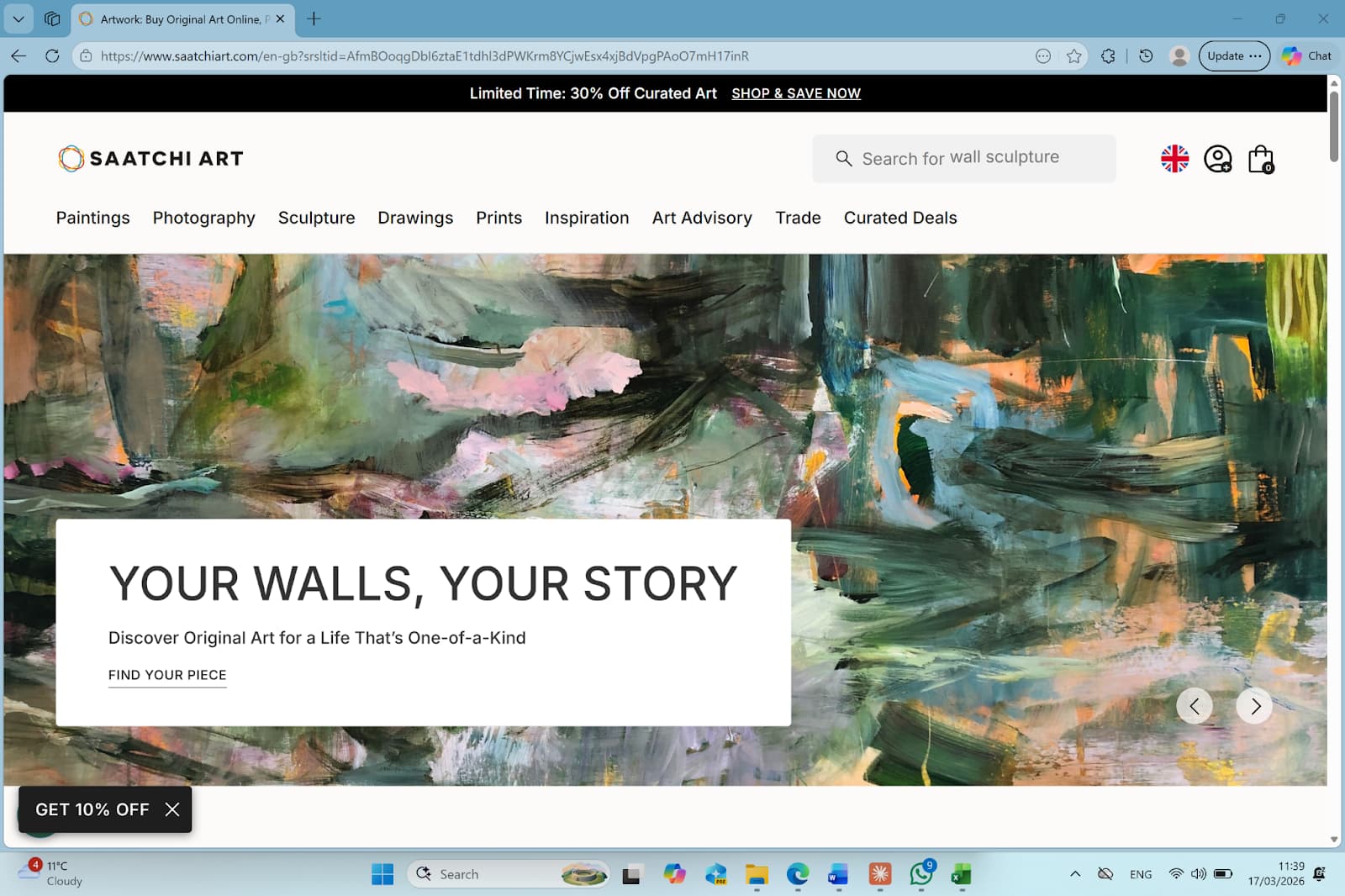
Image Credit: Saatchi Art home page.
The challenge with online platforms is that you're making significant decisions about scale and colour from a screen. Order samples where possible, use the return policies, and don't buy in bulk until you've seen at least one piece in the actual space.
Local Art Schools and Graduate Shows: An Underused Gem
Every summer, art schools across the UK hold degree shows and they're open to the public. These events are genuinely one of the most underrated opportunities for restaurant owners looking for original, affordable artwork for their walls. You'll find emerging artists at the start of their careers, often selling original works at prices that reflect that stage rather than their eventual market value.
There's a secondary benefit: you get a story. "The painting in the corner is by a recent graduate of the Royal College of Art" is the kind of detail guests remember and repeat. It gives local artists real exposure, and it gives your restaurant a narrative that money can't simply buy.
Contact art schools directly in the spring to find out about their show dates and whether there's an opportunity to preview the work ahead of the public opening.
Should You Commission Local Artists for Your Restaurant Decor?
Commissioning a piece specifically for your space is the most invested version of this decision — and often the most rewarding. A commissioned work is made for your walls, your dimensions, your palette. There's nothing quite like it for creating a sense of place.
It's also more involved than buying off the shelf. You'll need to brief the artist clearly, agree on a timeline, and be comfortable with the fact that the final result won't be exactly what you imagined — which is often a feature rather than a bug. Build in time and budget for a couple of rounds of feedback.
The Other Art Fair and local art school shows are both good starting points for finding artists open to commissions. Social media, particularly Instagram, is another excellent discovery tool — search by location and style to find artists working in a way that fits your vision.
Affordable Art for Restaurant Walls: The No-CapEx Option
If budget is the sticking point — or if you simply don't want the overhead of sourcing, purchasing, and managing artwork yourself — there's a newer model worth knowing about.
That's where we come in. PickArt works with restaurants, cafés, hotels, and other hospitality venues to bring original, locally sourced art into their spaces at no upfront cost. You can use our platform simply as a place to browse and buy artwork for your restaurant — we have a curated catalogue of works selected by region and style. But the more interesting option for most restaurant owners is our partnership model.
As a partner venue, you don't purchase the artwork at all. Instead, we curate a selection of original pieces chosen to suit your space and bring them to you, fully insured, ready to hang. Alongside each piece, we place a discreet label with a QR code. This isn't a price tag — it's an invitation for guests to scan and discover more about the work: the artist's story, their process, the piece itself. It adds a layer of cultural depth to the dining experience without disrupting it.
If a guest falls in love with a piece and decides to buy it, we handle the transaction and the logistics. Your venue earns a commission on the sale. When the artwork leaves, it's replaced. The display stays alive and evolving.
We also assist with curation — matching works to your space's architecture, palette, and character — so you're not making these decisions alone. It's a particularly useful option for operators who know they want original art on their walls but don't have the time or expertise to source it themselves.
The Best Canvas Prints for Dining Spaces (and How to Pick Them)
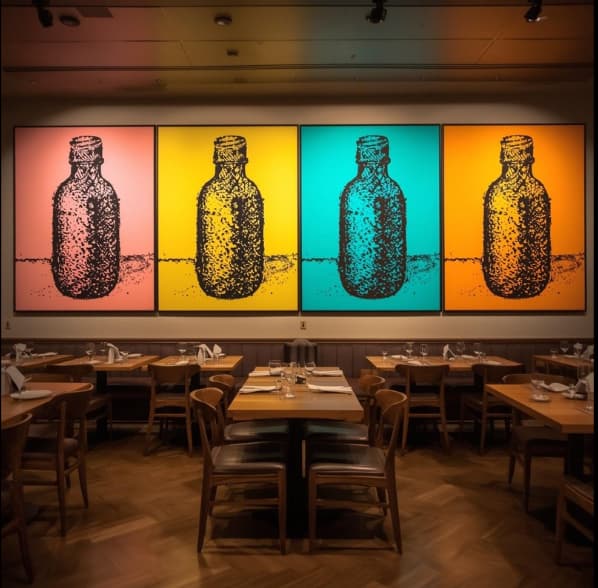
Canvas prints occupy the middle ground between original art and generic decoration. Done well, they can look genuinely strong in a restaurant context. Done badly, they look exactly like what they are: inexpensive fillers.
The key is quality of print and choice of image. If you're going with canvas prints, invest in the production values — good printing, proper stretching, appropriate frame depth for the scale. HENI, mentioned above, is one of the better options for fine art prints with real production quality.
Avoid the trap of buying recognisable images purely because they're recognisable. A canvas print of a famous painting in a restaurant context can feel lazy. If you're going the print route, look for works with a genuine connection to your concept — local photography, artworks that reference your cuisine's cultural origins, abstract pieces chosen for palette rather than brand recognition.
One honest note: canvas prints will rarely generate the conversation that an original work does. If budget allows, a single original piece in a prominent position will do more for your space than a wall covered in high-quality prints.
How to Style a Gallery Wall in Your Restaurant
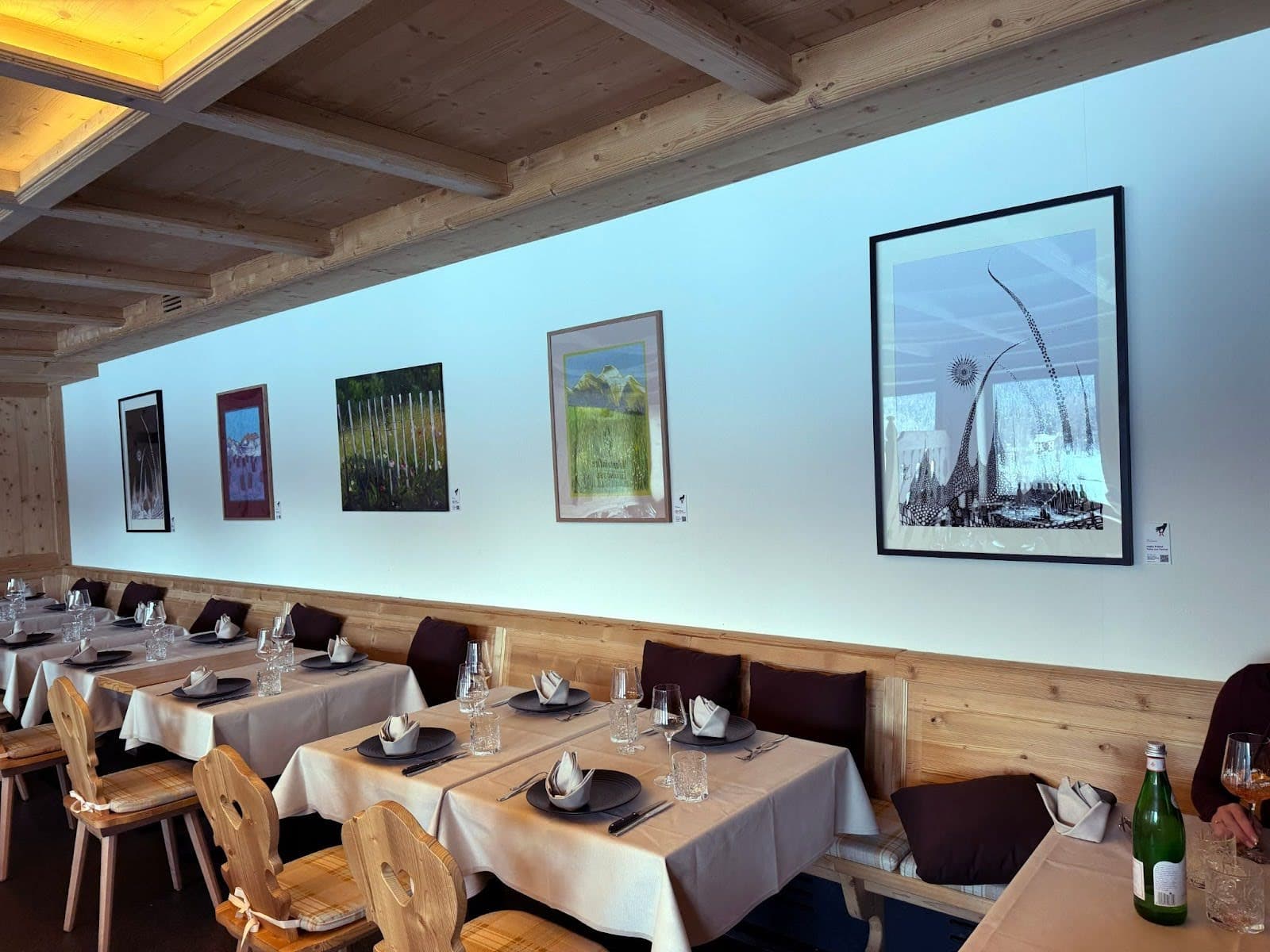
A gallery wall — a curated arrangement of multiple pieces — can be one of the most effective design moves in a restaurant. It creates a focal point, tells a story, and allows you to build a collection over time rather than committing to one large purchase.
A few principles to get it right:
- Start with a plan on paper. Measure the wall, cut out rough scale representations of each piece, and arrange them on the floor before committing to a single nail hole. The arrangement should feel balanced without being perfectly symmetrical.
- Create visual consistency. This doesn't mean identical frames — in fact, mixed frames can look excellent — but there should be a thread running through the collection: a shared palette, a related subject matter, or a consistent mood.
- Leave breathing room. Gallery walls fail when pieces are crammed too close together. Aim for consistent spacing — around 5 to 8 centimetres between frames — and treat the gaps as part of the design.
- Anchor with one hero piece. A gallery wall works best when there's a clear centrepiece that everything else orbits. This is usually the largest or most visually striking piece. Build the arrangement around it, not the other way around.
- Consider the lighting. Artwork without good light is wasted. If you're committing to a gallery wall, it's worth discussing directional lighting with your electrician or designer to make sure the pieces are seen the way they deserve to be.
The Bottom Line
Finding the right art for your restaurant is partly a creative decision and partly an operational one. The creative part — what style, what mood, what story — requires you to be honest about your brand and your guests. The operational part — where to source, how to budget, how to manage it — has more solutions available today than ever before.
Whether you spend a Saturday at The Other Art Fair, build a relationship with a local art school, browse Saatchi or HENI from your desk, or partner with us to get curated originals on your walls without the upfront cost — the worst outcome is doing nothing. Generic decor is forgettable. Original art, chosen with care, is one of the few things guests remember long after the meal.