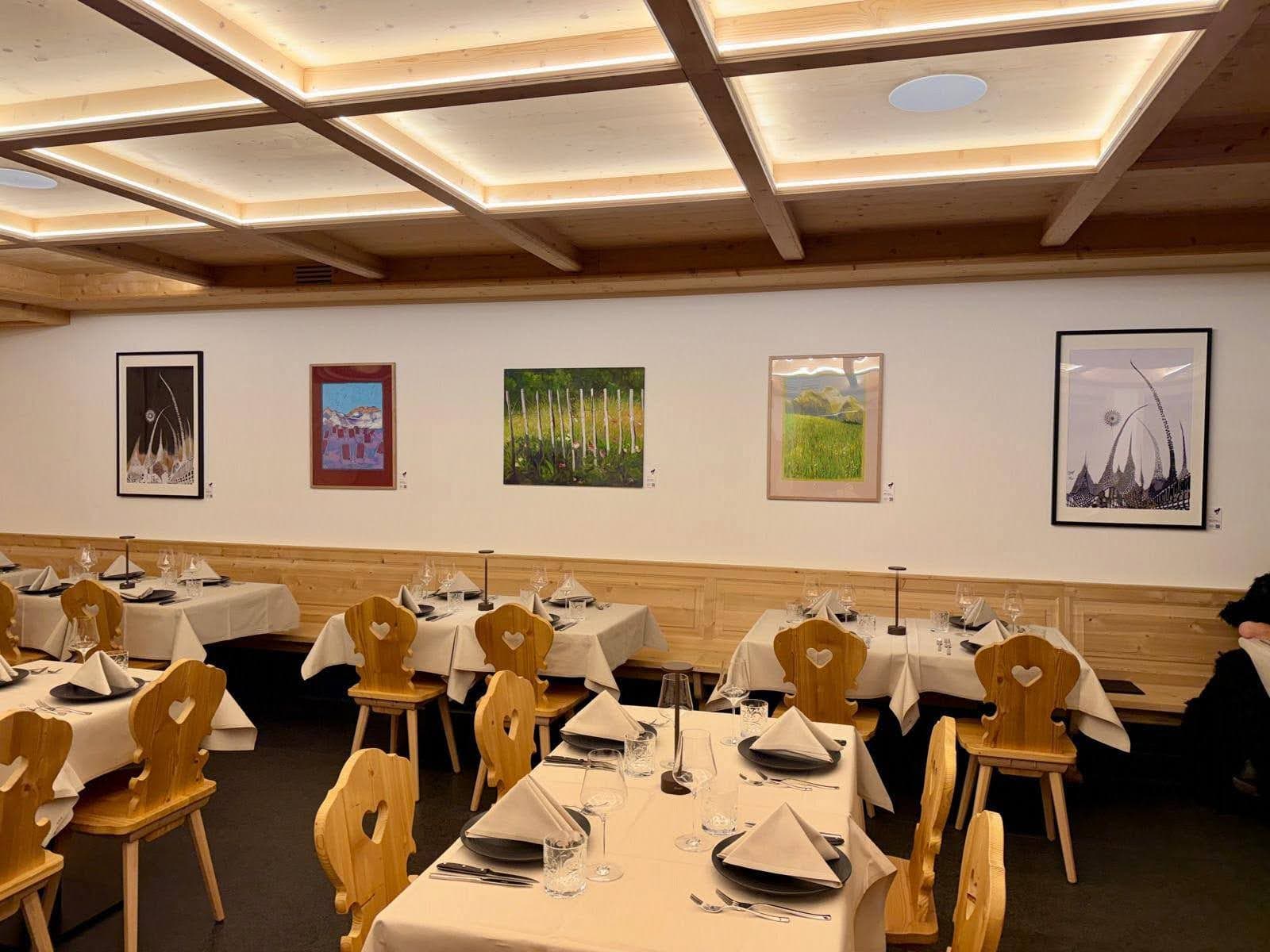
Art matters in hospitality. Guests notice it, photograph it, and mention it in reviews more often than most operators expect. What hangs on the walls of a restaurant, hotel lobby, or apartment is one of the clearest signals a space sends about the quality and intention behind the experience.
The problem is the cost. Or rather, the assumption of cost, because there is now a model that removes the upfront investment entirely. Before we get there, it's worth naming the three traps most venues fall into when they try to solve the art problem on their own.
Why Most Venues Think Art Is Too Expensive (And Why They're Wrong)
Hospitality operators typically approach art in one of three ways, and each has a significant drawback.
The first is to spend properly. Commissioning or purchasing original works for a hotel or restaurant can run to tens of thousands of pounds once you factor in multiple spaces, framing, installation, and the ongoing management of a collection. For an independent operator or a group opening a new property, this is a capital line that competes directly with everything else on the fit-out budget. It often loses.
The second is to spend cheaply. Mass-produced prints, generic canvases chosen to match the upholstery, unframed posters… These are everywhere in the hospitality industry, and guests know it. Rather than elevating a space, cheap decoration signals the absence of thought. It tells the guest that the operator considered the walls and decided they weren't worth caring about. That signal is surprisingly legible and surprisingly damaging.
The third is to wait. Some operators leave the walls largely bare at opening and plan to accumulate meaningful pieces over time. This is a reasonably long-term strategy, but it means opening (the moment when first impressions are formed and early reviews are written!) with an unfinished space. Those early reviews shape a venue's reputation in ways that take years to correct.
There is a fourth option that sidesteps all three problems. It's called a consignment model, and it's what we built PickArt to deliver.
What Is Art Consignment, and How Does It Work for Venues?
Art consignment is a model in which an artist or curator places works in a venue without selling them outright. The venue displays the works; if a piece sells, the proceeds are split between the artist and the venue. The venue pays nothing up front and takes no financial risk on the inventory.
This model has existed in galleries for decades. What PickArt has done is adapt it for hospitality: building the curation, logistics, insurance, sales infrastructure, and guest-facing experience around it, so that the model works seamlessly in a restaurant, hotel, or apartment rather than requiring the venue to manage any of it themselves.
The result is a fundamentally different answer to the art question: not "how much can we afford to spend?" but "what would we like on our walls?"
The Problem With Prints (And What Guests Notice Instead)
The hospitality industry's default answer to the wall art problem is the manufactured print: an image produced at volume, framed identically, and installed across a property or portfolio. It is the path of least resistance, and guests recognise it as exactly that.
Original art works differently. A guest who looks closely at a painting and notices the texture of the brushwork, or reads a small label and learns something about the artist who made it, is having an experience that a print cannot provide. They are engaging with a specific human sensibility, rooted in a specific place. That engagement is brief, often wordless, and almost always remembered.
It is also consistently the kind of detail that appears in reviews. "The art on the walls was beautiful, and we looked it up afterwards." "One of the paintings was by a local artist, and we ended up buying a print from their website." These are real guest responses to real original art. They do not happen with mass-produced canvases.
How a Revenue Share Model Benefits the Venue, the Artist, and the Guest
The consignment or revenue share model works because it aligns the interests of everyone involved.
-
The venue gets original, curated art on its walls with no upfront cost, no insurance liability, and no management overhead. It also earns a commission on every sale.
-
The artist gets their work displayed in a high-footfall hospitality space, seen by hundreds or thousands of guests, with a sales mechanism built in. This is genuine exposure with commercial upside, not just a loan.
-
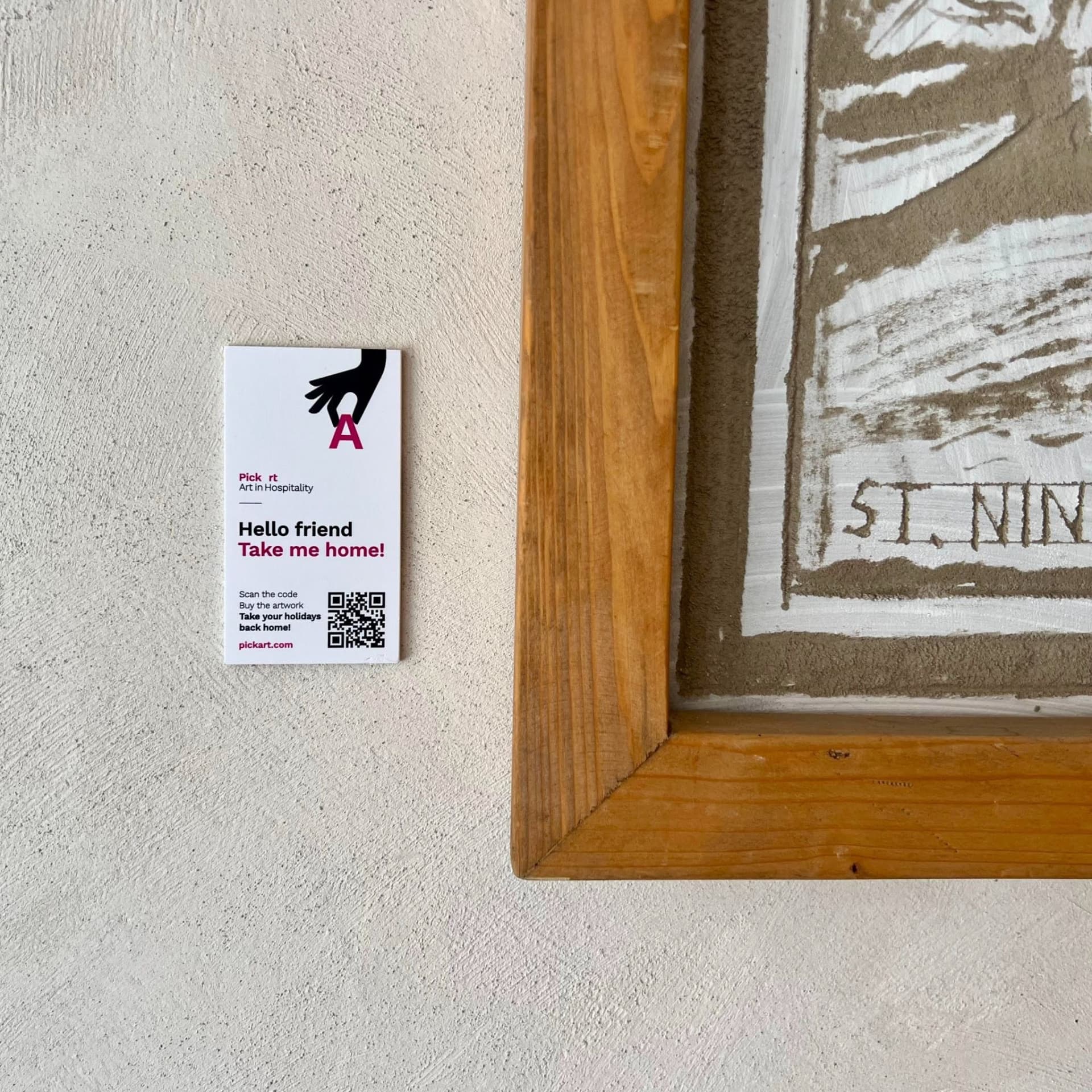
The guest gets a richer experience: art with a story, a way to engage with it, and the option to take a piece of their stay home with them. The QR label alongside each work is not a price tag; it's an invitation to discover more.
None of this requires the venue to become an art dealer, manage artist relationships, or handle transactions. That is PickArt's role.
Real Art, Zero Upfront Investment: How the Numbers Work
The economics of the PickArt model are straightforward. Venues pay nothing to join, nothing to receive the artwork, and nothing for ongoing curation or replacement. There are no hidden fees and no minimum terms that lock a venue into a commitment it can't exit.
When a guest purchases a work, the sale price is split between PickArt, the artist, and the venue. The venue's commission is paid automatically. When a sold work leaves, PickArt replaces it so the display stays full, stays fresh, and continues to do its job.
For a venue that is about to open, this means arriving at launch day with original, curated art already on the walls — without a single line on the art budget. For an established venue looking to improve its space, it means upgrading from generic prints to original works without a capital conversion.
What Venues Get Beyond Décor: Reviews, Social Shares, and Return Visits
The case for original art in hospitality spaces has never rested purely on aesthetics. The measurable downstream effects are real and well-documented: on reviews, on social sharing, on the likelihood of return visits.
Guests in spaces with considered, location-specific art are more likely to mention specific details in their reviews. They are more likely to photograph the space and share it. They are more likely to describe the experience as distinctive rather than generic, and distinctive experiences are the ones that generate recommendations.
For venues competing in markets where the quality gap between operators has narrowed, these softer advantages compound into real commercial ones: better review scores, higher visibility, stronger word-of-mouth, and the kind of loyal guest who returns because the place felt like somewhere, not just anywhere.
How PickArt Works: Curated Art, Placed in Your Space, Sold via QR Code
The process is designed to be as simple as possible for the venue.
-
We assess your space — its character, palette, scale, and guest profile — and select works from our network of local artists that are matched to it.
-
We deliver the artworks ready-to-hang and fully insured, alongside discreet QR labels for each piece.
-
Guests scan the QR code to learn about the work and the artist, and to purchase directly from their phone. We handle the transaction, the certificate of authenticity, and delivery to the buyer.
-
When a work sells, we replace it. Your venue earns a commission on every sale, paid automatically.
-
When you want to refresh the collection, we rotate the works. The display evolves without any administrative burden on you.
We work with restaurants, hotels, cafés, coworking spaces, aparthotel groups, and short-term rental operators. The model scales from a single-room venue to a multi-property portfolio.
If you've been putting off the art question because it felt like a budget problem, it isn't one. Get in touch to find out what PickArt could look like in your space.