
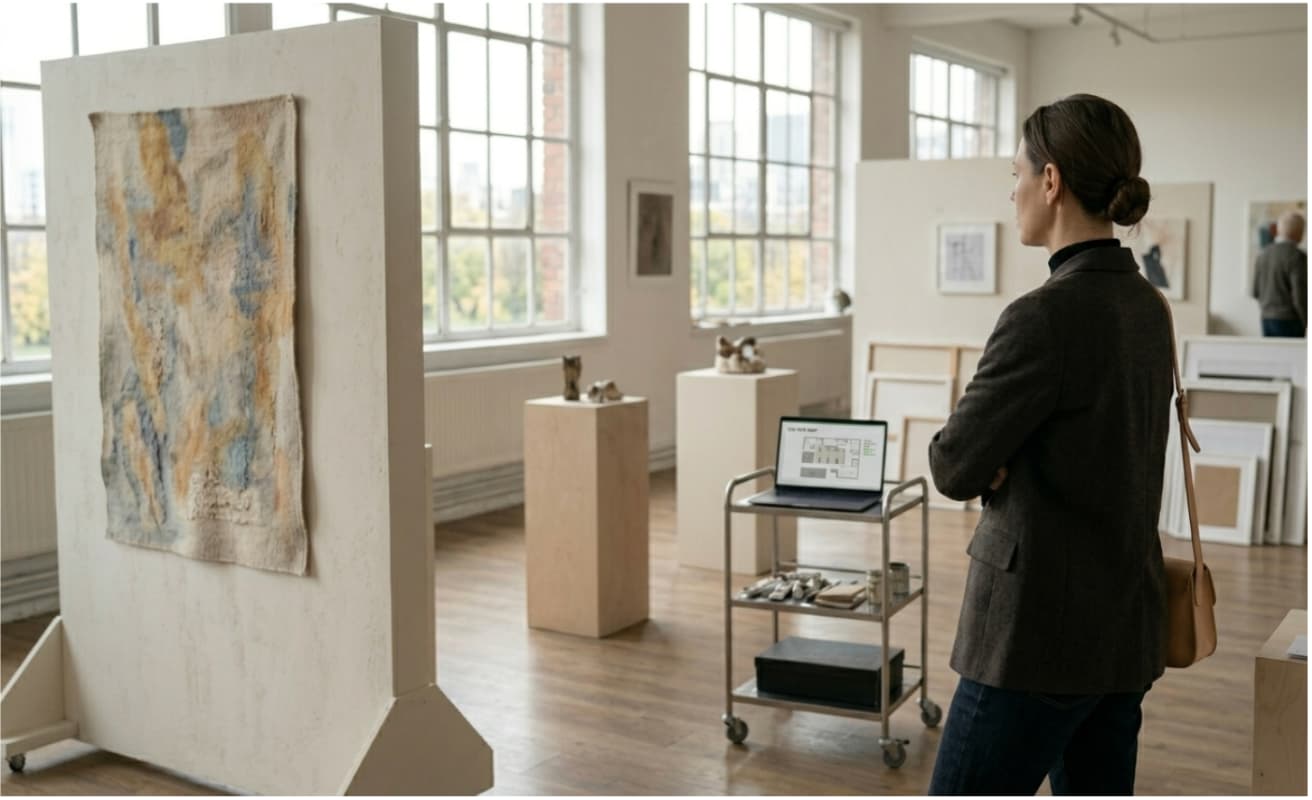
It's one of those questions that sits quietly in the background for most artists, especially when you start thinking about how to get your art noticed by galleries or how to build an art career and get represented. There's often an assumption that if the work is good enough, everything else will follow, but in reality, it's a bit more layered than that. Understanding this isn't about trying to fit into a mould, it's about recognising how your work is read, where it's seen, and how it holds together as a practice. And also, it's worth saying, curators aren't sitting there waiting to judge you. They're people who care deeply about art, who want to support artists, and who are often looking for passionate people, clear in what they're doing, and able to communicate that in a way that allows others to help them get there.
What Curators Look For When Selecting Artists for Exhibitions
The work does matter, of course it does, but it's not just about individual pieces. What curators are often responding to is a sense of consistency, intention, and direction. When thinking about what curators look for when selecting artists for exhibitions, it's less about one strong painting and more about whether there is a coherent body of work behind it. This is where a lot of artists get stuck, because they focus on single outcomes rather than the overall narrative. It's also why conversations around how to make your artist portfolio stand out to curators become so important. A portfolio is not just a collection of images; it's a reflection of how you think, how you edit yourself, and how your work evolves. It shows that you understand your own practice, which makes it much easier for someone else to step in and support it.
How Curators Discover New Artists and How Galleries Choose Who to Represent
At the same time, a lot of artists are trying to figure out how curators discover new artists, or how galleries choose which artists to represent, and the answer is rarely as direct as people hope. There isn't one clear pathway. Some artists are found through exhibitions, others through recommendations, others through online platforms, and many through a combination of all three. If you're wondering how to get discovered as an artist without connections, the reality is that visibility plays a much bigger role than people admit. It's not just about who you know, it's about where your work exists and who has the opportunity to encounter it. The more your work is out in the world, the more likely it is to be seen at the right moment.
How to Impress Art Curators (Without Trying to Impress)
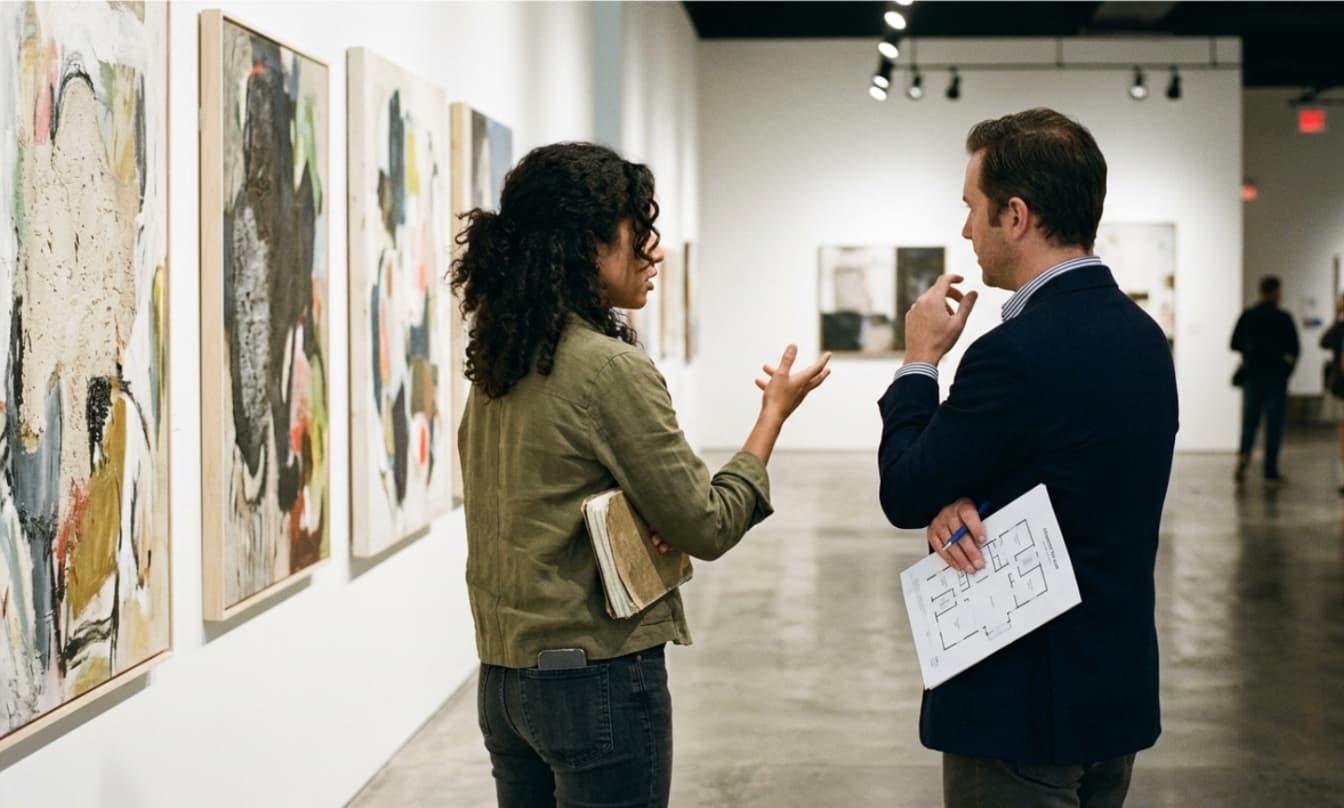
This is where the idea of how to impress art curators often gets misunderstood. It's not about trying to impress in a traditional sense or perform something you think they want to see; it's about being clear, grounded, and intentional in what you're doing. Curators are not just looking at the work; they are thinking about how it sits within a space, how it relates to other works, and how it contributes to a wider conversation. This is also why understanding what galleries look for in artists goes beyond technical ability. They are looking for artists who have a point of view, who are consistent, and who feel ready to be part of a programme rather than just an isolated moment. They're also looking for artists they can actually work with — people who can communicate their ideas and engage in dialogue.
How to Get Gallery Representation as an Emerging Artist
For many artists, the next question becomes how to get gallery representation as an emerging artist, or how to approach a gallery as an emerging artist in a way that actually leads somewhere. There is no single right way to do this, but what is clear is that cold emails alone rarely lead to meaningful opportunities. More often, relationships are built over time, through repeated exposure, shared spaces, and ongoing visibility. This is also where questions like "does an artist need an MFA to get gallery representation?" start to surface. The answer is no, not necessarily. While education can play a role, it is not a requirement. What matters more is how your work exists in the world, how clearly you understand it, and how consistently it is being seen.
How to Get Your Art Noticed by Galleries Beyond Traditional Routes
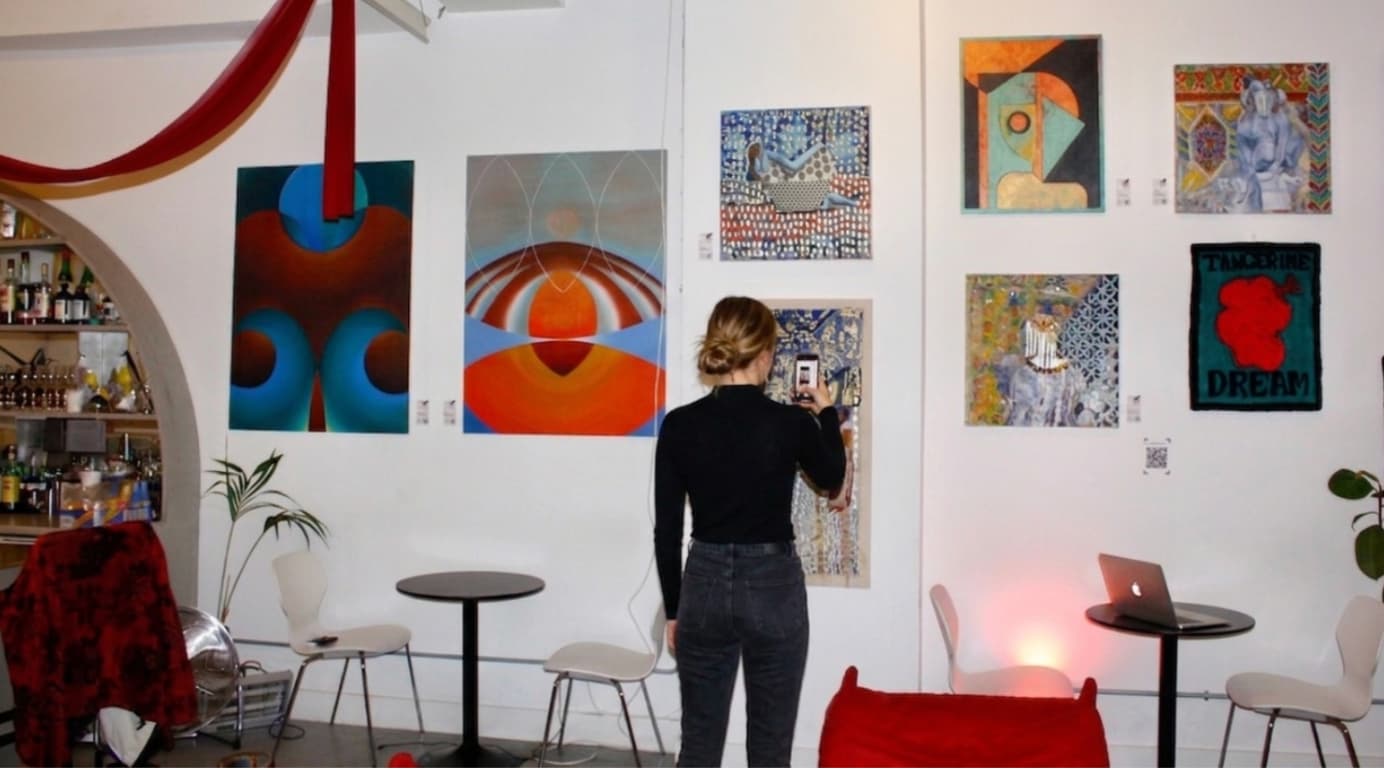
Increasingly, artists are finding that the traditional routes are not the only way forward. Learning how to get your art noticed by galleries now often involves looking beyond galleries themselves. This is where alternative models come in, offering new ways to build visibility and credibility without waiting for representation. Platforms like PickArt are part of this shift, creating opportunities for artists to place their work into real environments where it can be seen by a wider audience. By situating work in hospitality spaces, design-led venues, and everyday contexts, artists are able to build presence and recognition in a way that feels more immediate and less dependent on traditional gatekeeping.
How to Build an Art Career and Get Represented Through Visibility
This doesn't replace galleries, but it does change the pathway towards them. When thinking about how to build an art career and get represented, it becomes less about waiting to be selected and more about creating the conditions where your work is consistently visible. Curators are far more likely to encounter artists who are actively placing their work into the world than those who are waiting in the studio for an opportunity to arrive. In that sense, where your work hangs becomes part of the story. It shapes how it is perceived, who sees it, and what kind of conversations it enters into.
Ultimately, understanding what curators are responding to is less about decoding a fixed set of criteria and more about recognising patterns. Strong work, consistency, visibility, and context all play a role. But equally, so does your ability to communicate what you're doing and why you're doing it. Curators aren't there to gatekeep your progress; they're there to support it, and the clearer you are in your intentions, the easier it is for them to step in and help you move forward. The artists who stand out aren't always the loudest; they're the ones whose work and thinking feel aligned, visible, and ready to be engaged with.