
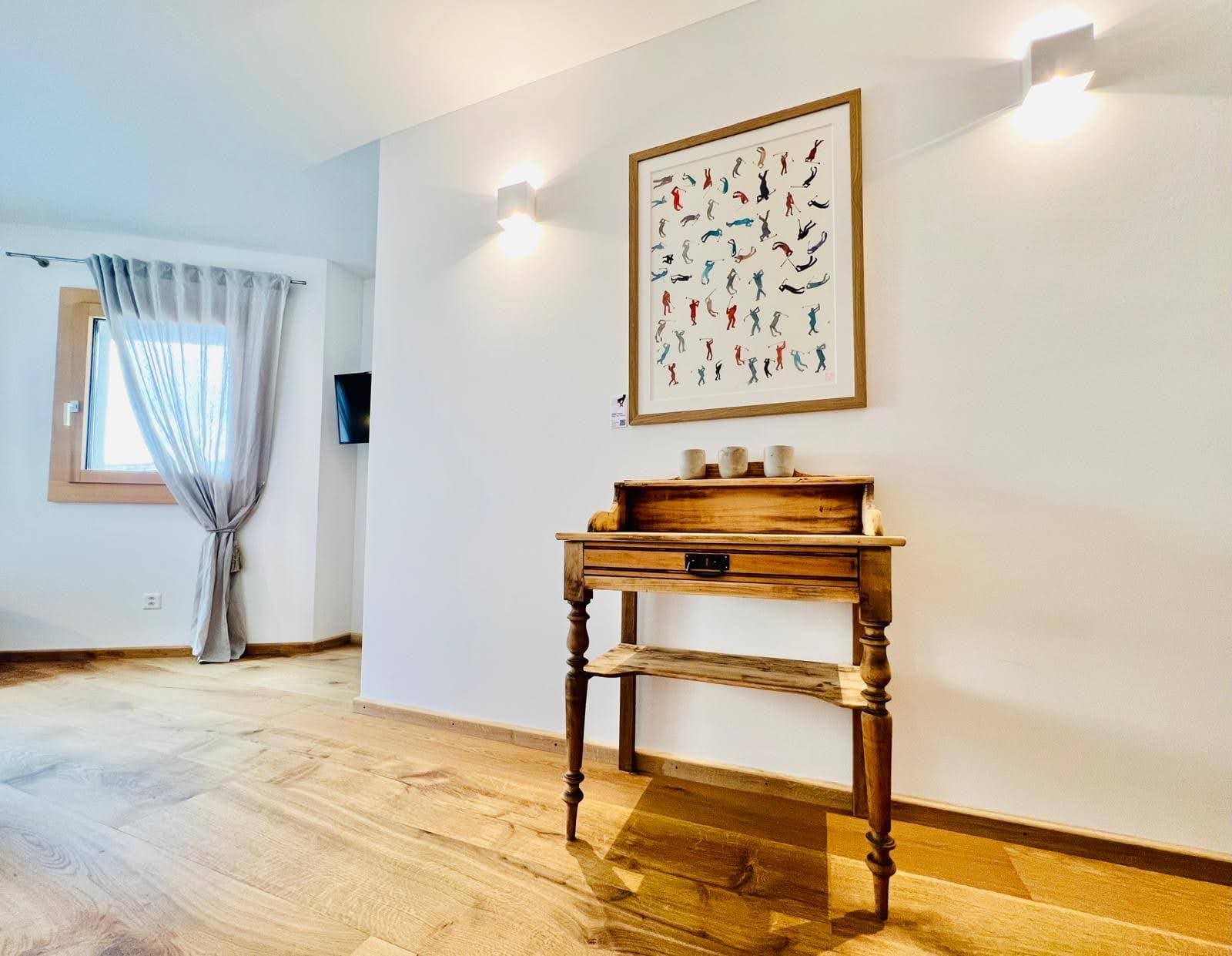
The short-term rental market has never been more competitive. Guests have more choice than ever, and their expectations have risen to match. Being clean, well-located, and fairly priced is no longer enough to earn five stars and repeat bookings. The properties that consistently outperform (higher rates, stronger reviews, better occupancy) share something that goes beyond the basics: they feel considered.
The stakes are real. Hosts who consistently deliver a premium experience don't just collect five-star reviews — they build a business that compounds. Repeat guests who rebook directly, strong occupancy rates that hold even in slower seasons, and nightly rates that sit comfortably above comparable listings: these are the financial rewards of getting the guest experience right. Reviews are the mechanism; the numbers are the outcome.
This guide is about what "considered" actually means in practice. Not a vague appeal to luxury, but the specific decisions that separate a forgettable stay from one guests recommend to everyone they know and return to themselves.
What Makes a Short Term Rental Feel Truly Luxury?
Luxury in a short-term rental context isn't primarily about price point or square footage. It's about the ratio of effort to friction: how much the host has anticipated, and how little the guest has to figure out for themselves.
Guests notice three things almost immediately upon arriving:
- Whether the space looks like the photos.
- Whether it feels clean, not just visually, but in the way it smells, the feel of the linen, the absence of anything worn or tired.
- Whether it feels personal. Not personalised to them specifically, but intentionally designed rather than generically assembled.
That third point is where most hosts fall short, and where the real opportunity lies. Generic furniture from a flatpack catalogue, mass-market prints on the walls, amenities that could have come from any budget hotel... these all signal that a host has invested the minimum. A space that tells a story, has texture, and rewards attention signals the opposite.
The good news is that "feeling luxury" is far more achievable than most hosts assume. It's rarely about spending more. It's about spending thoughtfully.
Vacation Rental Interior Design Tips That Impress From the First Photo
Your listing photos are your most important marketing asset. Guests make snap judgements based on thumbnails. If the first image doesn't stop them scrolling, the price, the description, and the reviews become irrelevant. Interior design and photography are therefore not separate concerns — they're the same decision.
Start with a coherent visual identity
You don't need to hire an interior designer. You need to make a decision about what your property is, and then make every choice in service of that decision. Warm and rustic? Minimal and Scandinavian? Bold and eclectic? Pick a direction and follow it consistently across furniture, textiles, lighting, and wall treatment. Incoherence (a mix of styles with no logic) reads as unfinished, regardless of what individual pieces cost.
Invest in photography
Professional photography typically costs a few hundred pounds and pays for itself within the first couple of bookings at a higher rate. Use natural light wherever possible, shoot in the morning or early afternoon, and declutter thoroughly before the photographer arrives. Less is almost always more in rental photography.
The wall problem
Bare walls are one of the most common weaknesses in short-term rental photography. They make spaces feel unfinished and make rooms look smaller in photos. But the solution isn't simply to hang anything because mass-market prints and generic canvases are immediately recognisable and signal low investment to a discerning guest.
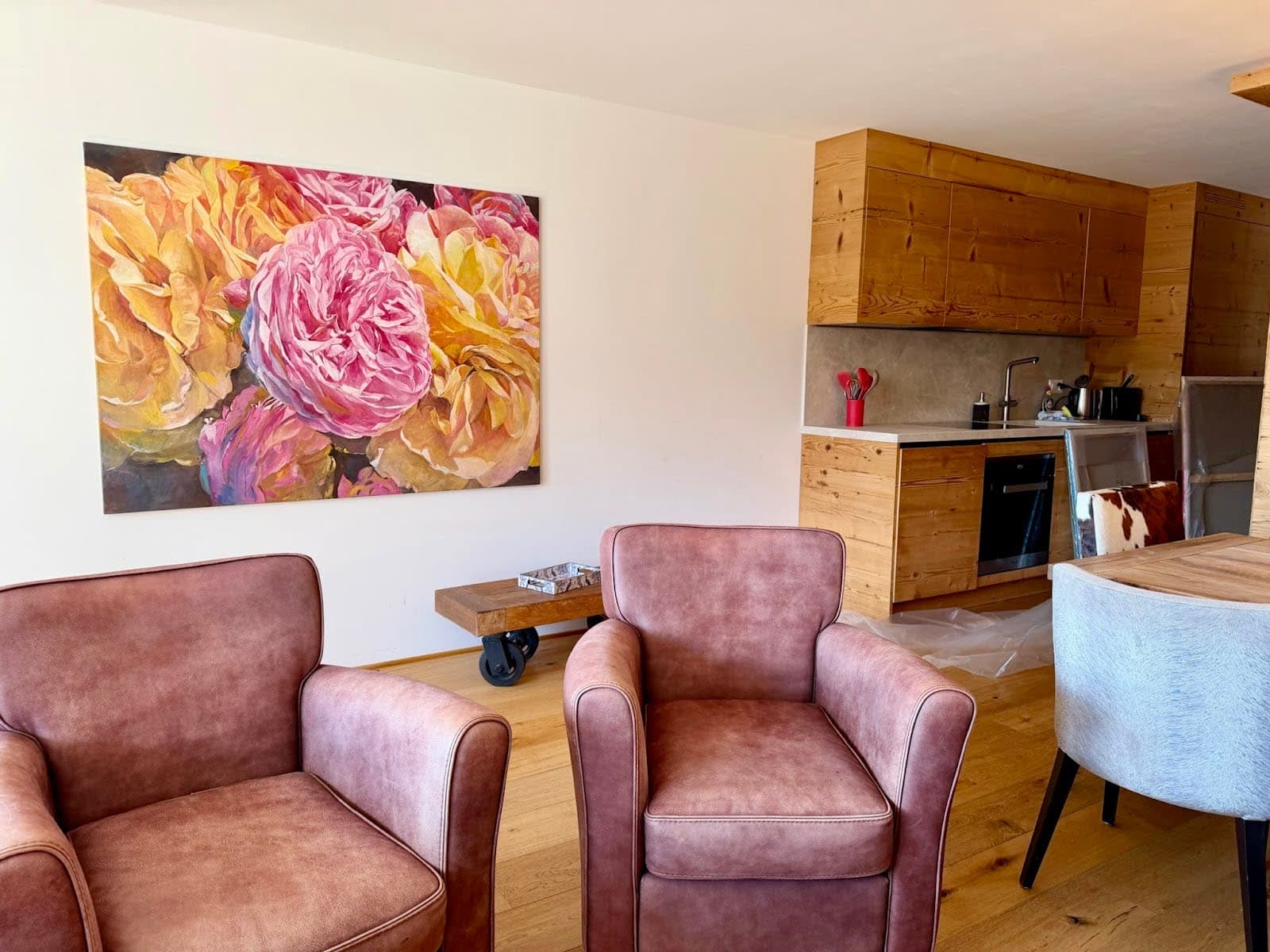
Original artwork, even a single well-chosen piece, transforms what a room communicates. It creates focal points, adds warmth and depth, and photographs beautifully. More on sourcing this without the usual CapEx burden below.
The Best Amenities for a Luxury Airbnb (That Guests Actually Care About)
There's a temptation to equate premium amenities with an exhaustive list of "nicest" things. In practice, guests care most about the things that remove friction or create a moment of genuine delight. The bar is set by what they experience in good hotels — and then exceeded when something feels more personal.
The non-negotiables
- High-quality bedding. Thread count matters less than guests think, but feel matters enormously. Invest in linen or high-quality cotton. White linen signals cleanliness and photographs beautifully.
- Good pillows. Guests sleep badly when pillows are flat or plasticky. A small investment here drives disproportionately positive feedback.
- Consistent, fast Wi-Fi. Non-negotiable for modern travellers. Display the password prominently on a framed card, in the welcome pack, or on a label near the router.
- A fully equipped kitchen. If guests can cook in your property, make sure the equipment actually works. Sharp knives, a proper coffee setup, decent pans. The absence of basics registers as neglect.
- Thoughtful bathroom amenities. Replace single-use plastic miniatures with refillable dispensers of genuinely good products. Guests notice the difference, and it's better for the environment.
The details that differentiate
- A quality coffee machine: not a pod machine, or if a pod machine, with pods provided
- A curated local guide: not a printed list of TripAdvisor top tens, but genuine personal recommendations for restaurants, walks, markets, and hidden spots
- Blackout blinds or curtains, especially in urban properties
- Extra blankets and throws, available and visible
- Charging points at the bedside, ideally with USB-C
- A Bluetooth speaker. Guests use them constantly and note their absence
The Ultimate Short Term Rental Welcome Pack Checklist
A welcome pack sets the tone for the entire stay. It's the first thing many guests look for after they've dropped their bags, and a well-constructed one answers the questions they'd otherwise have to message you about. A poor one (or no welcome pack at all) forces unnecessary back-and-forth and starts the stay on the back foot.
A premium welcome pack should include:
- A personal welcome note. Brief, warm, and specific to their stay. If possible, personalise the guest's name.
- Essential property information. Wi-Fi password, heating and hot water instructions, how to use the TV, emergency contacts, checkout procedure.
- Local recommendations. Your genuine personal favourites, not a generic list. The coffee shop you actually go to. The market that's worth getting up for. The walk with the best view.
- A small welcome gift. This doesn't need to be expensive: a local product (a jar of honey, a bag of coffee from a nearby roaster, a bottle of wine) creates a moment of genuine surprise and delight that guests mention in reviews far more often than the cost would suggest.
- Any property-specific notes. Quirks of the shower, how to work the key, where to find the spare set... anything that prevents a confused message at 10pm.
If your property is part of a programme like PickArt's ArtBonus (see below), a short note about the artwork is worth including too: it gives guests context for what they're seeing and a way to engage with it. More on that below.
How to Create a 5-Star Guest Experience From Check-In to Check-Out
A five-star review is rarely won by one single thing. It's the accumulation of small moments that went right... and the absence of moments that went wrong. Think of the guest journey as a series of potential friction points, and your job as removing as many as possible.
Check-in
Guests are often tired, sometimes stressed, and navigating an unfamiliar city. A smooth, frictionless check-in sets the emotional tone for everything that follows.
- Send clear arrival instructions 24 hours before check-in
- If using a key lockbox or smart lock, confirm the code works before the guest arrives
- Make sure the property is genuinely ready: aired, lit, and inviting
- A brief, warm welcome message when they arrive (not a barrage of instructions) goes a long way
During the stay
Resist the urge to over-communicate. Guests in premium rentals want the independence of a home, not the check-ins of a B&B. Be available without being present.
- Respond to messages quickly within an hour during waking hours
- If something breaks or goes wrong, acknowledge it immediately and solve it, don't deflect
- A mid-stay check-in message after day two or three ("Hoping everything's going well. Let me know if you need anything") signals attentiveness without intrusiveness
Check-out
The last impression is the one guests carry into their review. Make checkout as easy as possible.
- Clear, simple checkout instructions: what to do with keys, whether to strip the bed, where to leave towels
- Don't ask guests to do more than is reasonable. Guests resent being asked to clean, do laundry, or take bins out after a premium stay
- A brief thank-you message after they leave, with a genuine (not copy-pasted) note, often prompts a review that same day
Airbnb Superhost Tips: The Small Details That Get Big Reviews
Experienced hosts know that five-star reviews are rarely written about the sofa or the kitchen appliances. They're written about moments — specific, personal, unexpected things that stood out. Understanding this changes how you think about where to invest your attention.
Some of the most review-generating details cost almost nothing:
- A handwritten note that references something specific about the guest's trip ("Hope the conference goes well" or "Wishing you a wonderful anniversary")
- A local treat waiting on the kitchen counter
- Remembering a returning guest and acknowledging it
- Going out of your way to recommend something that turned out to be exactly right for them
The common thread is personalisation: evidence that a real person cared about this specific guest's experience, not just the average guest's experience.
On the physical side, the detail that most consistently moves the needle is the one guests didn't expect to see: a piece of art that made them stop, a book that was exactly the kind of thing they'd read, a view they didn't know would be there. You can engineer some of these. Curated original artwork is one of the most effective. It's the kind of detail guests photograph, reference in reviews, and remember months later.
How to Make Your Airbnb Stand Out in a Crowded Market
Standing out on Airbnb is increasingly a positioning challenge, not just a quality one. There are thousands of clean, well-reviewed properties. The question is what makes yours the one a particular guest chooses and comes back to.
The most durable differentiators are the ones that are hard to replicate quickly: a distinctive aesthetic, a genuine sense of place, and an experience that feels curated rather than assembled. Art is one of the most effective tools for achieving all three simultaneously.
Original art as a strategic differentiator
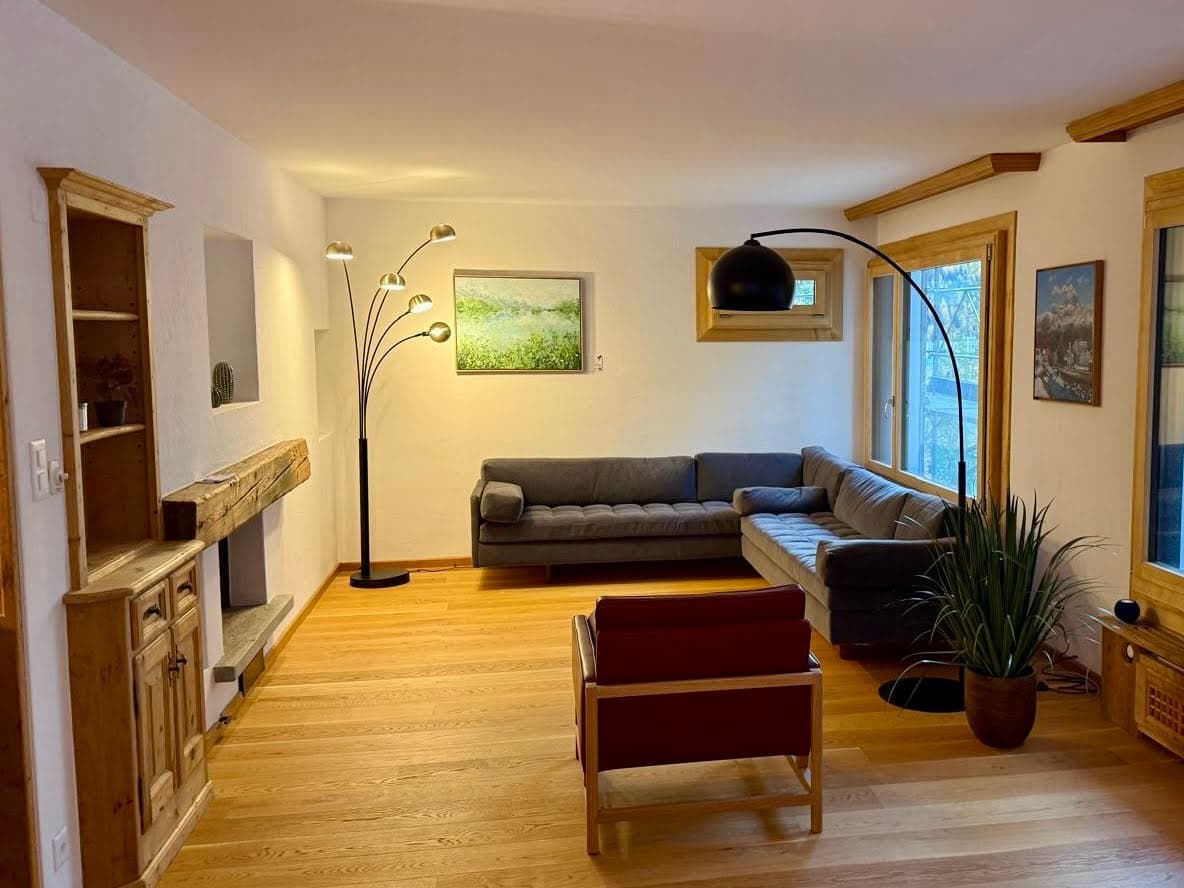
Most short-term rentals are decorated with generic prints or left with bare walls. A property featuring original, locally sourced artwork stands out immediately in listing photography: it creates focal points, adds warmth and depth, and signals an investment in the guest experience that generic decor simply doesn't.
The challenge, historically, has been the CapEx. Buying original artwork outright for a rental property (especially across multiple units) requires meaningful upfront investment, and the artwork stays in the property whether the rates justify it or not.
The ArtBonus model: original art, no investment
This is where we come in. PickArt partners with short-term rental hosts and property managers to bring original, locally sourced artwork into their properties with no purchase required and no upfront cost for the art.
Here's how it works: we curate a selection of original pieces matched to each property's architecture, palette, and character. The artworks are delivered ready-to-hang and fully insured. Alongside each piece, we provide a discreet QR label: not a price tag, but an invitation for guests to learn about the artwork and the artist behind it. Guests can scan, explore the story, and if they fall in love with a piece, purchase it directly. We handle the transaction and the logistics.
When a work sells, it's replaced. The display stays fresh. And the host earns a commission on every sale.
We call this ArtBonus. Hosts who lean into it (with a line in their listing and a note in the welcome pack) find it becomes a genuine differentiator: guests mention the artwork in reviews, photograph it for social media, and return specifically because the space felt like more than just a place to sleep.
The practical benefits stack up alongside the experiential ones. Better photography. Stronger listing appeal. A genuine story to tell. Higher achievable nightly rates. A share of art sales. All without purchasing a single piece.
The Bottom Line
Creating a premium short-term rental experience is not about ticking a checklist of expensive features. It's about making guests feel that someone thought carefully about their stay. The properties that earn consistent five-star reviews and command premium rates are the ones that get this right across every touchpoint: the first photo, the check-in message, the quality of the linen, the thing on the wall that made a guest stop and look.
Most of these decisions are within reach of any host who's willing to think them through. Some of them (like bringing original artwork into your property without any upfront cost) are easier than you might expect.
The worst thing you can do is leave your property in the "good enough" category. In a market this competitive, good enough is invisible.