
The bar for a good flat white has never been higher, and it has never mattered less as a point of difference. Sourcing, equipment and barista training that would have been remarkable ten years ago are now the baseline on most high streets. If you're asking how to make your café stand out, the honest answer is that the coffee won't do it on its own.
What does do it is narrower than most advice suggests. The cafés people remember tend to get two things right. They have hooks: small, specific things a customer can notice, talk about and come back for. And they have atmosphere: a quality of space people actively want to sit inside. Everything below is about building both, and about the one element that happens to do both at once.
Start With a Decision, Not a Checklist
What makes a café distinctive is a decision, not an accumulation of features. Before changing anything, try to finish this sentence honestly:
this is the place in our neighbourhood where you go for ______.
If the blank is hard to fill, that's the problem to solve first. A café that's slightly good at everything is hard for customers to describe, and harder for them to recommend. A café that's unmistakably the place for long slow mornings, or for the best sourdough toastie within a mile, or for filter coffee taken seriously, has given customers something to hold on to.
The answer then has to be visible in the things customers actually touch. The menu is the clearest signal: a shorter menu with genuine depth in one direction says far more than thirty syrups. Service is the second: staff who recognise faces, remember orders and have the time to talk are doing something chains struggle to replicate, because high turnover and scripted service make it almost impossible. And the brand — name, colour, cups, signage, tone of voice on a chalkboard — should be the expression of that decision, not a substitute for it.
Give People a Hook
A hook is a small, ownable detail that gives a first-time customer something to discover and a regular something to return to. It's usually cheap, and it's almost always specific.
Some that work well in cafés:
- A character. A resident dog, a founder who is always behind the counter, a barista with an encyclopaedic memory for orders. People tell their friends about people (and pets!).
- A short story library. A shelf of short story collections customers can borrow while they sit, free. Short stories rather than novels, deliberately: one can be finished in a single visit, which makes the reading part of the experience rather than something taken away.
- Depth in one direction. A single-origin focus, changed often enough to be worth asking about. Or a commitment to a specific tradition: Turkish coffee made properly, Neapolitan espresso and its rituals, a hand-brew method of the week on V60, siphon or Chemex. Customers who care will travel for it. Customers who don't will still register that you take something seriously.
- Something small and printed. A crossword or puzzle printed on a card and left on tables. A recipe card. A one-page zine about this month's coffee. Costs almost nothing, gets photographed, gets taken home.
Three rules make hooks work. Keep them few: two or three that are genuinely yours, not ten that read as gimmicks. Keep them consistent, because a hook that appears occasionally is just clutter. And make them discoverable without a member of staff having to explain them, so that noticing feels like the customer's own small find.
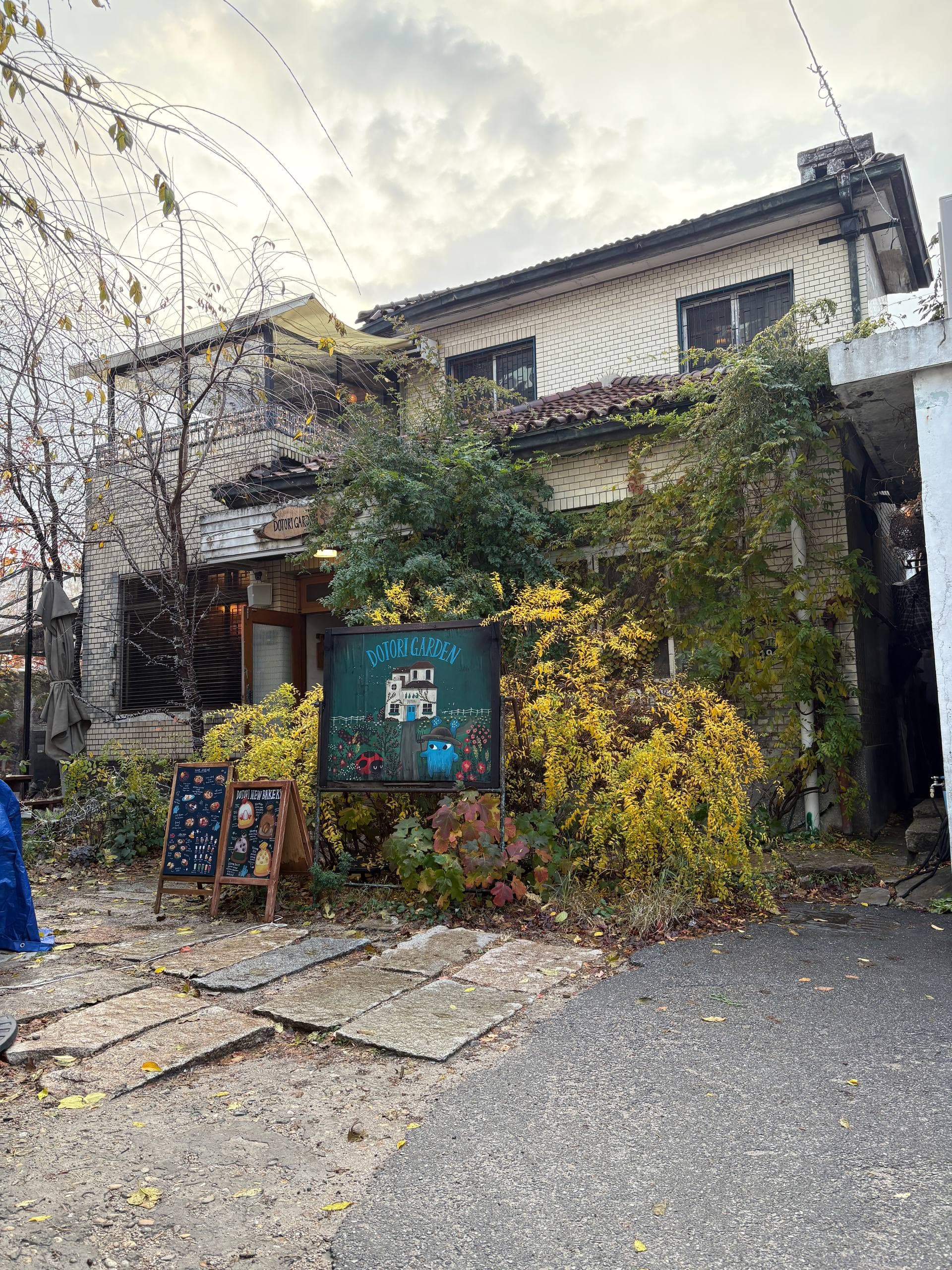
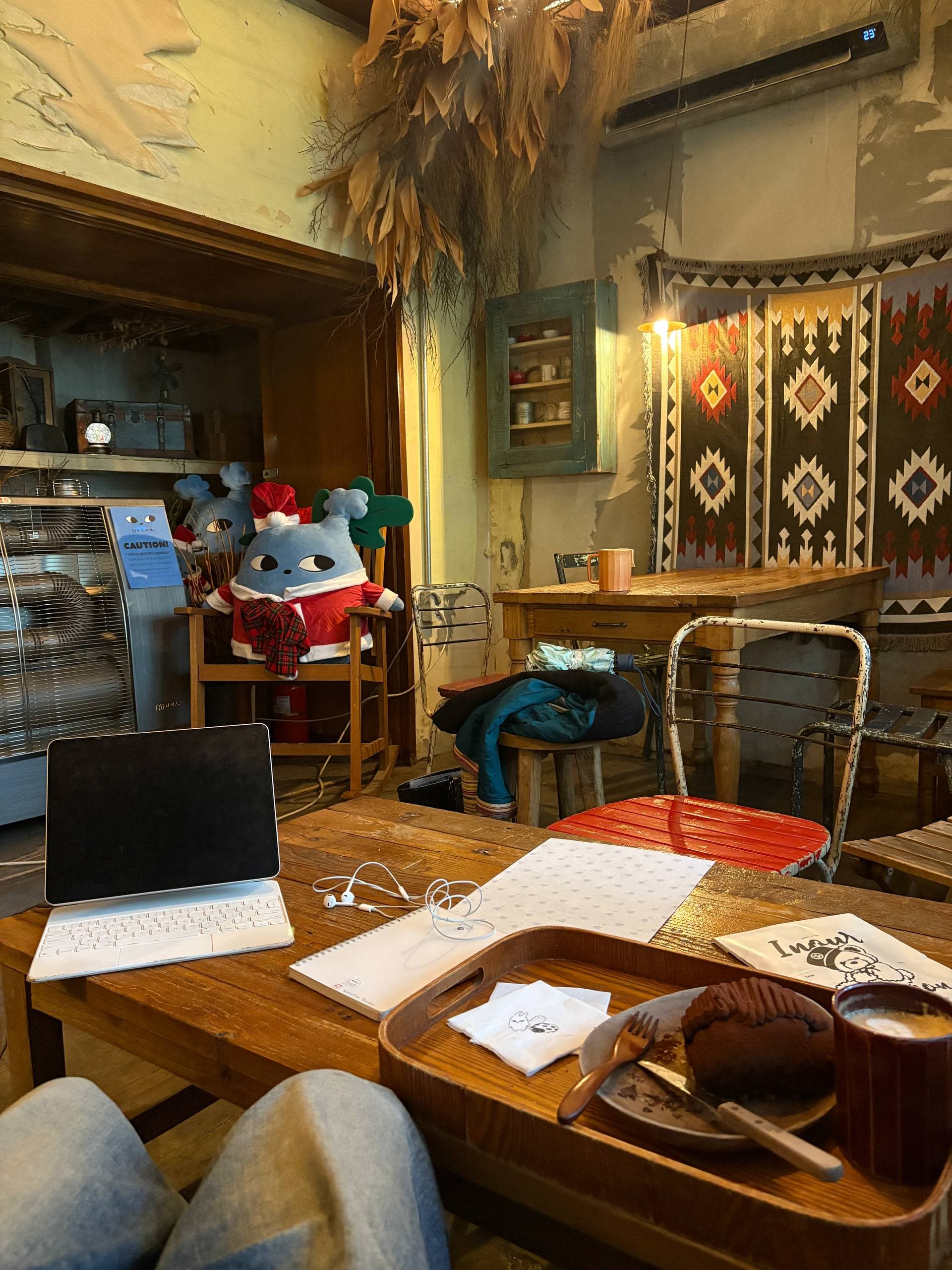
Dotori Garden in South Korea
Build an Atmosphere People Want to Be Inside
Hooks give people a reason to notice. Atmosphere gives them a reason to stay, and it's what they're really describing when they call a café lovely without being able to say why.
Most of it comes down to a handful of controllable decisions:
- Lighting is the biggest lever in most rooms, and the most commonly wasted. Warm, layered and low usually beats a grid of overhead panels.
- Music is a statement of identity, not background filler. A considered playlist that shifts across the day (quieter at 8am, warmer at 4pm) does more for atmosphere than most refurbishments.
- Seating variety determines who can use the space. A perch for solo laptop workers, two-tops for conversation, one large shared table for groups and strangers.
- Acoustics are usually the reason a beautiful room feels stressful. Soft surfaces, textiles and planting absorb the noise that hard, minimal interiors amplify.
- The view from the door does most of the work of the first impression. Whatever a customer sees in the first few seconds tends to be what they remember and describe.
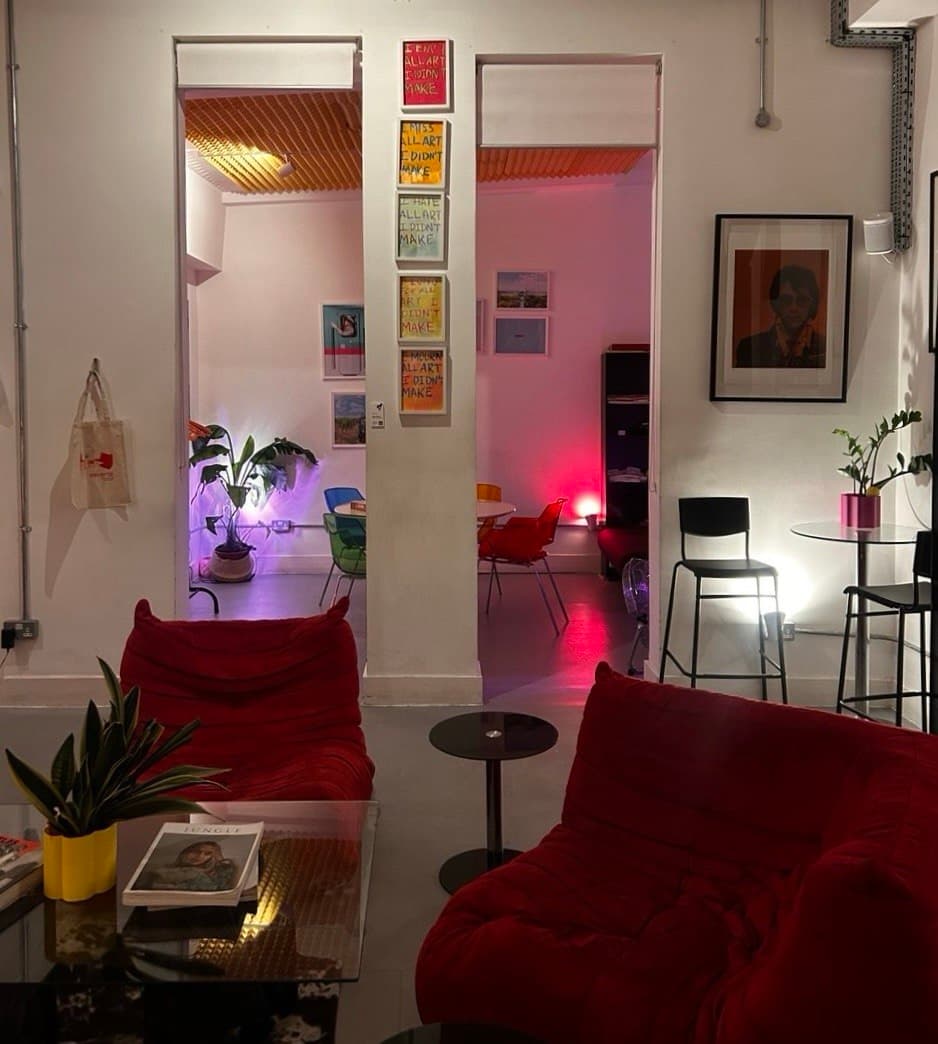
Lighting at Sevente in East London
A useful test: would someone choose to spend an hour here without buying a second coffee? If the answer is yes, the atmosphere is working, and those are the hours that turn visitors into regulars. Chains engineer atmosphere centrally, for the average customer in every location. An independent coffee shop can build one that's specific to a street, a room and a set of people, which is an advantage chains find very hard to buy.
Why Original Art Does Both
Most of the ideas above do one job. Art is unusual because it does both at once, and it's the reason we keep coming back to it.
It creates atmosphere. Scale, colour and texture change how a room feels faster and more cheaply than structural work, and original pieces signal that decisions were made by a person with a point of view. It gives people something to discover: a work customers form opinions about, ask about, photograph and look for again on the next visit. And when the work is by someone who lives and paints nearby, it roots the café in its neighbourhood in a way a print from a design retailer rarely does.
KAT Coffee Co. in London is a good example of this done consistently. Art has been part of the identity of the place since it opened in 2019 (way longer than PickArt has been around!), with an ongoing exhibiting programme, works available to buy from the walls, and an open invitation to artists who want to show there. The art is not decoration added after the fact. It is part of what the café is, and it gives customers a reason to look up. We wrote about this in more detail in Local Artists, Loyal Customers.
Sourcing artists yourself takes time, and the confidence to manage it, which is where we come in. PickArt places curated original artworks by local artists in cafés and other hospitality venues at no upfront cost. Pieces arrive ready to hang and insured, each with a discreet QR label linking to the artist's story and instant mobile checkout. If a guest buys a piece, we handle the transaction and delivery, arrange a replacement work for the wall, and the venue earns a commission on the sale.
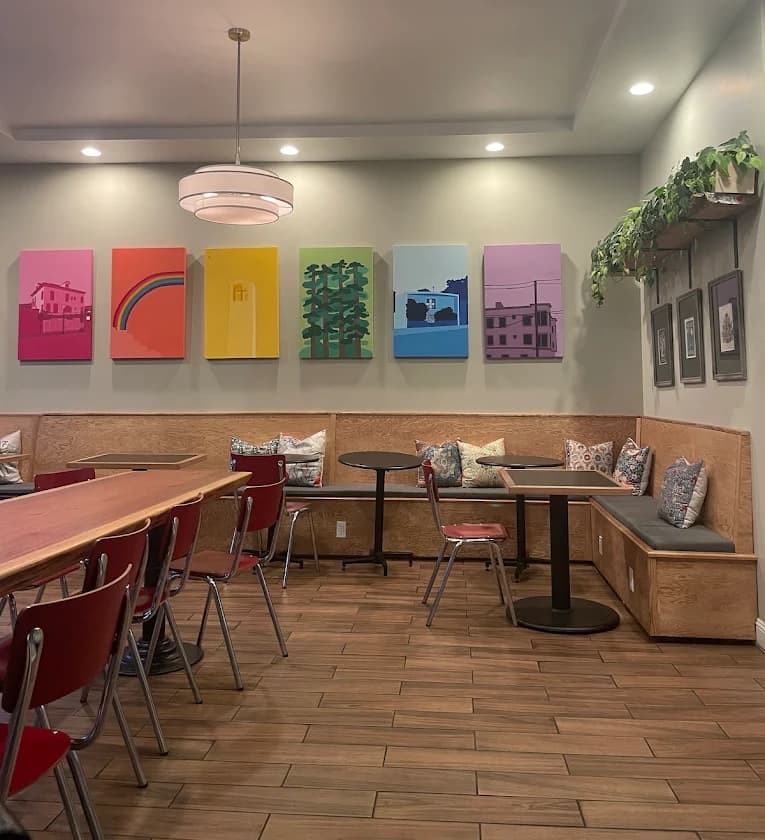
Compton's Coffee House in San Francisco, USA
Root Yourself in the Neighbourhood
Local identity is built from relationships, and it shows up in small, visible ways. Name your suppliers on the menu and mean it. Collaborate with businesses nearby on something limited and seasonal. Lend the room out during quiet hours for a run club, a book group or a workshop; underused space between 3pm and 5pm is an asset, not a cost.
None of this is marketing in the conventional sense. It's a set of reasons for people in the area to feel that the café belongs to them, which is the feeling that produces regulars.
Give People Reasons to Return, Recommend and Photograph
- Change something seasonally. A small menu shift, a new coffee, different flowers on the counter. Regulars notice attention, and noticing is what keeps them looking.
- Reward recognition over points. A loyalty card is fine. Knowing a customer's order before they reach the counter is better, and free.
- Ask for feedback, then act on it visibly. "You asked, so we did" is one of the most under-used lines in hospitality.
- Design one photographable corner. Good daylight and something worth framing. One corner, not the whole café, because spaces built entirely for a phone camera rarely feel good to sit in.
- Make the difference visible online. Most people decide where they're going before they leave the house. Fill your Google Business Profile with real photos of the room, the counter and the art rather than stock images, and show the same details on your website and social channels. If someone can see what's distinctive before they arrive, they walk in already looking for it.
Reviews reward specificity, and they reach far more people than anything you post yourself. Customers who mention the artist on the wall, the crossword on the table or the barista who remembered their name are advertising something a competitor can't copy by spending more.
Where to Start
Pick the decision first — what this café is for — then one hook and one atmospheric change to support it. Small, specific and consistent beats a full refurbishment almost every time.
If original local art is the direction that fits your space, that's the part we can help with. Explore how PickArt can help your café build a more distinctive local identity through curated original art, with no upfront artwork cost, or read more of our writing on art in hospitality.