
Most advice about restaurants comes in two piles. One is about attracting customers: local SEO, social media, influencers, offers. The other is about the experience: menu, service, atmosphere. Kept apart, both underperform. A restaurant with no clear identity can market its way to a busy Friday but won't fill a Tuesday in February. A restaurant with a genuinely distinctive experience that nobody has heard of stays quiet for a different reason.
They're the same problem. If you're asking how to make your restaurant stand out, the work is to decide what the place is for, build the guest experience around that decision, and then make it visible. The order matters, because marketing a restaurant that hasn't answered the first question is expensive and rarely compounds.
Start With What the Restaurant Is For
A proposition is a decision about four things: what you cook, who you're cooking it for, the occasion you're built around, and how the evening should feel. Most operators can answer the first. Fewer can answer all four, and guests can tell.
Two London restaurants are worth studying here.
Lady of the Grapes in Covent Garden is a French bistro and organic wine bar with a list built almost entirely around women winemakers. Founder Carole Bryon started it after years in the wine trade watching customers turn to male colleagues for advice, and the list now runs to several hundred organic, biodynamic and natural references, with the winemakers' names given prominence. The proposition isn't a line on the website. It's the wine list, which is the thing guests spend the whole evening with. Women and wine – simple combination, but new as a statement and purpose-driven. It has worked well enough to support a second, larger site near Borough Market. Bryon is considering adding women artists to the walls there.
Tatar Bunar in Shoreditch is built on Bessarabia, a historical region straddling southern Ukraine and Moldova that most Londoners couldn't find on a map. The restaurant takes its name from Tatarbunary, co-founder Alex Cooper's hometown, and the kitchen works from family recipes and the produce of that specific region rather than presenting itself as broadly Eastern European. The narrower choice is the stronger one. Specific is memorable; general is forgettable, however good the cooking.
A useful test: could a regular describe your restaurant to a friend in one sentence, without saying the food is good? If the only available answer is that the food is good, you have a quality standard rather than a proposition, and quality is what guests already assume they're paying for.
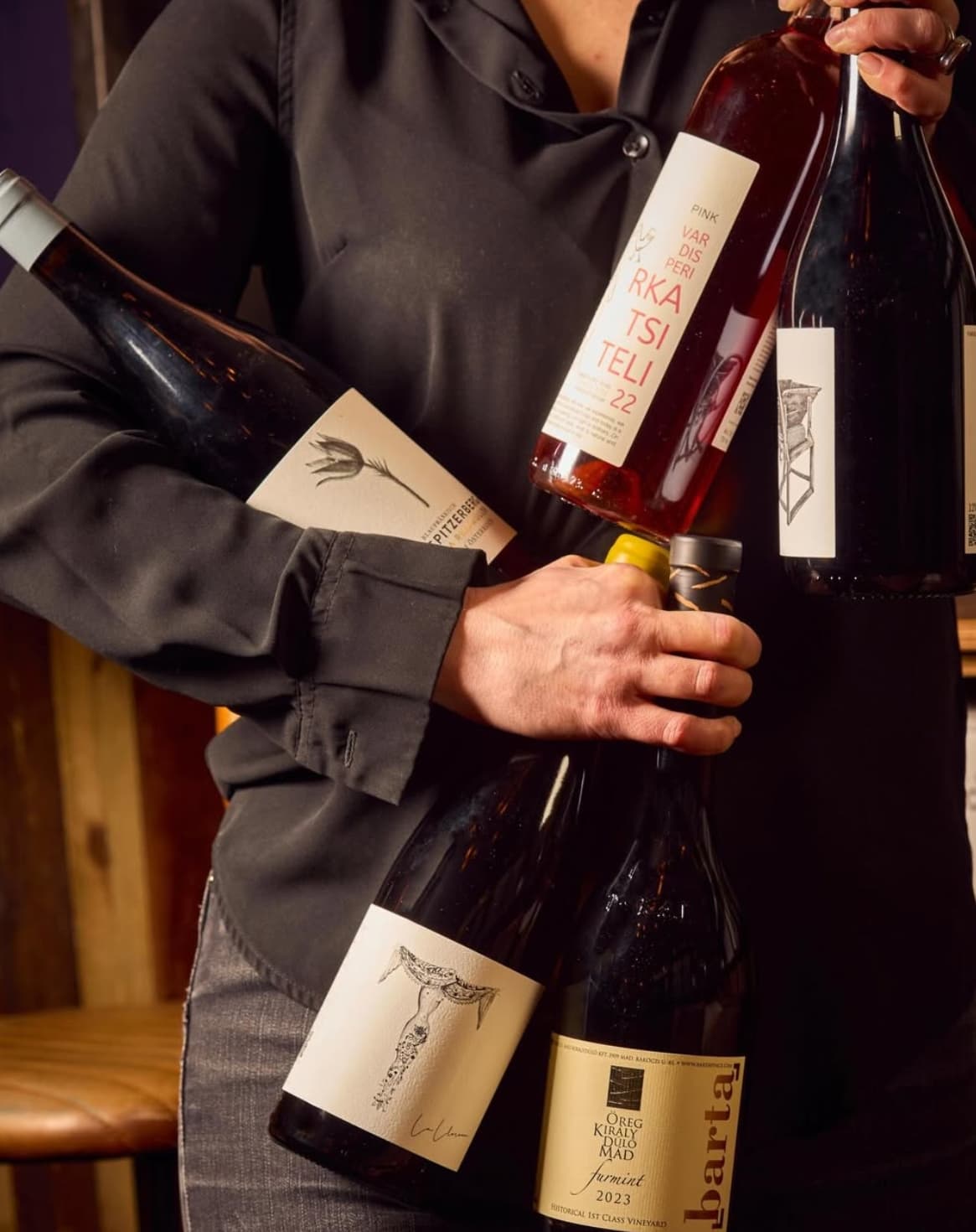
The Lady of the Grapes proudly advertising their wine identity
Carry It Through the Whole Guest Journey
A proposition only counts if guests meet it at every stage. Each moment either reinforces it or quietly waters it down.
- Booking. The booking page and the confirmation message are the first things a guest reads. A note that records an allergy, a birthday or a previous visit costs nothing and shapes the whole evening before it starts.
- Arrival. The first ninety seconds set expectations for everything after. Acknowledgement on arrival, even when nobody is free to set the table yet, does more for the evening than most menu changes.
- The menu. A shorter menu with a clear point of view reads as confidence. Write dish descriptions that carry the idea, so the kitchen and the room are telling the same story.
- Service. Staff who can say why this dish, why this producer, why this wine are the proposition made audible. That requires briefing time, not scripts.
- Pacing. The most under-managed variable in most dining rooms. A table that felt rushed rarely books again, however good the food was, and a table left waiting between courses remembers the wait rather than the meal.
- Departure. The last two minutes carry disproportionate weight in a review. Being able to pay without hunting for someone, and being thanked by name, is most of it.
Make the Room Argue the Same Case
Atmosphere is where a proposition becomes something guests feel rather than read. The controllable elements are familiar, and they are usually where the least deliberate decisions get made:
- Lighting sets the register of the evening more than any other single choice. Warm and layered, with light on the tables rather than the ceiling, suits most dining rooms.
- Acoustics decide whether a full room reads as buzzy or exhausting. Soft surfaces, textiles and planting absorb the noise that hard, minimal interiors amplify.
- Seating and layout determine who your restaurant is comfortable for: couples, groups, solo diners at the counter. Trying to serve all three equally often serves none of them well.
- Tableware, menus and signage are the details guests handle directly, which makes them the details they remember and photograph.
Tatar Bunar is a good example of coherence in this. Reclaimed oak from the Carpathians and Bulgarian stone from Bessarabia sit alongside ceramics handmade in Kyiv by Svetlana Sholomitska during the blackouts, with vintage rugs and family photographs on the walls. Few guests arrive knowing any of that. They register the coherence anyway, because every material in the room is making the same argument as the menu.
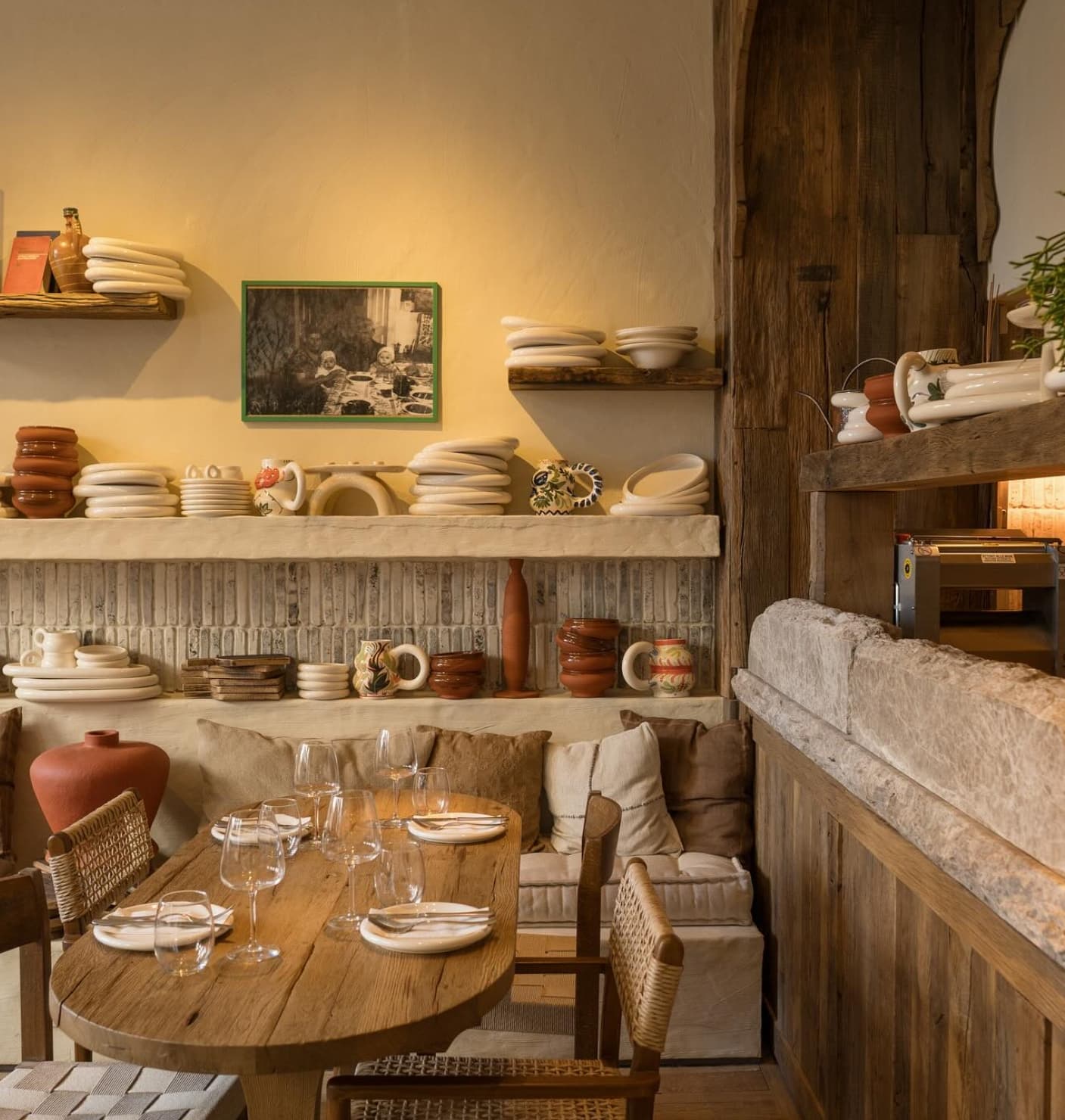
The atmosphere at Tatar Bunar
Local Identity and Original Art
Guests remember places that feel genuinely of somewhere. That feeling comes from relationships more than budget: named suppliers on the menu, collaborations with producers and businesses nearby, a room that could not be dropped into another city unchanged. We have written more about what makes hospitality feel local and why generic sense of place never quite lands.
Original art is unusually good at this, because it does two jobs at once. It creates atmosphere, changing how a room feels faster and more cheaply than structural work, and it gives guests something to notice, ask about and come back to. A painting by someone who lives and works a few streets away roots the restaurant in its neighbourhood in a way a print from a design retailer rarely does.
It also has a measurable effect on the reasons people return. We looked at that in more detail in Local Artists, Loyal Customers, and set out the practical routes to sourcing work (local artists, degree shows, fairs, online platforms and curation services) in our guide to finding art for your restaurant.
Doing it yourself takes time and the confidence to make the calls, which is where we come in. PickArt places curated original artworks by local artists in restaurants and other hospitality venues at no upfront cost. Works are chosen against the room, its palette and its character, and arrive ready to hang and insured. Each carries a discreet QR label that lets a guest read about the artist and buy from the table if they want to. If a piece sells, we handle the transaction and delivery, arrange a replacement for the wall, and the restaurant earns a commission.
Turn the Experience Into Your Marketing
Once the experience is specific, marketing gets easier, because you are describing something real rather than inventing reasons to visit. The tactics below are worth doing only when each one carries the same proposition.
- Local search. Most bookings start with a search or a map. Keep your Google Business Profile current, and fill it with real photographs of the room, the plates and the details that make you different rather than stock imagery.
- Social media. Post the specific thing: the producer, the ceramics, the wine that arrived this week. Generic dish photography competes with every restaurant in the country. The particular competes with nobody.
- Email. The only audience you own outright. A short monthly note about what has changed on the menu outperforms discounting, and it reaches people who have already decided they like you.
- Reviews. Ask at the right moment, and reply properly to what arrives. Reviews that mention a specific dish, the art on the wall or a member of staff by name do more for a first-time booking than any paid placement.
- Recognition over points. For restaurants, loyalty usually lives in the booking record rather than a card. Knowing that a guest sat at table nine last time and drank the Georgian orange wine is worth more than a stamp.
- Collaborations and seasonal events. A winemaker dinner, a supplier evening, a menu built around one month of the year. These work when they are an extension of the proposition, and feel like filler when they are not.
Where to Start
Answer the first question honestly, then pick the two or three touchpoints where the gap between the idea and the experience is widest. A restaurant that knows what it is for gives people a reason to come and a reason to come back, and everything downstream — the photographs, the reviews, the Tuesday bookings — gets easier.
If a more distinctive dining room is part of that, we can help with the walls. Explore how PickArt can help your restaurant create a more distinctive dining environment through curated original local art, with no upfront artwork cost, or read more of our writing on art in hospitality.