
A refurbishment is the cheapest moment in a hotel's life to fix things that are expensive to fix at any other time. Once the walls are closed and the rooms are back in service, adding a socket, moving a door or improving sound insulation stops being a decision and becomes a project with its own downtime and cost.
So the useful question isn't which finishes to choose. It's which decisions have to be made now because they can't be revisited later, and which upgrades can safely wait. These hotel renovation ideas are ordered on that basis, for independent properties working to a real budget rather than a brand standard.
Start With What Guests Already Tell You
Before allocating anything, read a year of your own reviews and count what comes up. Not the sentiment, the specifics. Most independent hotels find the same three or four complaints repeating: noise from the corridor or the room next door, not enough places to plug things in, a bathroom that's awkward rather than dirty, lighting that's either glaring or too dim to read by.
That list is your priority order, and it is worth more than any trend piece, because those are the things already costing you a star at a time. Distinctiveness matters enormously, but it works best on top of a stay that has stopped irritating people. Set the budget against the repeated complaints first, the condition of what is genuinely worn second, and the character of the property third.
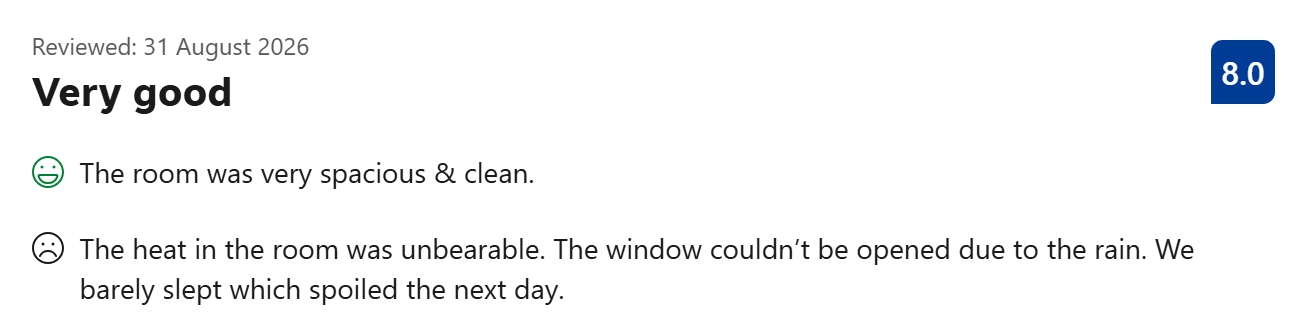
If the issue is temperature, fix it: AC or windows that open all the way (and don't let the rain in)
Decide the Irreversible Things First
Some decisions are effectively permanent once the work is signed off. These deserve the most attention and the earliest sign-off:
- Acoustics. Sound isolation is the single most common upgrade hotels wish they had paid for. Solid doors with proper seals and no gap at the threshold, insulation in party walls, and attention to pipework and lift shafts. Guests rarely praise a quiet room, but noise complaints are devastating to your rating.
- Layout and accessibility. Door swings, bathroom thresholds, turning space, grab-rail fixings and step-free routes through public areas. Accessible rooms designed properly during a refurbishment cost a fraction of what retrofitting costs, and they broaden who can book you.
- Lighting circuits. Not the fittings, which can be changed later, but the wiring behind them: separate circuits for bright overhead light and softer ambient layers, dimming where it makes sense, and bedside switching that controls the room without the guest getting up.
- Power and data. Socket positions are close to impossible to change afterwards, and they are where most older rooms fail. Sockets with integrated USB-C, on both sides of the bed and at the desk, are now a low-risk choice: EU rules require USB-C on most new portable devices, so the standard should stay useful for years.
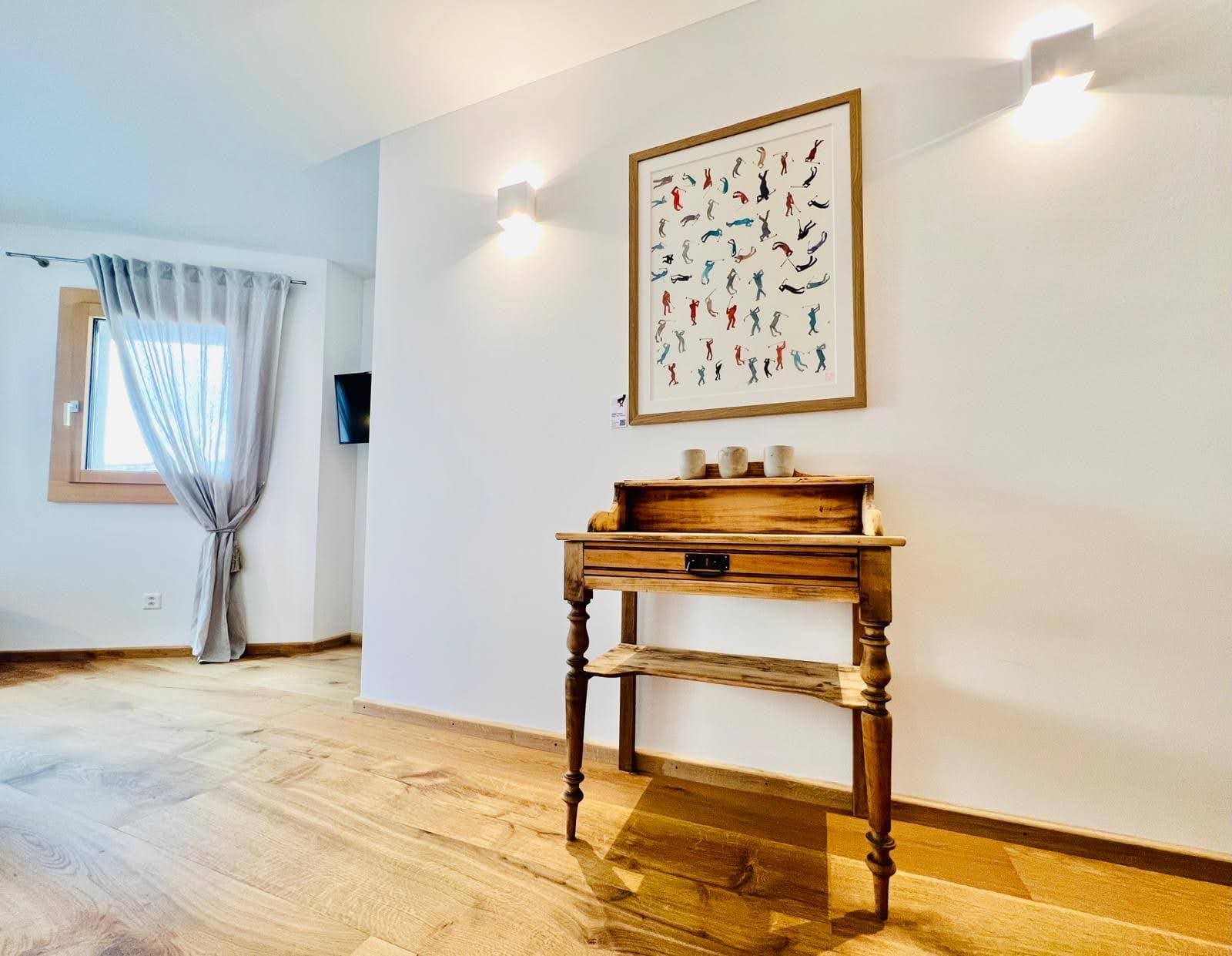
- Wall space and fixings. Where art will hang, what it will hang on, and where the light falls on it. A picture light or a well-aimed spot costs very little at first-fix stage and is a genuine nuisance to add later.
Almost everything else can wait. Soft furnishings, mirrors, screens, accessories and artwork can all be introduced after the building work is finished, which makes them useful places to phase spending if the budget tightens mid-project.
Guest Rooms: What Actually Improves the Stay
- Sleep, treated as infrastructure. A good mattress and proper blackout curtains that overlap in the middle do more for a review score than anything decorative in the room.
- Light you can actually use. Bright overhead light for packing and cleaning, a reading light on each side of the bed, and a warm ambient layer for the evening. LED strip lighting behind a headboard or under a vanity is inexpensive and makes a room look considered at very little cost.
- Charging where people sit and sleep. Guests notice sockets with USB-C built into the faceplate, because it means no adapter and no crawling behind furniture. Keep a couple of standard sockets accessible too, and don't bury any of them behind the bed.
- Storage that suits short stays. A luggage rack at a usable height, open hanging space, and somewhere to put a wash bag. Most guests never open a chest of drawers for a two-night stay.
- Bathroom usability. Shelf space beside the basin, a hook within reach of the shower, lighting at the mirror rather than above it, decent extraction and water pressure that works when the hotel is full.
- A decent screen. Flatscreen prices have fallen far enough that a good television is now one of the cheapest upgrades in the building, and one with straightforward casting lets guests use their own accounts rather than paying for an in-room entertainment package.
Choose Finishes That Age Well
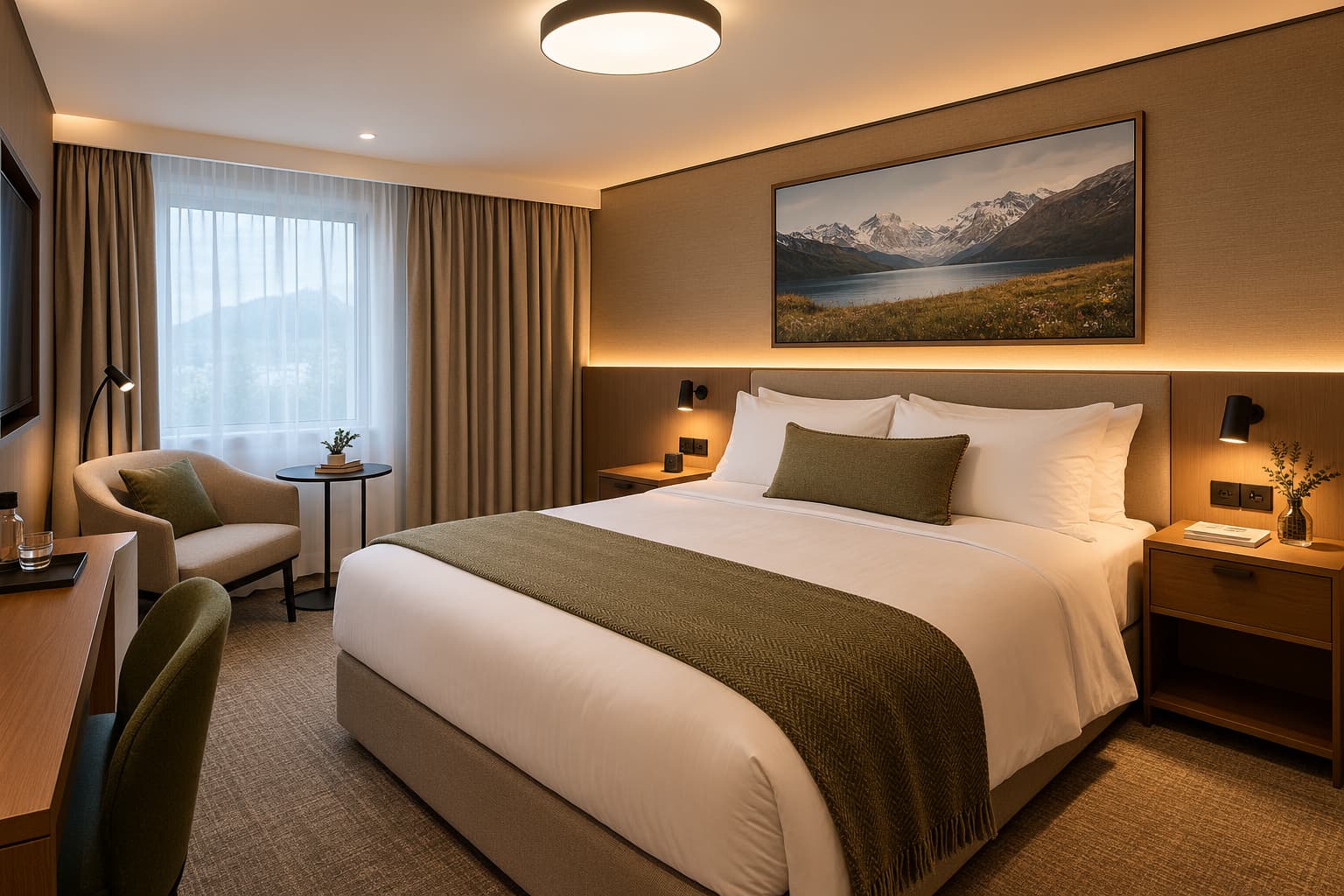
Replace furniture that's heavily scratched rather than touching it up. Guests read visible wear as a proxy for how the rest of the hotel is maintained, including the parts they can't see, and a repaired scratch usually reads as a repaired scratch.
The wider decision is how long you want this refurbishment to last. Finishes chosen from the current moment date on a predictable schedule; materials with some texture, solid edges and honest colour tend to wear into looking used rather than looking tired. Where possible, build in elements that can be replaced individually — seat pads, headboard panels, lampshades, artwork — so the room can be refreshed in five years without another full closure.
The Lobby and Shared Spaces
The lobby does two jobs: it sets expectations in the first ten seconds, and it decides whether guests spend their evening downstairs or in their room. Both are worth designing for.
- The arrival sightline. What a guest sees from the door, and whether it is obvious where to go. Clear signage and a visible point of contact remove the small anxiety that colours the first few minutes of a stay.
- Zoned seating. Somewhere to wait with luggage, somewhere to work with power at the seat, and somewhere comfortable to sit with a drink. One undifferentiated row of chairs serves none of those.
- Acoustics and lighting, again. A hard-surfaced lobby that echoes empties quickly, and overhead-only lighting makes the space feel like a corridor after dark.
Art, Local Detail and Why Refurbishment Is the Moment
Character is what stops a refurbished hotel reading as generically new. It usually comes from specifics: toiletries from a local maker, coffee from a nearby roaster, ceramics or textiles by regional craftspeople, produce with a name attached. Guests remember properties that feel of somewhere, which we have written about in more detail in what makes hospitality feel local.
Art is the most efficient version of this, and it works differently in the two places you will hang it.
In the lobby, art is public and it is doing the work of first impressions. It can carry scale, act as a focal point across a large space, and tell an arriving guest within seconds that the hotel has a point of view. It is also what gets photographed and shared, which makes it the piece of your refurbishment most likely to be seen by people who haven't stayed yet.
In the room, art is private and it is doing something quieter. One guest lives with one work for a night or a week, looking at it from the bed, first thing in the morning, while getting ready. Scale is smaller, and subject matter matters more: a room needs something a person can rest their eyes on repeatedly, not something that demands attention. Done well, it is the clearest difference between a hotel room and a room somebody actually thought about. We go into placement, sizing and hanging in more depth in Art in a Hotel, and compare the routes to sourcing it in hotel art services and curators.
A refurbishment is our favourite moment to talk to a hotel, because it is the only point at which the whole space is genuinely open. Wall space, lighting and hanging positions are still being decided, so art can be planned as a centrepiece rather than added to whatever wall is left over. PickArt places curated original works by local artists in rooms and shared spaces with no upfront artwork purchase cost. Pieces are selected against the property, its palette and its setting, and arrive ready to hang and insured. A discreet QR label lets guests read about the artist and buy the work if they want to; if a piece sells, we handle the transaction and delivery, arrange a replacement for the wall, and the hotel earns a commission.
Where to Start
Spend the early part of the project on the things that cannot be revisited — acoustics, layout, wiring, socket positions, wall space and lighting — and phase the visible upgrades after them. That order costs no more, and it is the difference between a hotel that looks renovated and one that is genuinely better to stay in.
Planning a hotel refurbishment? Explore how PickArt can help you introduce curated original local art into your rooms and shared spaces, with no upfront artwork purchase cost.