
A pub's interior is rarely designed in one go. It accumulates: a bar fitted in one century, panelling from another, a carpet that has outlived three landlords, and a wall of photographs, horse brasses and old tankards that regulars would notice the moment one went missing. That accumulated character is the reason people choose a pub over a bar, and it's exactly what a careless refurbishment can strip away.
So the starting point for any pub interior design project isn't a mood board. It's deciding what kind of pub you are. Plenty of British pubs are, and should stay, unapologetically traditional. Plenty of others, gastropubs included, have taken the format somewhere new while still being unmistakably pubs. Both are legitimate, and the right decor ideas depend on which one you're running.
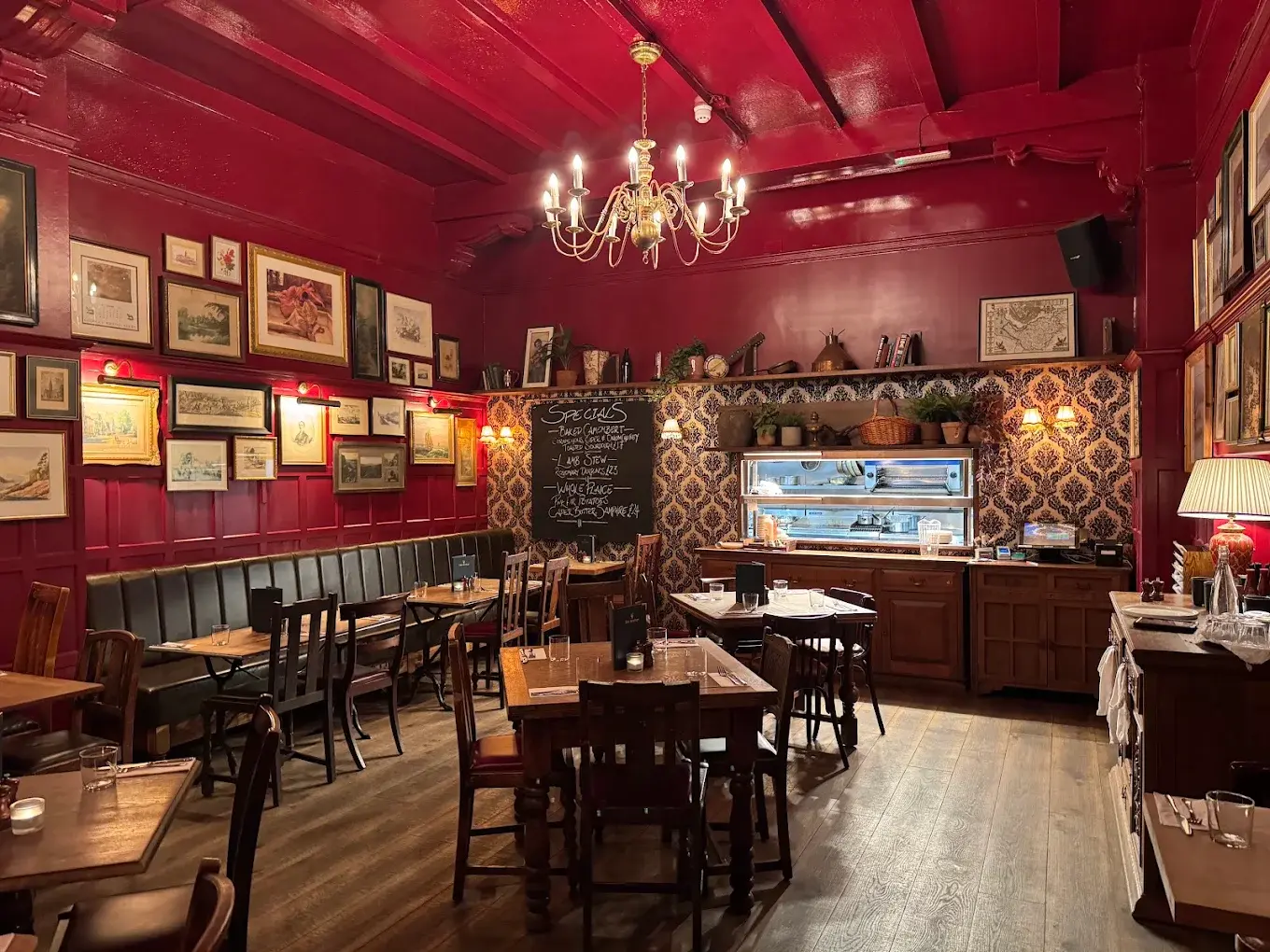
The Antelope in Tooting: design accumulated over decades. Credit: Mark Nicholson via Google Maps
Start With What Gives Your Pub Its Character
Before changing anything, walk the pub as three different people.
- A regular. Which seat do they head for, and why? What would they be upset to lose — the fireplace, the corner by the window, the old bar back, the photographs of the darts team? Those are the things to protect.
- A first-time visitor. What do they see from the door? Is it obvious where to order, where to sit and whether food is served? What feels tired rather than characterful? Those are the things to refresh.
- The building itself. Original tiles, etched glass, cornicing, panelling and fireplaces are irreplaceable, and they're usually what gives a room its proportions and warmth. Work with them before working around them.
That exercise sorts most of the pub into three piles: preserve, refresh and replace. Keep the first pile genuinely short-listed and genuinely protected, and the rest of the project gets much easier.
If your pub is listed or in a conservation area, check before touching the interior. Listed building consent can apply to internal fixtures as well as the outside, so speak to your local planning authority first; Historic England explains how consent works. CAMRA's heritage pub inventories are also worth a look, both to see whether your pub is on them and to see how others have refurbished without losing what made them special.
Layout, Seating, Lighting and Acoustics
These are the changes customers feel rather than see, and they matter more than any paint colour.
- Bar sightlines. Staff should be able to see most of the room from behind the bar, and customers should be able to see the bar from most of the room. Tall partitions and heavy screens look atmospheric but slow down service and leave corners feeling forgotten.
- Snugs and zones. The traditional multi-room pub solved a modern problem a century early: different people want different things at the same time. A snug, a dining end and a standing area by the bar let drinkers, diners and groups share one pub without getting in each other's way. The Princess Louise in Holborn, whose 2007 refurbishment reinstated the screens and compartments around its island bar, is the classic example.
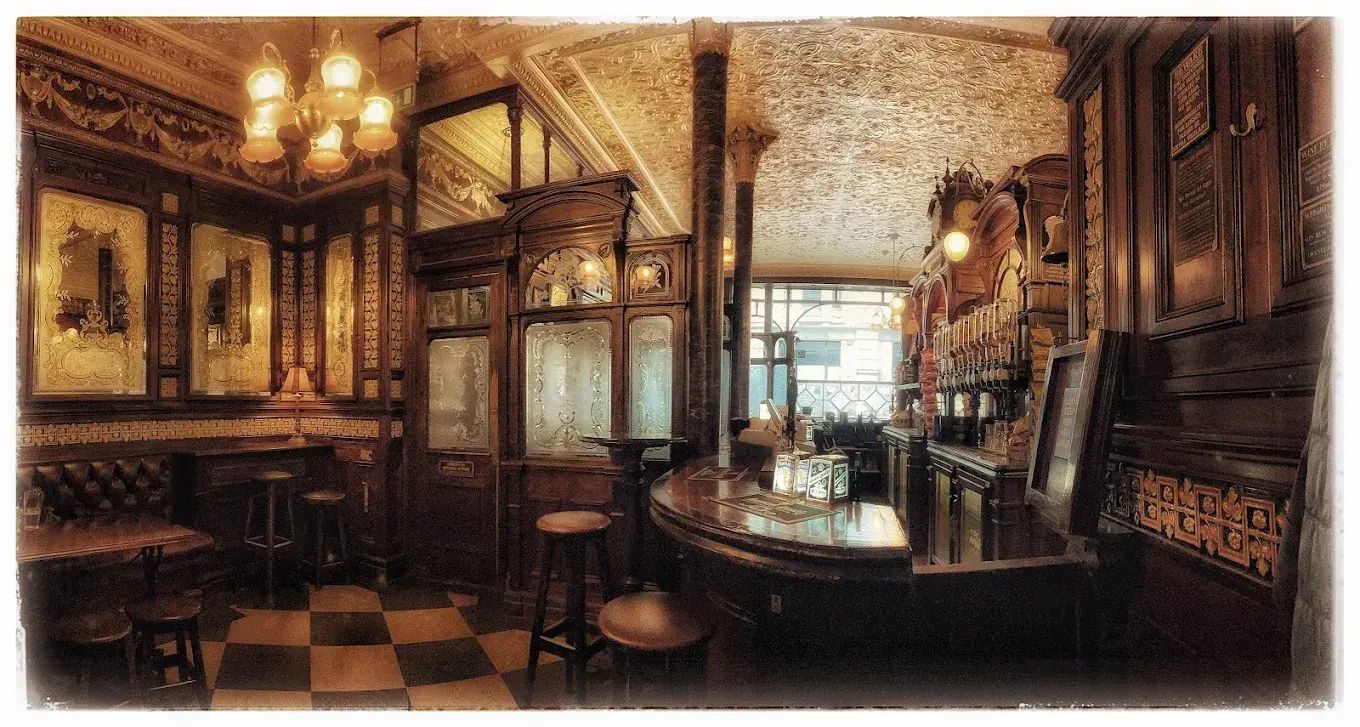
The screens at Princess Louise. Credit: Chris Preddy via Google Maps
- Small pubs. In a small pub, every seat has to work hard. Fixed bench seating along walls frees up floor space, smaller round tables fit more people than square ones, and a few high stools at a ledge give standing drinkers somewhere to rest a glass.
- Seating that lasts. Pub seating takes more punishment than almost any other hospitality furniture. Solid wood frames that can be reglued, and contract-grade upholstery rated for commercial use, cost more up front and far less over a decade.
- Layered lighting. Warm, low and from several sources: wall lights, lamps on tables, light behind the bar and, where there is one, a working fireplace. Put the main lights on dimmers so the room can shift from a bright lunchtime to a softer evening.
- Acoustics. A full pub is meant to be lively, but hard floors, bare walls and a high ceiling can turn lively into exhausting. Upholstered banquettes, curtains, rugs in quieter areas and acoustic panels hidden in the ceiling all help without changing the look.
Decor Ideas: Colour, Materials and Furnishings
Traditional pub interior design rests on a short list of materials — dark wood, brass, glazed tiles, etched glass and leather — and they've lasted because they're durable, easy to clean and age well. A refresh rarely needs to replace them. More often it needs to clean, repair and relight them.
Colour is the cheapest lever. Deep greens, oxblood, navy and warm off-whites all suit a pub, and a dark lower wall with a lighter upper wall hides scuffs where they happen. Keep the palette to two or three colours, so the materials, rather than the paint, are what people notice.
Furnishings should follow use. Leather and wipeable fabrics near the bar, softer upholstery in the dining area and snug, and sturdy, stackable furniture anywhere the room needs clearing for events.
Traditional or Experimental: Deciding What Goes on the Walls
Pub wall decor is where the two kinds of pub part ways.
For a traditional pub, the miscellanea is the point. Old photographs of the street, brewery mirrors, local sporting memorabilia and the odd stuffed pike are a record of the pub's life, and regulars read them like a family album. The job is to keep that collection honest: clear out anything bought by the metre to look old, keep what has a real story, and light it properly.
But the UK is also full of pubs that are more experimental while remaining every bit as much pubs. The Eagle in Farringdon, generally credited as Britain's first gastropub, opened in 1991 and showed that a pub could serve serious food without stopping being a pub. Since then, plenty of pubs have played with their identity — what they serve, who they book, how they look — while keeping the bar, the regulars and the sense of a local at the centre.
For those pubs, original art by local artists can be one of the most effective quirks available. It gives the room a point of view that a supplier's catalogue cannot, it gives customers something to talk about and come back for, and it roots the pub in its area at a time when that's precisely what distinguishes a local from a chain. We've looked at why that combination builds loyalty in Local Artists, Loyal Customers, and at what makes a venue feel genuinely of its place in what makes hospitality feel local.
The Prince of Wales in Brixton is a good example. Brixton's identity is built on nightlife, creative arts and a long history of diverse communities, and the pub leans into all three: it runs late, it books music, and its whitewashed brick walls carry bold original work rather than memorabilia. A large expressive portrait in deep blues and violets, lit by a simple wall light above it, does more to say where you are than any amount of borrowed vintage.
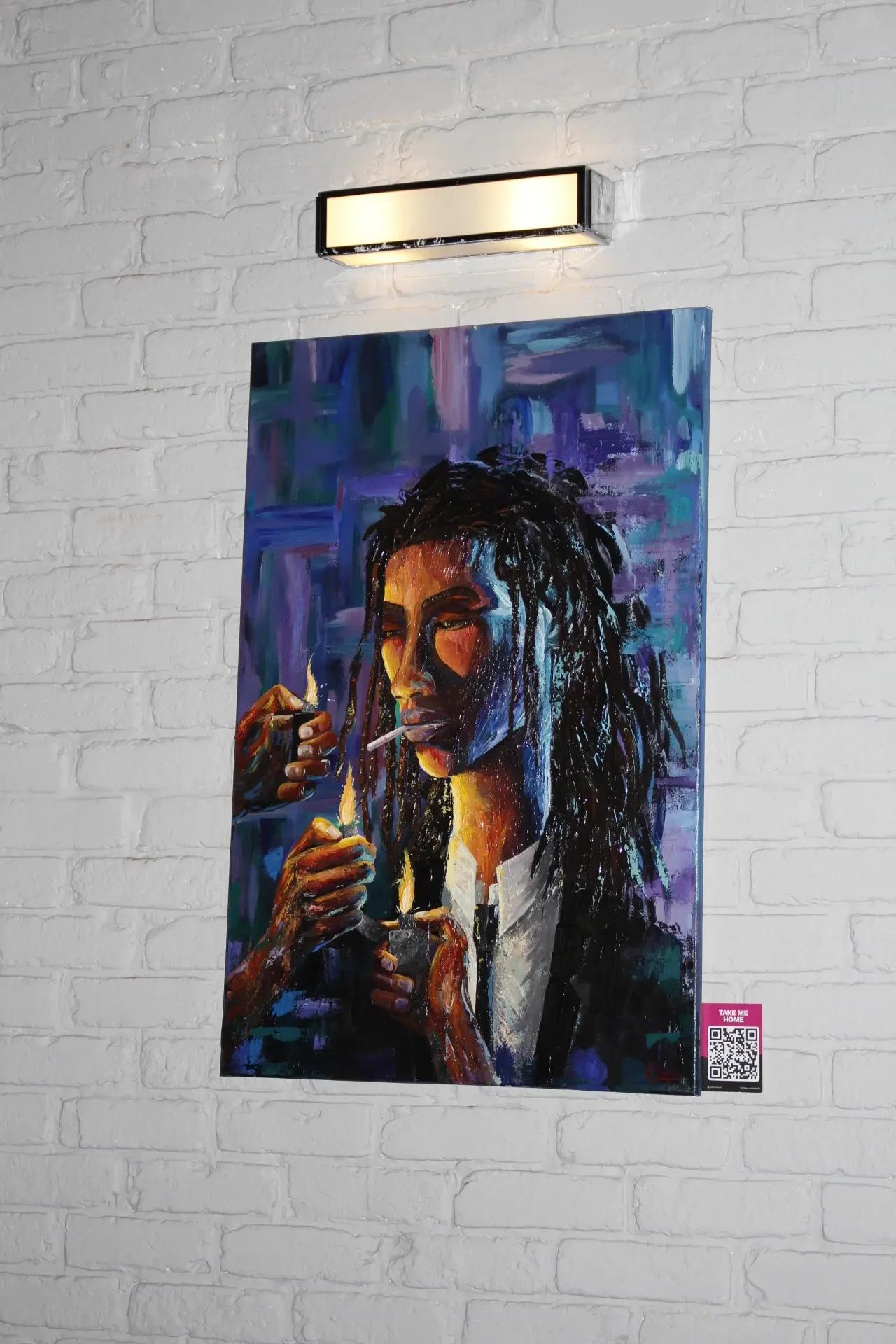
Original artwork on whitewashed brick at the Prince of Wales, Brixton.
If that direction suits your pub, PickArt can help. We work with venues to select original works by local artists that suit the space, its light and its character, without an upfront artwork purchase. Each piece carries a discreet QR label, so a customer who falls for a work can read about the artist and buy it, and we handle the sale and delivery. It's one way to try a more distinctive identity on your walls without committing the refurbishment budget to it. For more on how identity helps a hospitality venue stand out, see how to make your restaurant stand out; most of it applies to pubs as well.
Quick Updates or a Full Refurbishment?
Most pubs can't close for a month, and most don't need to. Sort the work by disruption as well as cost.
- Updates that fit around trading. Deep cleaning and repairing wood and brass, repainting, new lampshades and bulbs, reupholstering a few seats at a time, a new rug in the snug, and changing what's on the walls. Most can be done before opening or on the quietest days.
- Work worth a short closure. Rewiring for better lighting, new flooring, acoustic treatment, reconfiguring seating or the bar, and anything involving the toilets. Group these together so you close once rather than three times, and aim for the quietest weeks of the year.
- Durability and maintenance. Before buying anything, ask how it will look after a year of Friday nights and how long it takes to clean on a Sunday morning. If the honest answer is not great, it's the wrong choice for a pub, however good it looks in the catalogue.
None of these changes will guarantee a busier pub on their own. What they can do is make the pub more comfortable, more distinctive and easier to love, which gives regulars a reason to stay and new customers a reason to come back.
Where to Start
Decide what kind of pub you are, protect the things that make it yours, fix what customers feel before what they see, and then decide what your walls should say. For a traditional pub, that might mean clearing out the fake memorabilia and lighting the real thing properly. For a more experimental one, it might mean original work by the artists who drink at the bar.
Looking to bring original art into your pub? Explore how PickArt works with venues to find artwork suited to their space, without an upfront artwork purchase.