
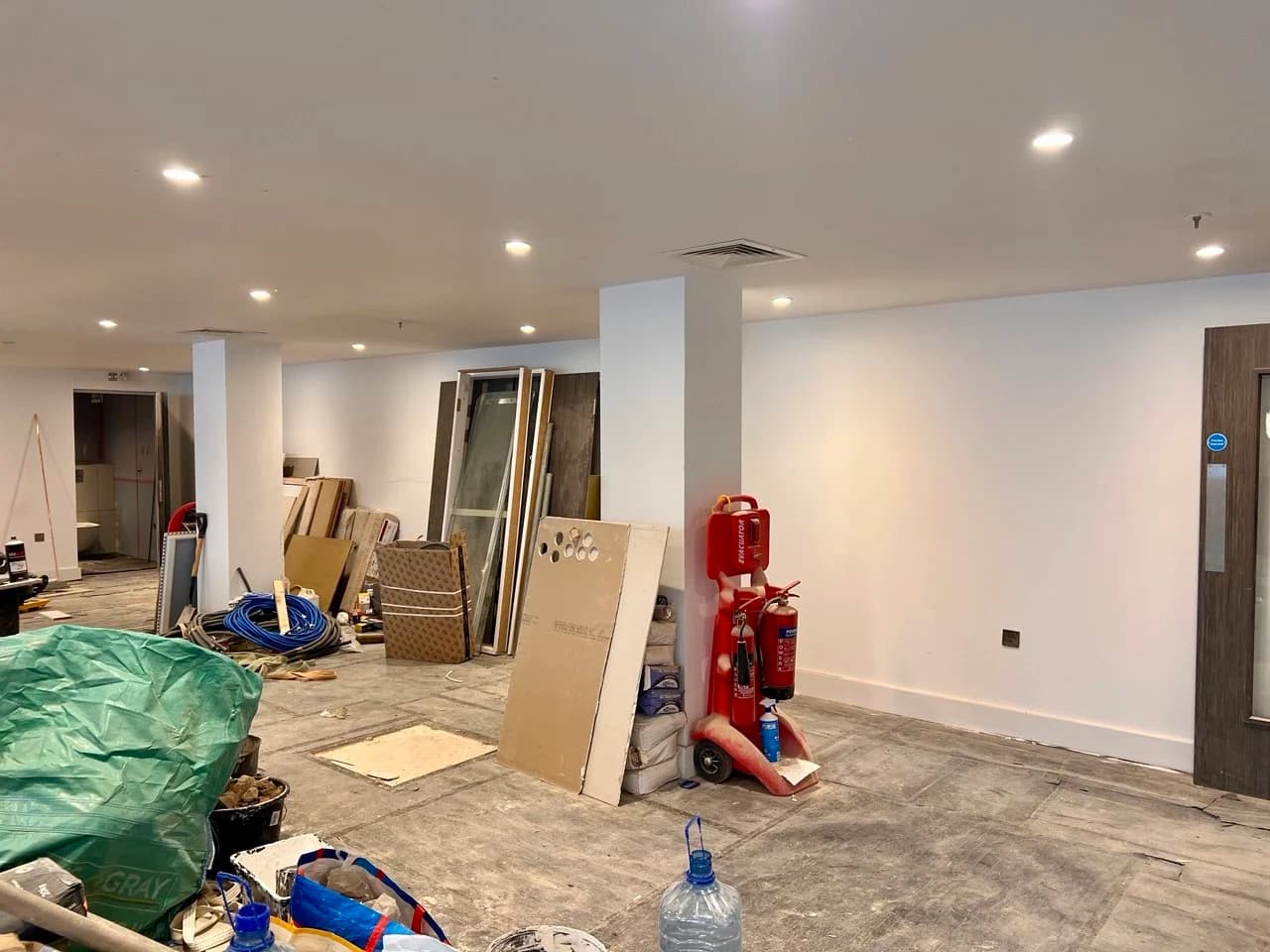
The real cost of a restaurant renovation isn't the fit-out. It's the closed days, and the fact that some decisions can only be made while the walls are open. Once the space is back in service, moving a socket, improving the acoustics or changing where the service station sits stops being a line on a quote and becomes a second closure.
So the question worth answering first isn't which finishes to choose. It's which decisions have to be made before the work is signed off, and which improvements can safely wait until cash flow recovers. The restaurant renovation ideas below are ordered on that basis, for independent operators working to a real budget rather than a brand standard.
How Should You Decide What to Prioritise?
Start with the complaints you already have. Read a year of your own reviews and count what repeats, rather than reading for sentiment. Most independent restaurants find the same handful of issues: it's too loud to talk, the tables are too close together, the toilets are tired, it's cold by the door, the lighting is unflattering.
That list is your priority order, and it's more reliable than any trend piece, because those are the things already costing you a star at a time. Work through it in three passes: the repeated complaints first, the genuinely worn-out second, and the character of the place third. Character matters enormously (we've written separately about what makes a restaurant stand out) but it lands better on top of a room that has stopped irritating people.
Which Decisions Have to Be Made Before the Work Is Finished?
These are the ones that are effectively permanent once the contractor leaves, so they deserve the earliest sign-off and the largest share of the budget.
- Layout and flow. Both routes matter: how customers reach tables, bar and toilets, and how staff reach the pass, the till and the service station without crossing the dining room repeatedly. A layout that makes service shorter pays back every shift for years.
- Accessibility. Step-free entry, door widths, turning space and an accessible toilet are far cheaper designed in than retrofitted. Under the Equality Act 2010 you have a continuing duty to make reasonable adjustments, and building regulations for accessible design generally bite when you carry out a material alteration — so a renovation is the moment this gets decided either way.
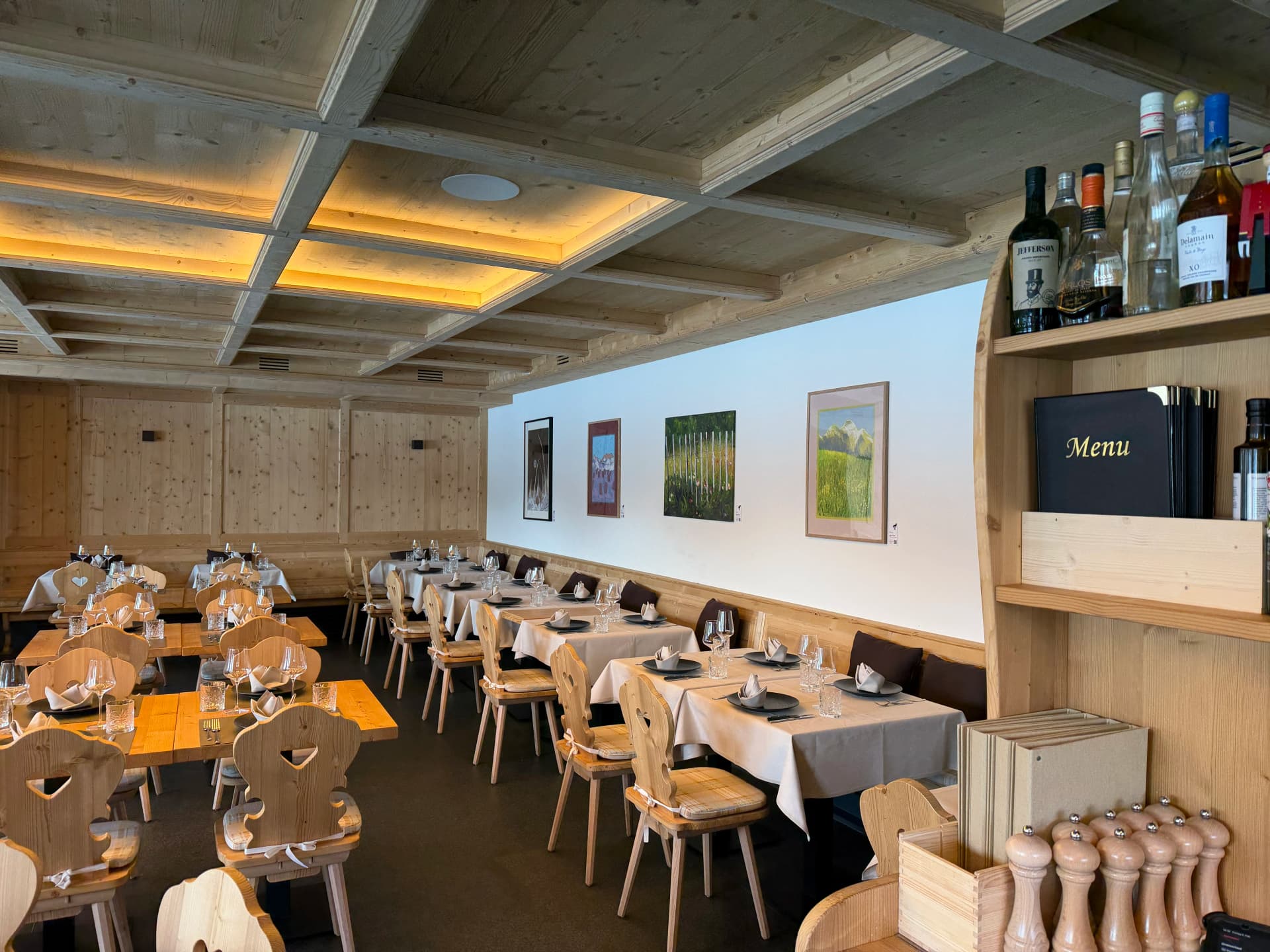
- Acoustics. Noise is the complaint that most reliably stops people booking again, and a hard, minimal dining room amplifies it. Normal conversation sits at roughly 60 dB, and once a room pushes past about 70 dB diners start raising their voices, which raises the room further. Acoustic ceiling treatment, soft wall panels, textiles, banquette upholstery and planting all absorb; they are also much easier to install before the decoration is finished.
- Lighting circuits. Not the fittings, which can be swapped later, but the wiring behind them. Separate circuits for bright cleaning light and low evening light, dimming on the dining zones, and light aimed at tables and walls rather than only down from the ceiling. Specify a high colour rendering index — CRI 90 or above — so food looks like itself, and keep the colour temperature warm, around 2700–3000K.
- Power and data. Card machine docks, till points, the music system, outdoor heating, and sockets at any seating where people will work during the day. Socket positions are close to impossible to change afterwards and are a common regret.
- Ventilation and temperature. Extraction, air conditioning and the cold draught at the door are structural problems, not soft-furnishing problems. A door lobby or air curtain designed in now is worth more than any number of complaints about table one in January.
- Wall space and fixings. Where artwork will go, what it will hang on, and where the light falls on it. A picture light or a correctly aimed spot costs very little at first fix and is a genuine nuisance to add later.
Almost everything else — furniture, soft furnishings, tableware, signage, planting, artwork — can be introduced after the building work is done. That makes those the sensible places to phase spending if the budget tightens mid-project, which it usually does.
Which Renovation Ideas Actually Improve the Meal?
These are the changes diners feel directly, and most of them are specification decisions rather than design ones.
- Seating comfort and durability. A chair that is uncomfortable after forty minutes shortens the meal and the spend. Specify contract-grade upholstery: the usual benchmark for commercial use is 40,000 Martindale rubs or more, with 100,000-plus for the hardest-used seats. It costs more per metre and far less per year.
- Table spacing and mix. Every extra cover adds revenue on paper and takes something away from every table around it, so decide deliberately which side of that line you're on — and check that a server can pass behind a seated guest without asking them to move. A mix of sizes helps too: two-tops that join, a counter for solo diners and one larger shared table fill the room across more of the week than fixed four-tops do.
- Flooring that is safe when wet. Ask for the wet pendulum test value, not the dry one. A PTV of 36 or above is classed as low slip potential under HSE and UK Slip Resistance Group guidance, and entrances, service routes and washrooms are where it matters.
- Toilets. Disproportionately present in reviews, and usually last on the budget. Good light, a working lock, somewhere to put a bag and an extractor that actually extracts cover most of it.
How Do You Refresh a Restaurant Without Replacing Everything?
Most of what customers register is concentrated in a few places, which means a partial refurbishment can read as a full one if you spend in the right order.
- The frontage and the first few metres. Signage, glazing, the entrance and whatever a passer-by can see from the pavement do more for footfall than anything deeper in the room.
- Surfaces people touch. Tabletops, seat pads, menus and door furniture show wear first and are replaceable individually. Reupholstering sound frames is usually cheaper than new chairs and looks like more.
- Light fittings and lamps. Changing fittings, or simply the lamps in them, changes the evening register of the room for a fraction of the cost of structural work.
- Paint, textiles and planting. The cheapest levers available, and the ones that most improve both how the room looks and how it sounds.
The broader decision is how long this refurbishment needs to last. Interiors chosen from the current moment date on a predictable schedule, and a dining room that has to be redone in three years is an expensive kind of fashionable. Materials with some texture, solid edges and honest colour tend to wear into looking used rather than looking tired. Where you can, build in elements that can be replaced one at a time — seat pads, lampshades, artwork — so the room can be refreshed without another closure.
Give the Room a Local Identity
Character is what stops a refurbished restaurant reading as generically new. It tends to come from specifics rather than budget: tableware by a regional maker, materials with a provenance you can name, produce and suppliers credited on the menu, original art by someone who lives nearby. Guests remember places that feel of somewhere, which we looked at in more detail in what makes hospitality feel local.
Art earns its place here because it does two things at once. It changes how a room feels faster and more cheaply than structural work, and it gives diners something to notice, ask about and come back to. That is also why it belongs in the renovation conversation rather than after it: the wall space, the fixings and the lighting that make art work are all being decided while the room is open.
A Worked Example: A Hanging Rail at Lady of the Grapes
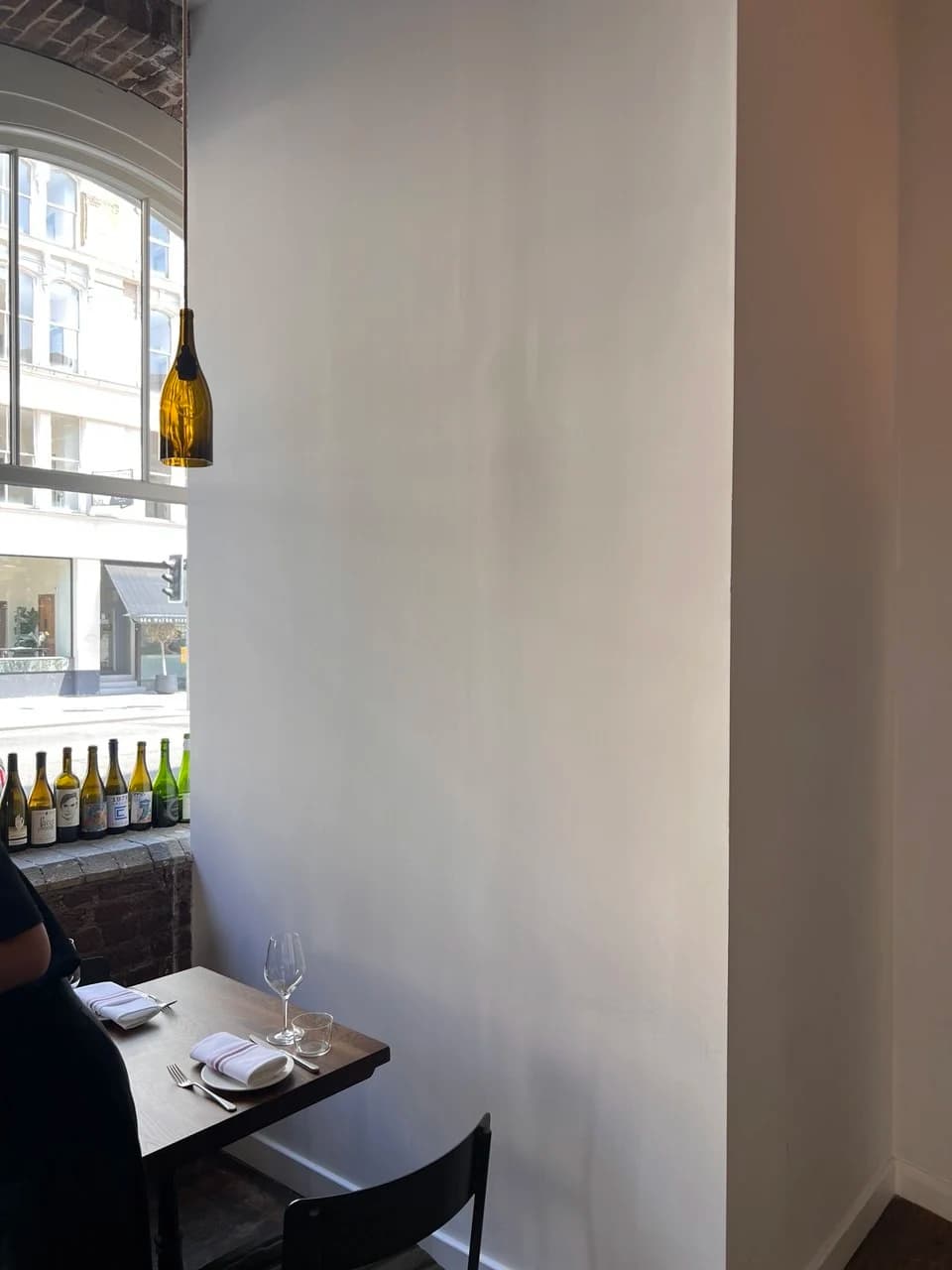
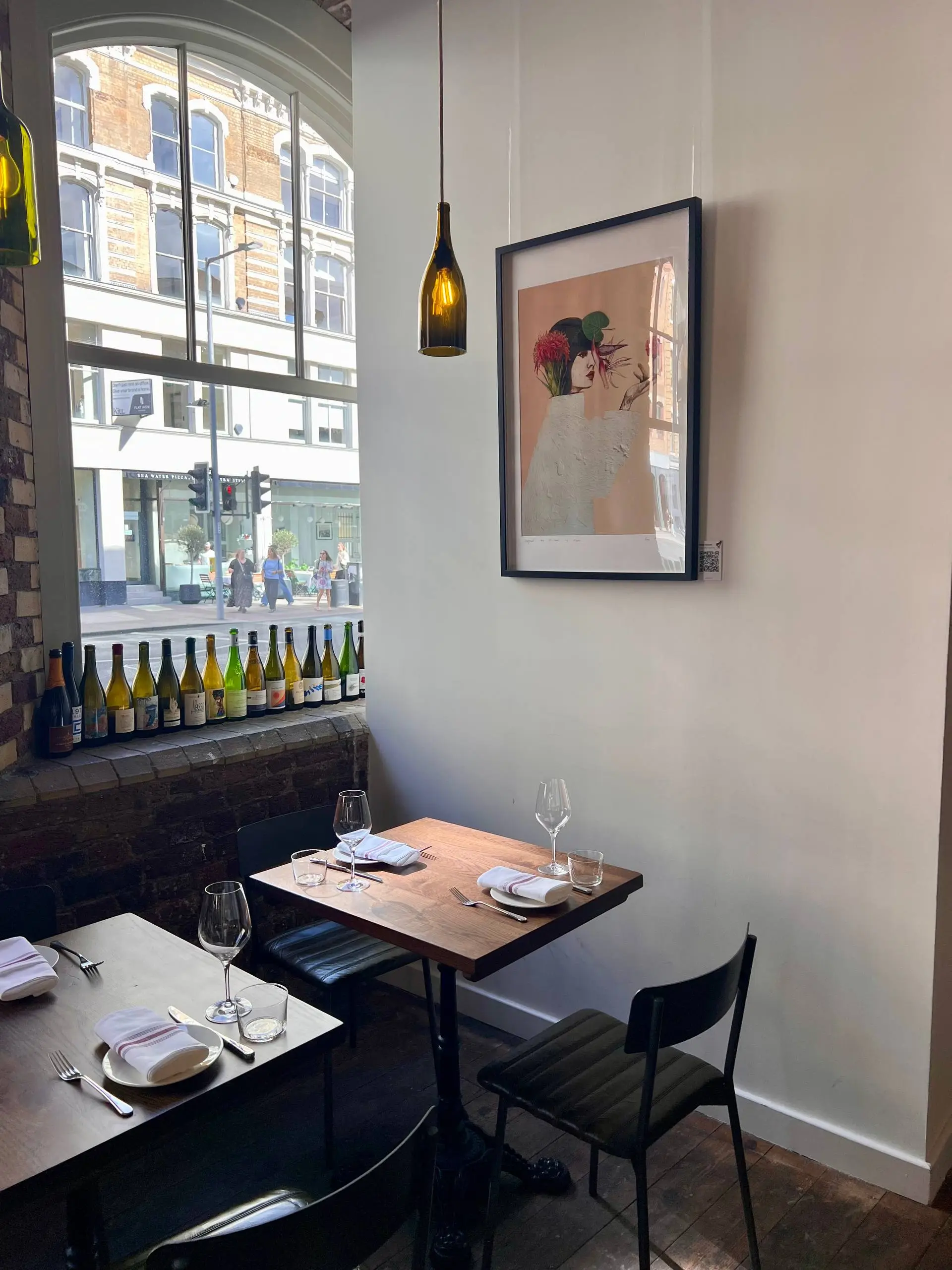
Lady of the Grapes, the French bistro and organic wine bar whose list is built around women winemakers, opened a second, larger site at London Bridge after its original in Covent Garden. The room had recently been refurbished, with a bright ground floor and a large white wall — the kind of surface that is either the best feature in the restaurant or the emptiest.
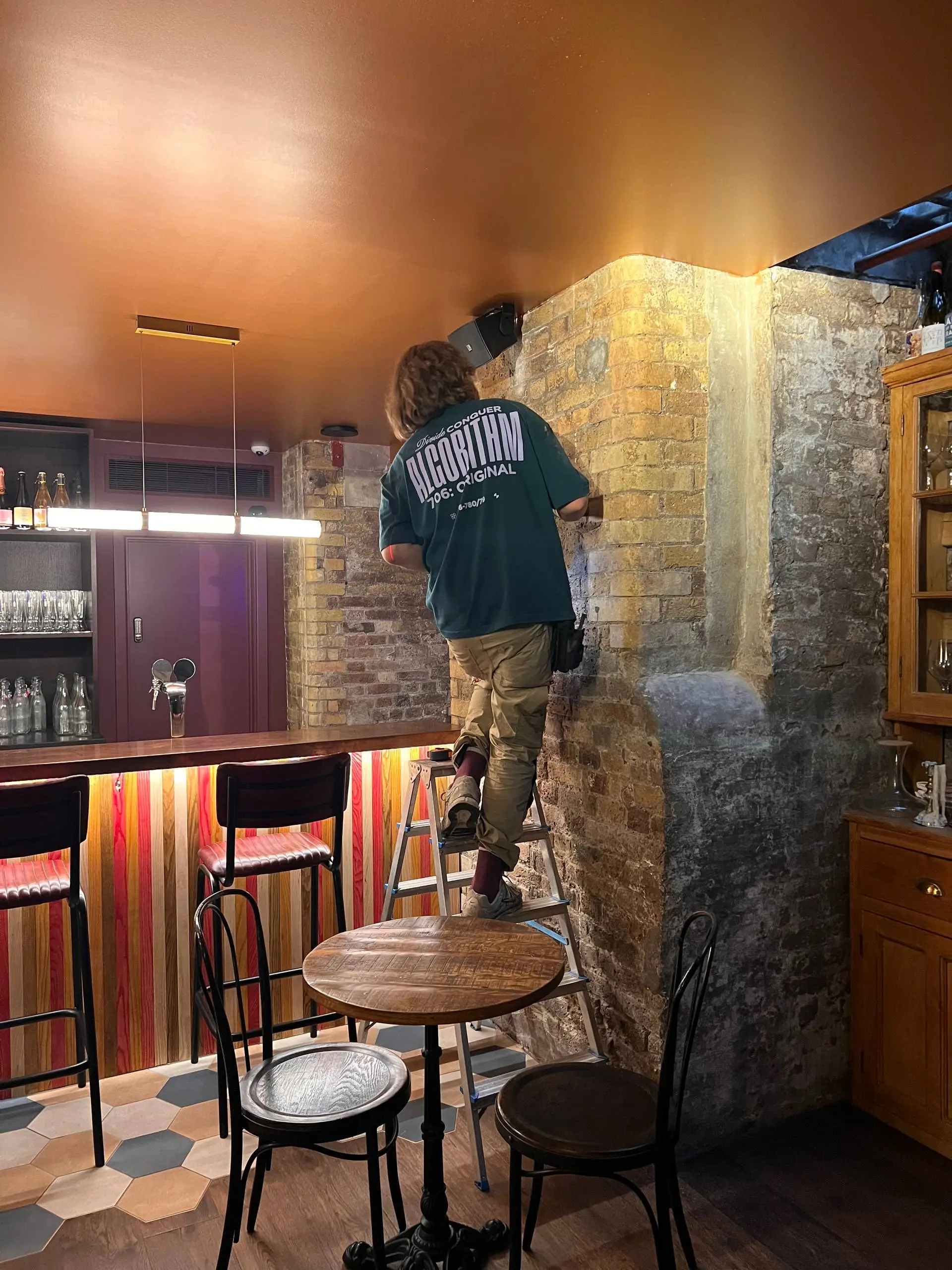
Rather than drill for a fixed arrangement, the venue had a hanging rail installed along that wall. The work was carried out by Liam Sharkey Thomas, a fine art installation specialist. It is a small intervention with a long tail: once a rail is up, what hangs on the wall can be changed, re-spaced or swapped entirely without new holes, filling and paint each time. The rail stays with the building as an asset, and the wall stops being a decision the restaurant has to get permanently right.
PickArt placed a collection of work by three women artists — Emma de Polnay, Ewa Podleś and Olivia Bouzyk — on that wall, chosen to sit with a restaurant whose entire proposition is about giving women in a male-dominated trade more visibility. The art and the wine list are making the same argument, which is what coherence in a dining room actually means.
If you are planning similar work, the practical routes to sourcing art — local artists, degree shows, fairs, online platforms and curation services — are set out in our guide to finding art for your restaurant, and we have written about how to put original work on the walls without it becoming a capital cost.
PickArt places curated original artworks by local artists in restaurants and other hospitality venues with no upfront artwork purchase cost. Works are selected against the room, its palette and its setting, and arrive ready to hang and insured. Each carries a discreet QR label that lets a guest read about the artist and buy the piece from the table. If a work sells, we handle the transaction and the delivery, bring a replacement for the wall, and the restaurant earns a commission.
Where to Start
Spend the early part of the project on what cannot be revisited — layout, accessibility, acoustics, lighting circuits, power, ventilation, wall space — and phase the visible upgrades behind them. That order costs nothing extra, and it is the difference between a restaurant that looks renovated and one that is genuinely better to eat in.
Renovating or refreshing your restaurant? Explore PickArt for venues to see how original local art can add character to your space and give customers something new to discover, or read more of our writing on art in hospitality.