A guest scrolling listings in London is looking at a lot of the same flat. Grey sofa, white walls, a bed with two cushions arranged at an angle, a kitchen that could be anywhere. The furniture is fine, the photos are fine, and nothing in any of it says which city you're in, let alone which part of it.
The instinct is to fix that with London-themed decor: a tube map print, a red phone box, a skyline canvas above the bed. It doesn't work, because those things are souvenirs of London rather than evidence of it. What makes a stay feel like London is more specific and usually cheaper: the building you're actually in, the neighbourhood around it, and a few objects that could only have come from here.
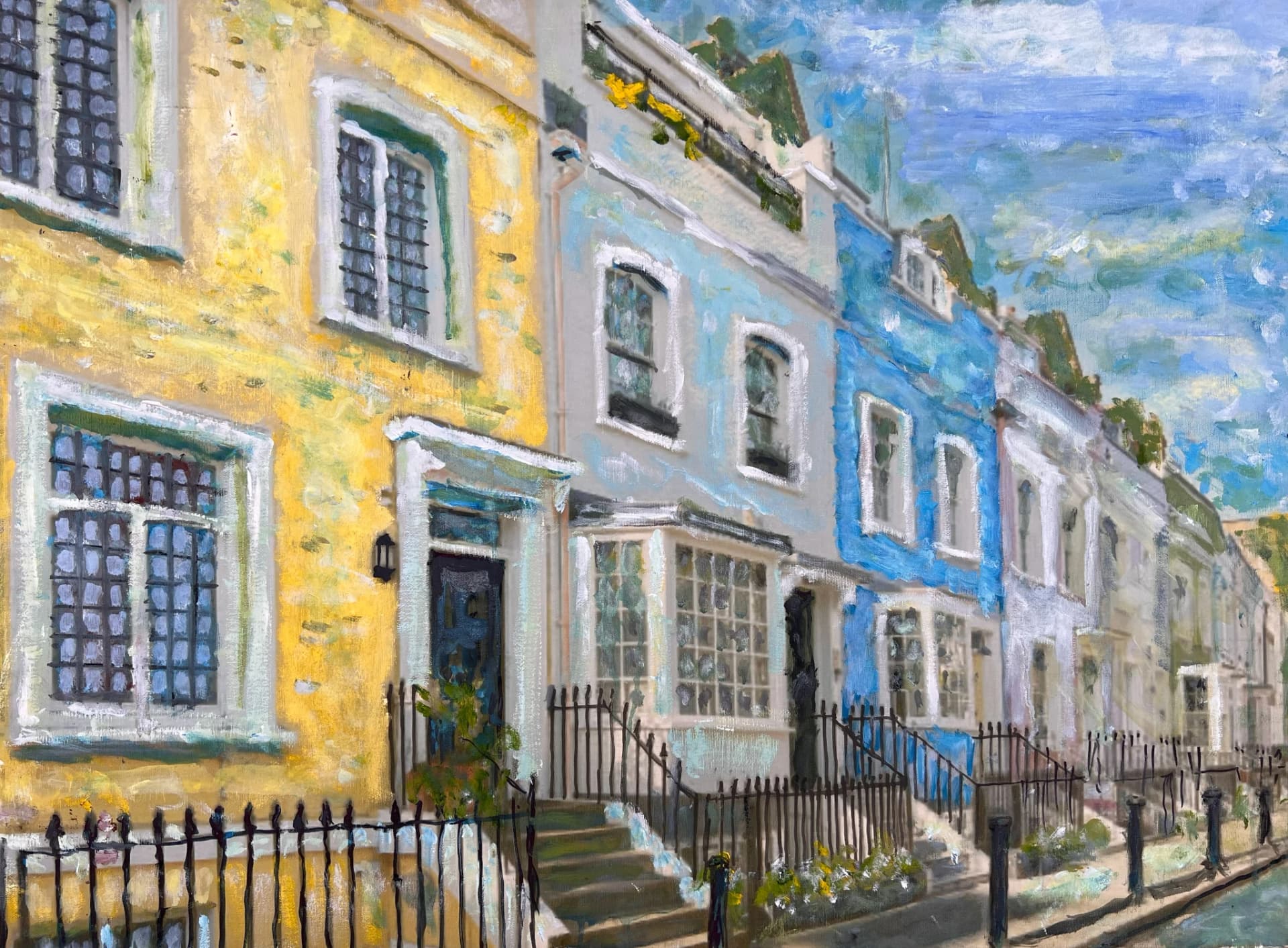
Chelsea Street View by Daniel d'Arlay
What Makes a London Flat Feel Like London?
Start with the building, because in London the building is usually the most distinctive thing you have. Most short-term rentals here sit inside something with a history: a Victorian terrace conversion, an Edwardian mansion block, a 1930s council-built flat with good bones, a warehouse conversion, a Georgian townhouse carved into four.
The common mistake is flattening all of that into a neutral rental finish: cornicing painted out, a fireplace boarded over, floorboards under grey laminate, sash windows behind blinds that cover the frame. Each of those removes the one thing a guest couldn't get in a new-build anywhere else. Let the building lead instead, and spend the budget making it work:
- Keep the period features legible. Pick out cornicing, a picture rail or a fireplace surround in a contrasting tone rather than burying it. A working or even purely decorative fireplace is one of the most photographed things in a London flat.
- Light for a grey city. London daylight is low and flat for a good part of the year, and a single ceiling pendant makes a room look like a waiting area. Three or four warm lamps at different heights do more for a listing's evening photos (and for the stay) than any amount of new furniture.
- Treat the alcoves as an asset. Nearly every period London room has a chimney breast with a recess on each side. Built-in shelving or a cupboard in those recesses solves the storage problem these flats always have, and it looks deliberate rather than retrofitted.
- Work with the window, not against it. Sash windows are a selling point. Full-length curtains hung wide, so the frame shows, read better than a blind cut inside the reveal.
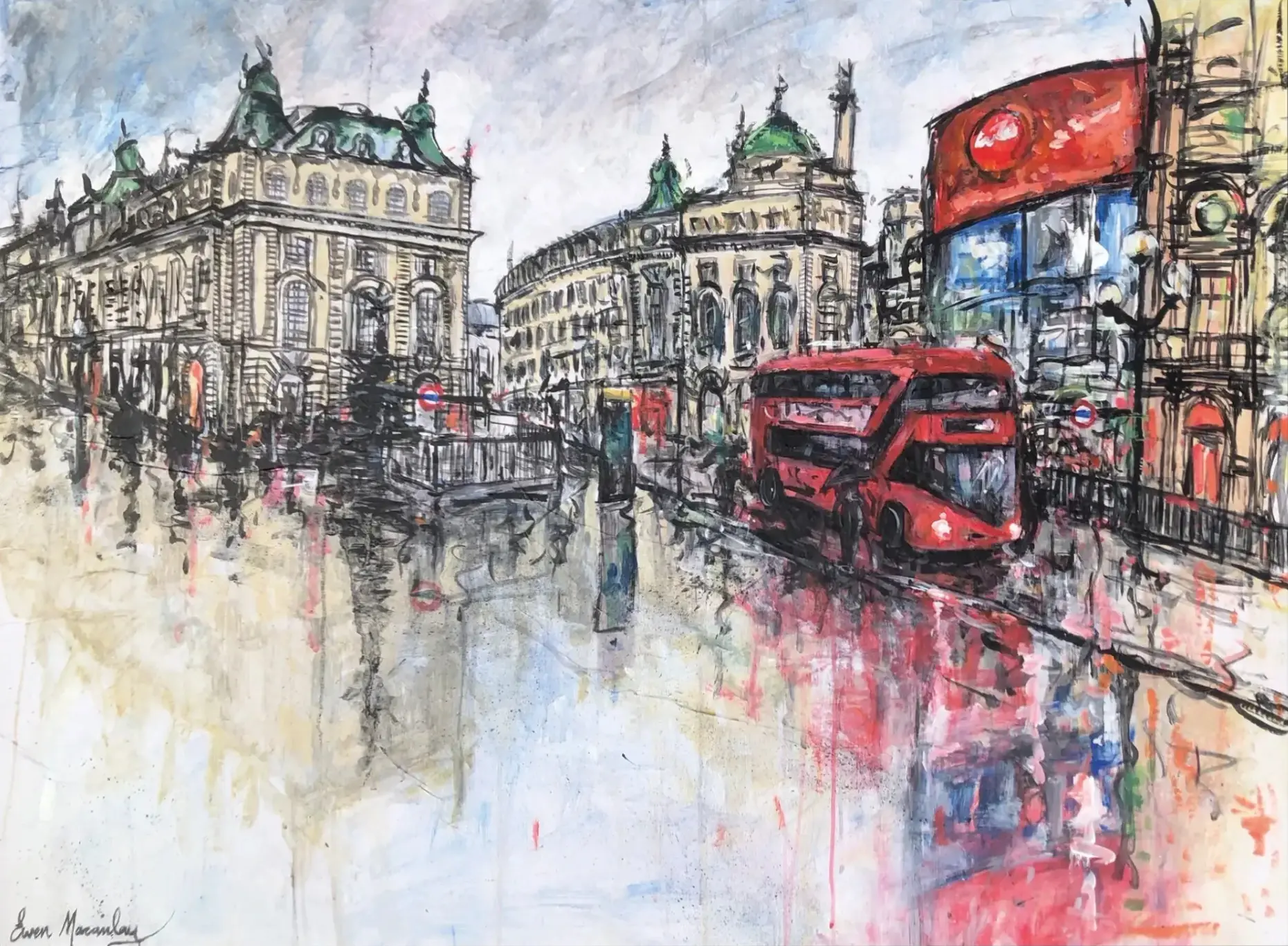
London, Piccadilly Circus in the rain by Ewen Macaulay
Design for the Neighbourhood, Not for "London"
London is a collection of places that have very little visually in common, and a guest has usually chosen one of them deliberately. A flat in a Shoreditch warehouse conversion and a mansion flat in Marylebone are both London; styled identically, both are generic.
The useful exercise is to look out of your own window and ask what the area is actually made of, then let two or three decisions follow from the answer:
- East London warehouse conversions have the scale and the industrial detail — steel, brick, big windows — to carry large-format work and darker, heavier furniture that would overwhelm a smaller flat.
- Period terraces in places like Peckham, Walthamstow or Queen's Park suit colour. These are family houses with small rooms, and a deep painted room with warm lighting feels considered where magnolia feels like a rental.
- West London stucco and garden squares (Notting Hill, Bayswater, parts of Kensington) carry a lighter, more classical palette, and guests there are often drawn by the gardens and the architecture rather than nightlife.
- Riverside and dockland flats in Greenwich, Rotherhithe or Wapping have the view as their main asset. The design job is mostly to get furniture out of its way and put the seating where the window is.
A quick test for any decision: would this flat look exactly the same if it were in Manchester, Leeds or Dublin? If the answer is yes, nothing in the room is doing the local work — and the listing is competing on price alone.
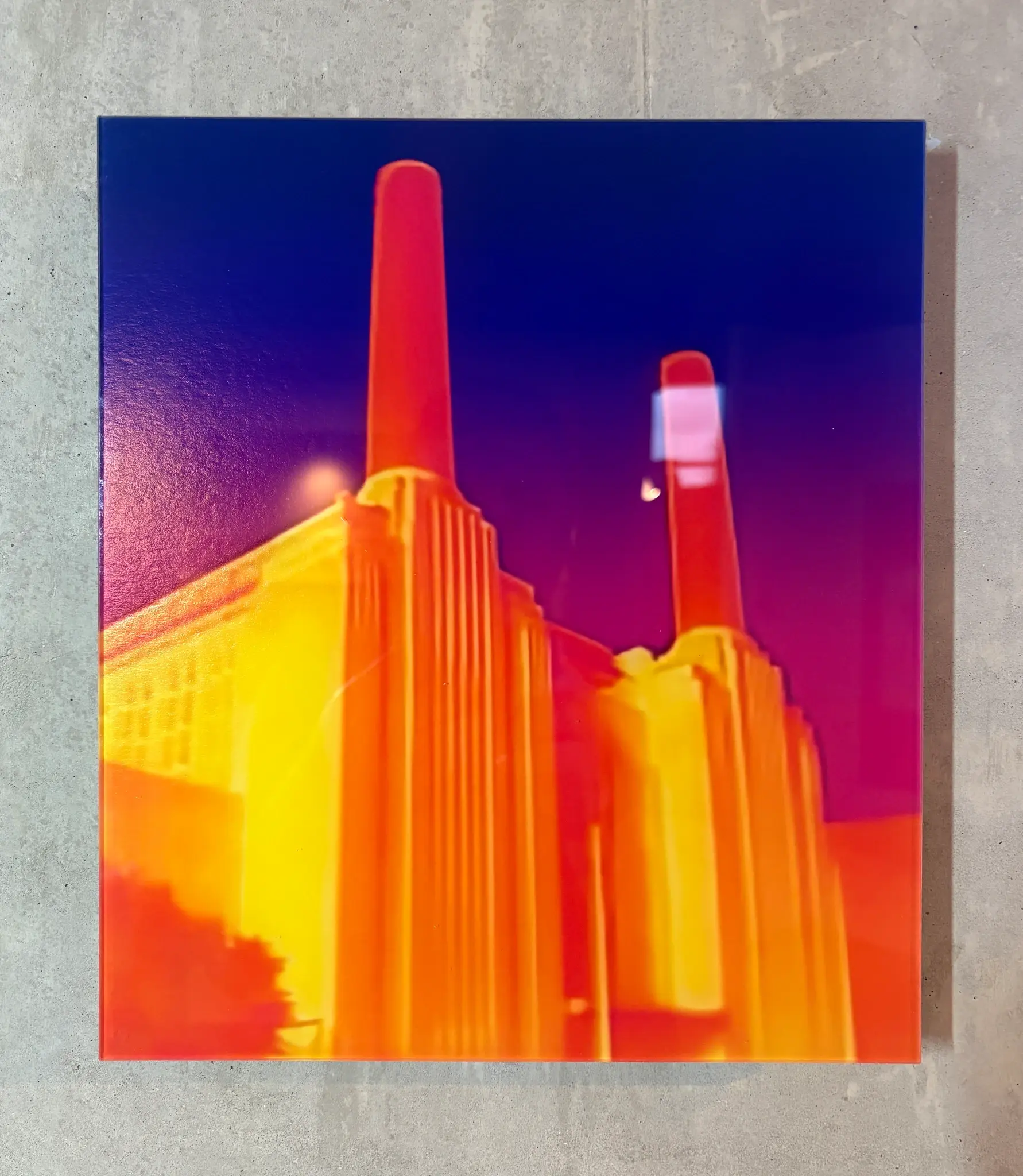
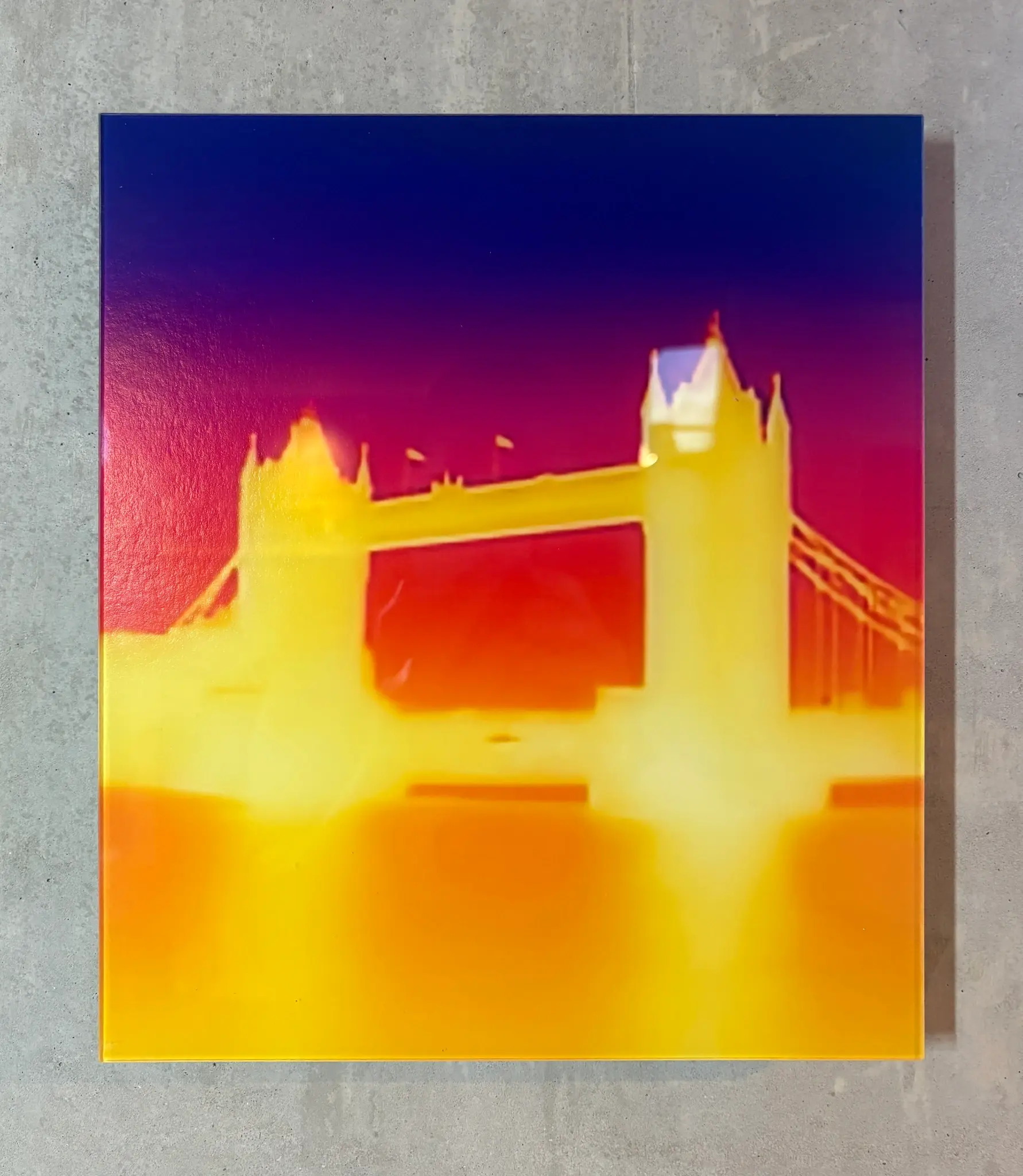
Infrared London: Battersea Power Station and Tower Bridge by Ernesto Romano
Working With London Constraints
London properties come with a fairly consistent set of problems, and solving them well is itself a design decision. General furnishing advice — durability, mattresses, what to buy and what to avoid — is covered in our guide to furnishing a holiday let; these are the London-specific ones.
- Small rooms. London flats run smaller than the national average, so every piece has to earn its footprint. Wall-mounted lighting instead of floor lamps, a drop-leaf or round table instead of a rectangle, and nothing that forces a guest to turn sideways in a doorway with a suitcase.
- Uneven period interiors. Floors slope, walls bow and no two alcoves match. Freestanding furniture tends to sit badly against it; made-to-measure joinery in one or two places usually costs less than replacing a whole room of furniture and fits properly.
- Shared buildings. Communal stairs, no lift, a front door onto a busy street. A well-lit entrance, a clear bag-drop spot by the door and a rug that takes London weather do more for first impressions than anything deeper in the flat.
- Noise and heat. Traffic, night buses and flats with single glazing on a main road. Heavy interlined curtains, a rug, soft furnishings and a quiet fan in summer are a hospitality investment, not a decorative one — and they show up directly in reviews.
Show the Character in Your Listing
None of this helps if the listing photographs like everything else. Shoot in daylight with the lamps on, include the details that make the place specific — the fireplace, the window, the art, the view down the street — and photograph the neighbourhood as well as the flat. Write the description as though you live there: name the bakery, the park, the walk that is actually worth doing. A short, honest house guide of your own recommendations is among the cheapest things a host can produce and among the most reliably mentioned in reviews. We've written more about the wider stay in how to create a premium Airbnb experience.
London Makers, and London on the Walls
Character comes from objects with a provenance you can name: coffee from a roaster in the next street, ceramics from a local maker, something from the market down the road. All of it is cheap relative to furniture and specific in a way a catalogue cannot be.
Original art does the most work of anything in this category, because the walls are the largest surface in the flat and usually the emptiest. It is also where the difference between a souvenir and a genuine local object is most obvious. A mass-produced skyline canvas tells a guest nothing. An original painting of a street two stops away tells them someone made a decision. We've written about this in more depth in art in your Airbnb.
London art is also far broader than the postcard version, which matters when you are matching work to a specific flat. In this article, you can see five pieces from our collection that can show the range of London-inspired artwork:
- Infrared London — Battersea Power Station by Ernesto Romano, a small limited-edition photographic print that turns a familiar landmark into something strange and saturated. A landmark subject that is nothing like a landmark poster.
- London, Piccadilly Circus in the Rain by Ewen Macaulay, a large expressionist canvas — the kind of single statement piece that can carry an entire wall in a warehouse conversion or a high-ceilinged reception room.
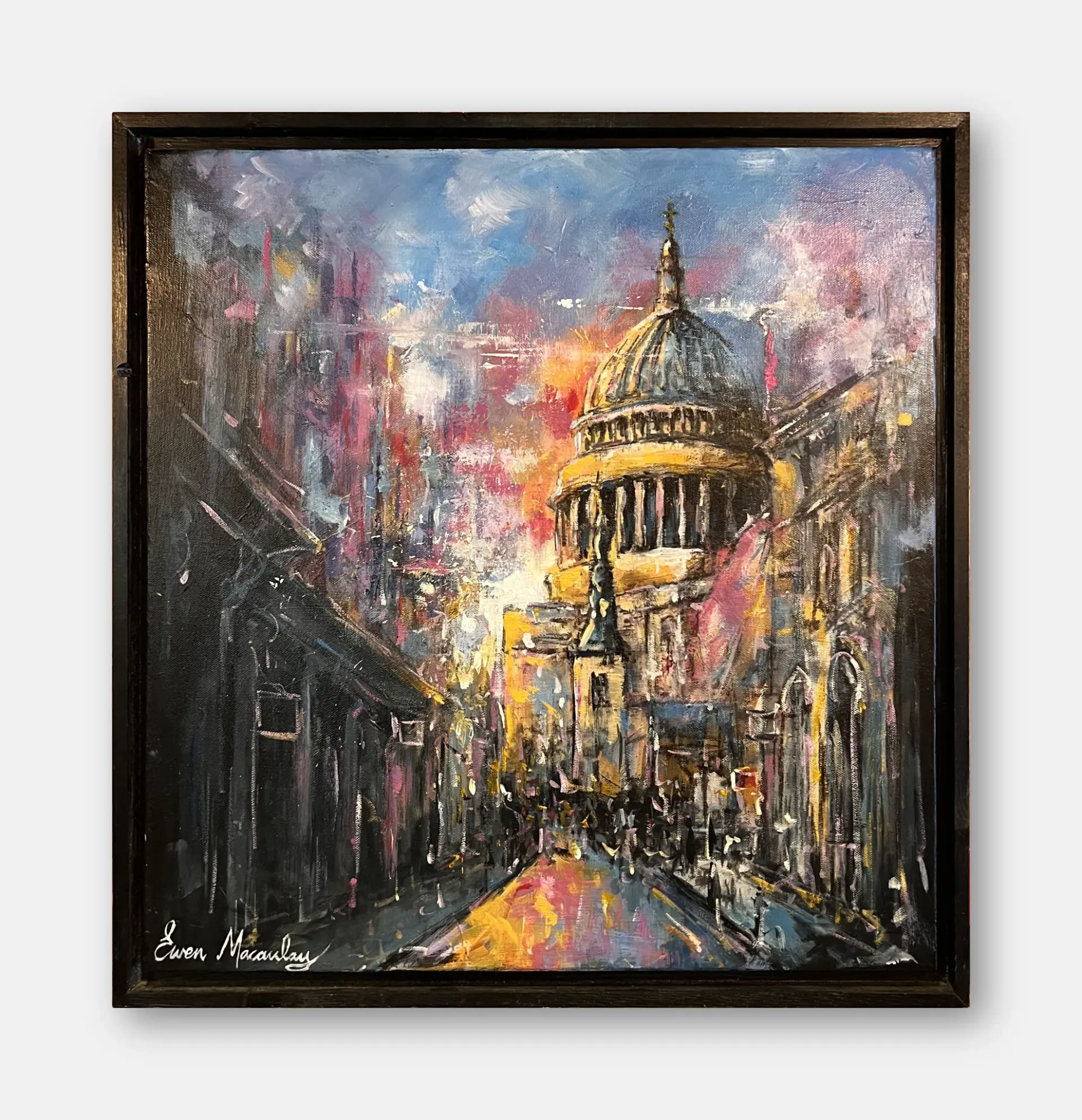
- St Paul's, London by Ewen Macaulay, a square acrylic treating the cathedral loosely rather than reverently. Recognisable instantly, and still a painting rather than a tourist image.
- Chelsea Street View by Daniel d'Arlay, an impressionist oil of an ordinary street. No landmark at all, which is exactly why it reads as somebody's London rather than a visitor's.
- Japanese Garden, Holland Park, Kensington by Daniel d'Arlay, watercolour and ink — a quiet, specific corner of west London that rewards a guest who goes and finds it.
Chosen well, a piece like this does two things at once. It gives the room a focal point that no other listing has, and it gives the guest something to ask about, photograph and remember the flat by.

Japanese garden, Holland Park, Kensington by Daniel d'Arlay
Why We're Talking About London
We have been running short-term rental art placements in Switzerland for some time, working with operators and owners in the Engadin, and the model has held up well in exactly the conditions London hosts will recognise: furnished apartments, high guest turnover, and small teams with no appetite for extra admin.
The artwork visibly enhances the apartments, the ongoing workload for us as an agency is low, and working with PickArt is straightforward and professional.
We are now bringing that model to the UK, and London is where we are starting. The city has the density of short-term rentals, the competition between near-identical listings, and the depth of working artists that makes original local art worth paying attention to.
List your property with us and you gain access to a professionally curated collection of local art, without purchasing the artwork. If you manage property on behalf of owners, it is a way to give your landlords more without charging them more — and if the property is your own, more without spending more. In a competitive accommodation market, first impressions matter: original artwork can give a property a more distinctive identity and help it stand out visually from similarly furnished flats.
Works are selected by our curators from a premium catalogue to suit the property, its light and its neighbourhood, and each carries a discreet label that lets a guest read about the artist and buy the piece if they fall for it. The same approach is set out in more detail for serviced apartments and short-stay portfolios.
Explore how PickArt can help your London short-term rental stand out through curated original artwork from local artists, without upfront costs.