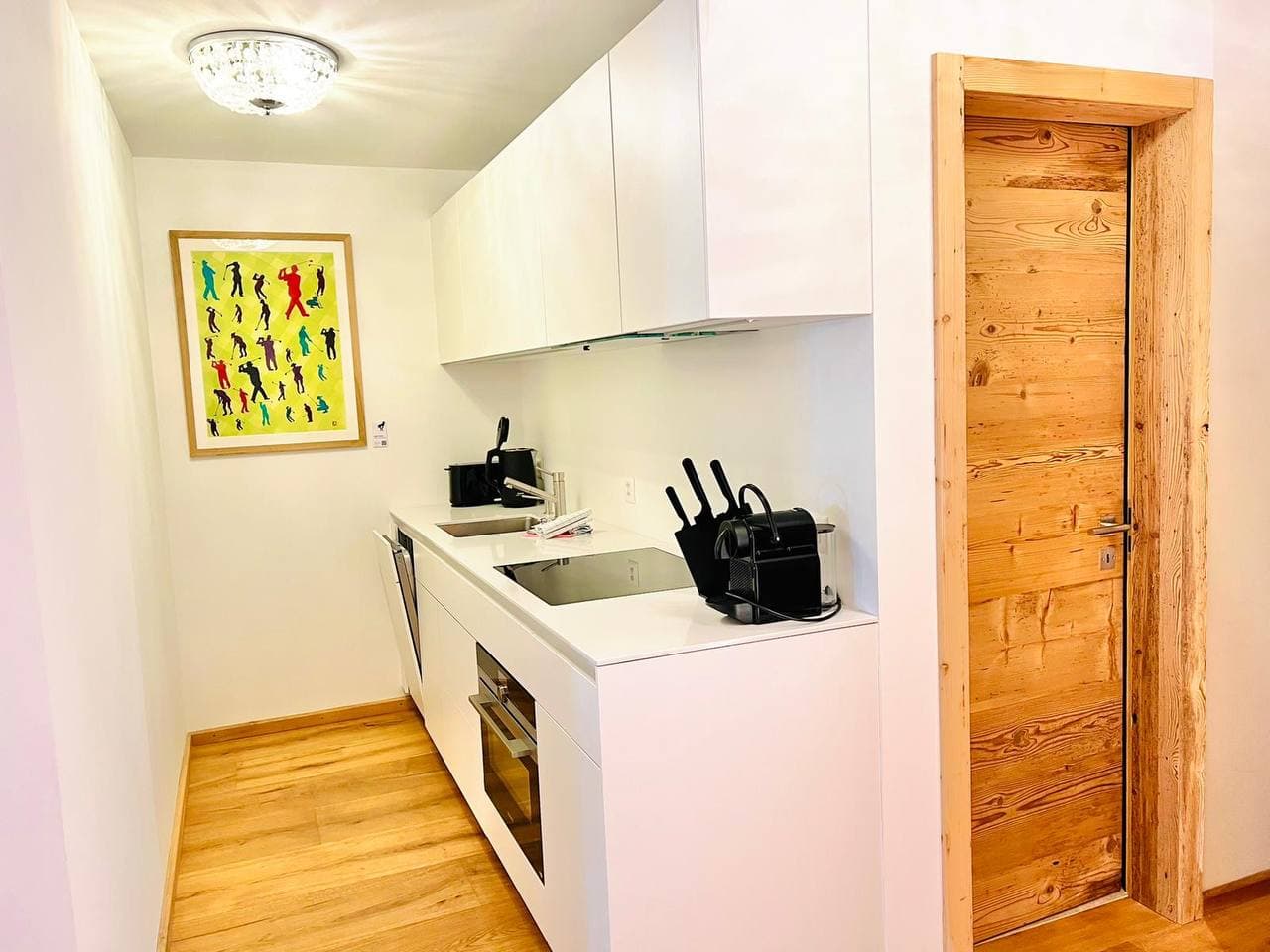
A guest staying two nights in an apartment glances at the walls. A guest staying six weeks lives with them. That distinction is the whole argument for taking art seriously in serviced apartments and for approaching it differently than you would a short-stay rental or a hotel room.
When someone is living in a space for weeks or months — a professional on a project assignment, a family between homes, a couple new to a city — what surrounds them shapes not just their first impression but their daily experience. They notice what is good and what is missing. They notice when a room feels considered. And they notice, with particular acuity, when it doesn't.
This article is for property managers and operators thinking about art at the scale of a portfolio: what to choose, where to source it, and how to make it work across multiple units without defaulting to the generic.
Why Long-Stay Guests Notice Art More Than Short-Stay Guests Do
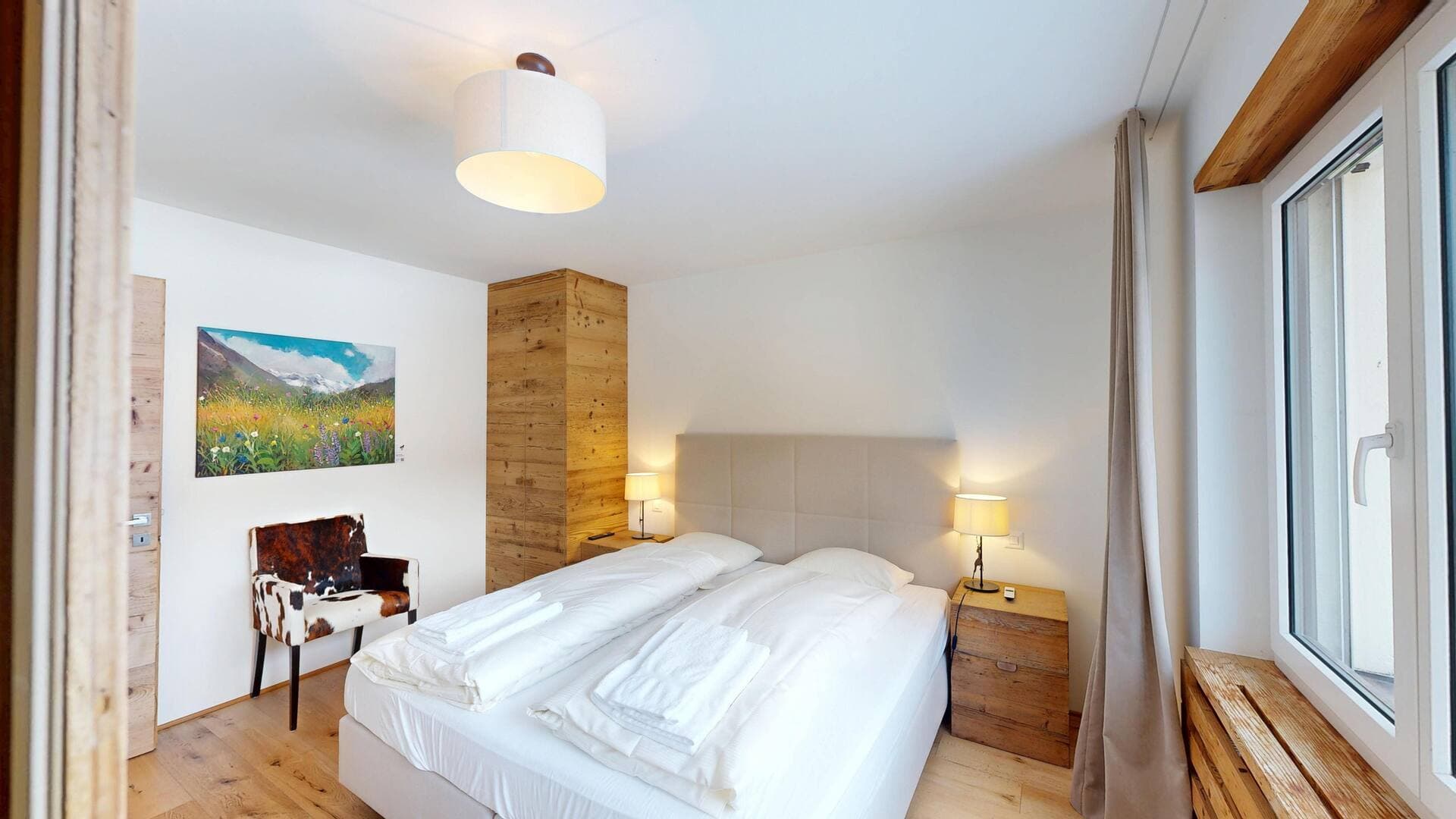
Long-stay guests develop a relationship with a space over time. They notice what is good and what is missing. They notice when a room feels considered and when it feels assembled. And they notice, with particular acuity, when the art on the walls is generic.
This is not just intuition. Gensler, one of the world's leading architecture and design firms, has written about the potential for serviced apartments to be designed specifically for wellbeing and productivity, noting that the quality of the physical environment directly affects how residents feel and perform. The environment a professional works in for weeks at a time is not a neutral backdrop. It is an active part of their experience.
For leisure guests staying longer — a family in a city for a month, a couple relocating and waiting for their own home — the dynamic is similar. The apartment needs to feel liveable, not staged. Art that connects to the place, something local, specific, chosen with care, contributes to that liveability in ways that blank walls or generic prints simply cannot.
Even Airbnb, whose audience skews towards short stays, has recognised this. Their own hosting guidance advises hosts to decorate with local art. If the platform's own resource centre is recommending local art as a route to five-star stays, the case for taking it seriously in longer-stay accommodation is even stronger.
Prints vs. Original Art: What Makes Sense for Serviced Apartments
The honest answer depends on the context and the budget, but the framing of the question matters. The choice is not simply "original or print", but "what will a guest living in this space for an extended period feel about what is on the wall?"
Generic mass-produced prints — the kind available from any large home retailer, instantly recognisable as such — communicate the minimum. They fill wall space without adding meaning. In a short-stay context, this is a missed opportunity. In a long-stay context, it becomes a negative. A professional working from a serviced apartment for a month who looks at the same inoffensive print above their desk every day is being reminded, daily, that they are not in a real home.
Original art operates differently. It is specific and it has a story. It rewards repeated looking in a way that a reproduction cannot. For a long-stay guest, a piece of original work by a local artist is a daily connection to the place they are temporarily inhabiting. That connection is part of what makes the difference between a serviced apartment that feels like a home and one that feels like an extended hotel room.
High-quality limited edition prints — particularly those produced from original work by local artists, in small runs — occupy a meaningful middle ground for operators managing large portfolios. They carry provenance and local character without the logistics of managing original works across many units. We explored this approach in more depth in our article on art for hotels, where the same portfolio-scale challenge applies.
Why 'Feeling Local' Matters Even More for Long-Stay Guests
The sense of place argument is the idea that the best hospitality spaces feel specifically rooted in their location rather than interchangeable with anywhere else. It applies with particular force to long-stay accommodation. We explored this in detail in our piece on feeling local in hospitality, and the conclusion holds: guests who feel genuinely connected to a place have a richer experience and leave more positive.
For a professional on a month-long assignment in a city they do not know well, local art is one of the most accessible windows into that city's creative life. A painting by an artist who lives three streets away, in a style that reflects something about the neighbourhood, tells a guest that they are somewhere — not just in another serviced apartment in another city. That specificity is increasingly what both leisure and business long-stay guests are seeking.
It is also, practically, one of the things that distinguishes a well-regarded independent operator from a chain. Chains compete on consistency and reliability. Independent and boutique operators compete on character. Local art is one of the clearest and most cost-effective ways to establish that character at scale.
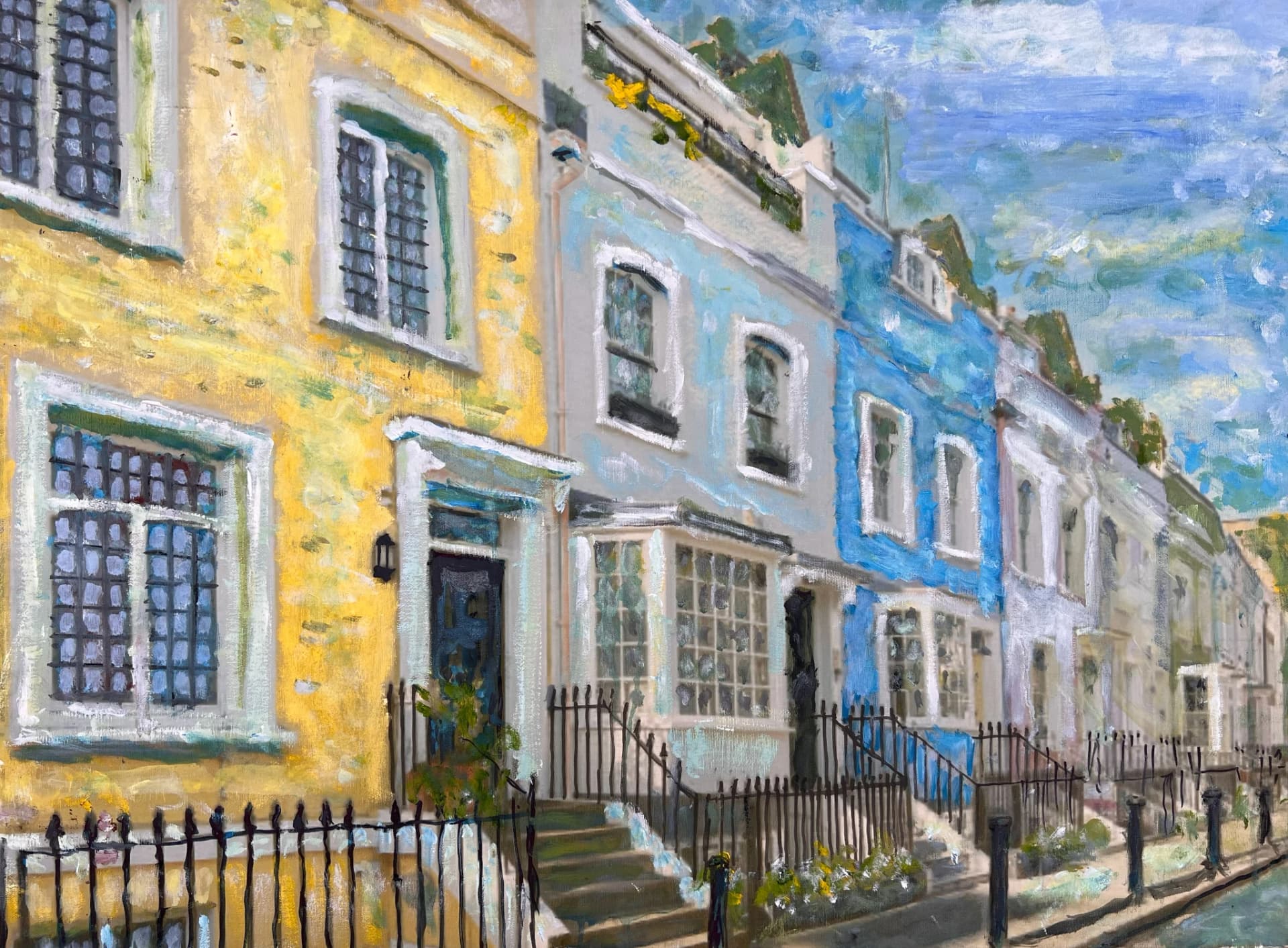
A great example of an artwork to place in your rental in Chelsea.
The Challenges of Sourcing Art Across Multiple Properties
For an operator managing a single serviced apartment, art sourcing is manageable, if time-consuming. For an operator managing twenty or fifty units across different buildings, different neighbourhoods, perhaps different cities, it becomes a genuinely complex operational challenge.
The issues are familiar to anyone who has tried to solve them:
- Volume vs. originality. Original art at scale is expensive. Mass-produced prints at scale are cheap but generic. The middle ground — distinctive work that can be deployed across many units without looking identical — requires a curatorial solution, not just a procurement one.
- Consistency vs. specificity. A portfolio benefits from a coherent visual identity. But the best argument for local art is its specificity to place. These two goals can pull in opposite directions when managing properties across multiple locations.
- Turnover and damage. Art in rental properties gets bumped, exposed to humidity, and occasionally damaged. The logistics of insurance, replacement, and ongoing management add up quickly for a large portfolio.
- Curation overhead. Finding the right artists, negotiating terms, managing installation and rotation — these are tasks that require time and expertise most property management teams do not have in-house.
These are the problems a specialist art partner is designed to solve.
Working With an Art Partner: What Property Managers Should Expect
The right art partner for a serviced apartment operator does more than supply artwork. They bring curatorial judgement, local knowledge, logistical capability, and a model that removes the financial risk of buying art outright.
At PickArt, we have been placing original, locally sourced art in apartments and hospitality spaces in Switzerland and are working with hotels and serviced accommodation providers across the UK. Our partners include Mountain Flair and Supercity Aparthotels. One consistent pattern we have observed: properties displaying original local art have been able to command a premium on their nightly or weekly rates without a corresponding drop in occupancy. The art justifies the price because guests can feel the difference.
Our model for serviced apartment operators works as follows: we curate a selection of original works from our network of local artists, matched to each property's character, scale, and guest profile. Works are delivered ready-to-hang and fully insured. Each piece is accompanied by a discreet QR label — not a price tag, but an invitation for guests to learn about the work and the artist, and to purchase if they choose to. We handle the transaction and arrange replacement when a piece sells.
Operators pay nothing upfront and earn a commission on every sale. The display stays fresh because sold works are replaced. And the curatorial overhead sits with us rather than with the property management team.
For operators who prefer prints for portfolio consistency or practical durability — particularly in high-turnover studio units — we can also facilitate connections with artists open to licensed reproduction, helping structure those arrangements appropriately. The goal in either case is the same: a space that feels genuinely considered, by a guest who is going to be living in it long enough to notice.
What Style of Art Works Best in Serviced Apartments
There is no universal answer, but there are useful principles.
For long-stay guests, art that rewards extended looking tends to work better than art that makes an immediate visual statement and then recedes. Works with depth — compositional complexity, textural richness, or a subject that reveals more on repeated viewing — hold a resident's attention over weeks in a way that bold, simple graphic work does not.
Calm palettes tend to outperform high-contrast or intense colour schemes in sleeping and working environments. This is not an argument for bland or inoffensive work — it is an argument for choosing art whose energy is contemplative rather than stimulating. The art above a desk where a professional will work for six hours a day should feel like a companion, not a distraction.
Local specificity remains the strongest single principle. A work that connects to the city — its landscape, its architecture, its creative history, its people — gives long-stay guests a daily point of connection with the place they are temporarily living. That connection is what turns a serviced apartment from accommodation into an experience worth recommending.
As we noted in our broader article on short-term rental interior design, the art on the walls is one of the first things guests photograph and one of the last things they forget. In a long-stay context, where the relationship between guest and space is measured in weeks rather than nights, getting it right is not a finishing touch. It is a core part of what you are offering.