
Most cafés have the same shape of week: a busy morning, a lunchtime rush, a long quiet afternoon and evenings when the room sits empty or the shutters are down. Events are one of the few ways to put that unused time to work, and the good ones do more than fill seats. They bring in people who wouldn't otherwise have found you, and they give regulars a reason to feel the place is partly theirs.
The bad ones cost staff time, disrupt normal trade and attract a crowd that never comes back. The difference is rarely the idea itself; it's whether the event fits the café's space, its customers and what it already does well. We've written about building that identity in how to make your café stand out. Below are the event ideas that tend to work, who each suits, and the practical and legal essentials of running them in the UK.
Café Event Ideas Worth Hosting
- Coffee tastings and cuppings. The most natural fit for a café that takes its coffee seriously. A roaster or your head barista leads a small group through three or four coffees. It suits specialty cafés with a dedicated customer base, needs little more than a table and an hour after close, and sells retail bags of beans on the night.
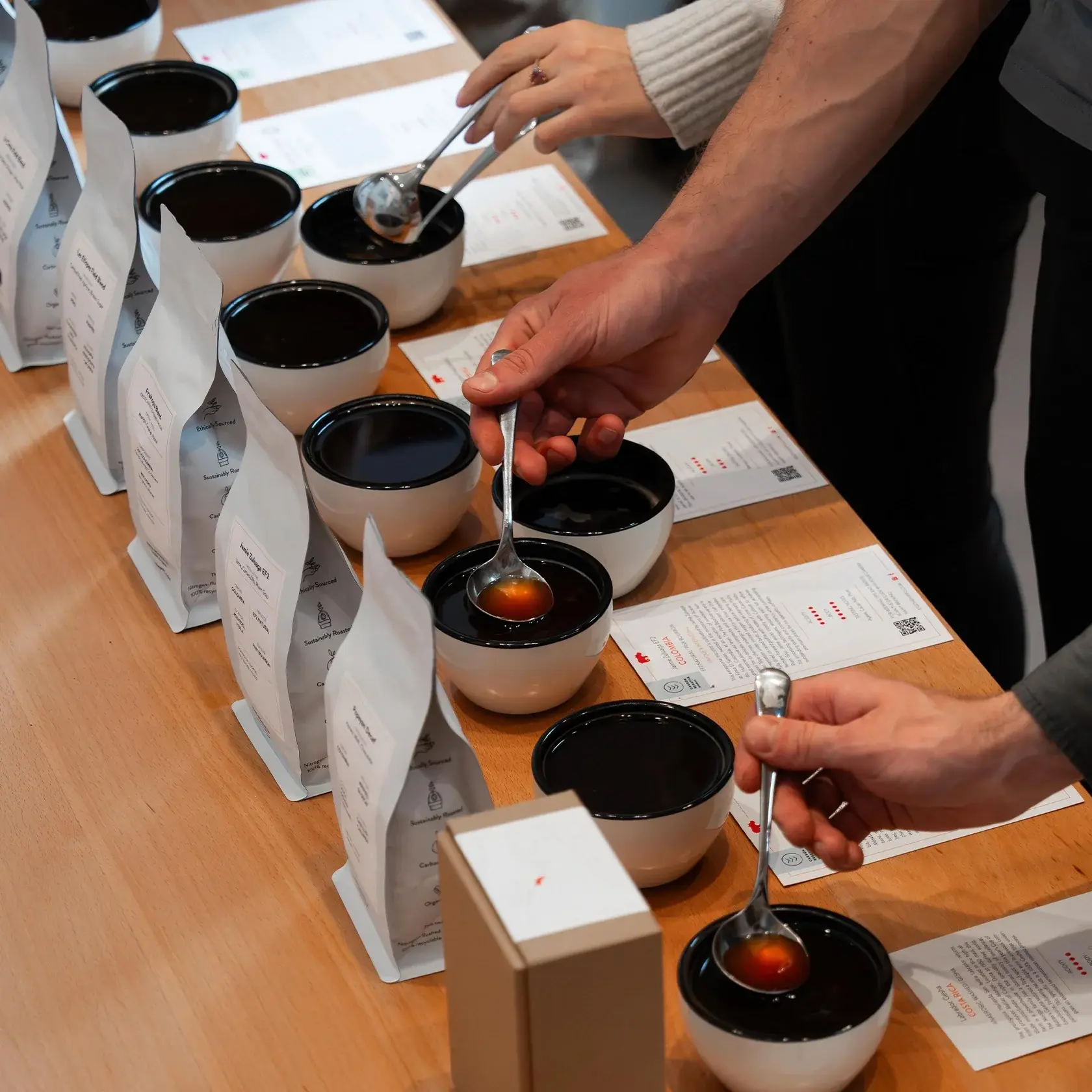
Coffee tasting at Kiss the Hippo
- Book clubs. Low effort, very loyal. A fixed monthly slot, a reserved table and perhaps a discount on drinks is usually enough. It suits cafés with comfortable seating and a quiet early evening, and it turns eight or ten people into genuine regulars.
- Quiz nights. Reliable for bigger cafés open in the evening, less so for small rooms. Needs a host, a microphone and food that works for sharing.
- Live music. Acoustic sets, a jazz trio on a Sunday afternoon, an open mic. It suits rooms with decent acoustics and a crowd that will listen. It also carries the most licensing questions, covered below.
- Workshops and creative sessions. Latte art, cake decorating, life drawing, paint-and-sip, pottery painting, sketching. Ticketed workshops are among the few café events that make money directly, and they fill otherwise dead hours. In London, our friends at Table For Art connect verified artists with independent cafés and restaurants to run recurring workshops in quiet hours, with deliberately simple arrangements between venue and artist.
- Local art exhibitions and artist evenings. A display on the walls costs little to run and works every day; an opening night or artist talk turns it into an event. Covered in more detail further down.
- Fundraisers. A charity coffee morning is almost tailor-made for cafés. Macmillan's World's Biggest Coffee Morning runs every September and comes with ready-made materials; local causes such as a school, a food bank or a hospice usually draw a more personal crowd. Agree in advance, and say publicly, what share of what goes to the cause.
- Grand openings and relaunches. The aim is to introduce the café to its neighbourhood, not to give away the most coffee. Invitations to nearby businesses and residents, a tasting on the first morning, and something to remember the place by, such as a local artist's work on the walls or a supplier on hand to talk about the beans, beat a queue for freebies.
Matching the Event to Your Space, Budget and Staff
Before picking an idea, be honest about four constraints.
- Space. A twenty-cover café suits a book club, a tasting or an artist talk with standing room. Quizzes, live music and large workshops need more room or a back space, and anything that means moving every table is a bigger job than it looks on a quiet Tuesday.
- Audience. Families suit weekend mornings; students, evenings; office workers, almost nothing during the week. Run the event for the customers you already have, or for one specific group you want more of.
- Budget. Book clubs, talks and exhibitions cost almost nothing. Music, guest hosts and workshop materials cost real money and need ticketing or a minimum spend to cover them.
- Staffing. An event during service needs someone who isn't also on the machine. An event after close needs someone willing to stay, and a plan for paying them.
Recurring events almost always outperform one-offs. A book club on the first Tuesday of every month builds a habit; a one-off evening, however good, has to be marketed from scratch each time.
Organising the Essentials
Most of the work is the same whatever the event.
- Timing. Put events where the café is quiet, not where it is busy. An event that displaces paying customers on a Saturday morning rarely pays for itself.
- Capacity. Know your safe maximum and stick to it. Your fire risk assessment should already cover how many people the space can hold and how they get out.
- Collaborators. Agree in writing who does what, who keeps which money and who promotes the event. A short email is enough; a misunderstanding about takings is not.
- Ticketing or minimum spend. Free RSVP events fill easily but suffer the most no-shows. A small ticket that includes a drink, or a minimum spend per head, filters for people who will actually come.
Then check what you are allowed to do. Licensing in England and Wales falls under the Licensing Act 2003, and there are three things to look at. This is a signpost, not legal advice; your local council's licensing team is the place to confirm anything specific.
- Your premises licence. If you already sell alcohol, check what your licence and its conditions allow, including hours. If an event involves something it doesn't cover, you may need a Temporary Event Notice.
- Temporary Event Notices. A TEN covers licensable activities such as selling alcohol, regulated entertainment or hot food after 11pm, for events of fewer than 500 people lasting up to 168 hours. It costs £21 and must reach the council at least ten clear working days beforehand. Individuals can give up to five a year, or fifty with a personal licence. GOV.UK sets out the full rules.
- Music and entertainment. Since the Live Music Act 2012 and later changes, unamplified live music between 8am and 11pm generally needs no entertainment licence, and amplified live or recorded music on alcohol-licensed premises is exempt for audiences of up to 500 in the same hours. That covers the council side only. Playing music in public, live or recorded, separately needs copyright permission, usually through TheMusicLicence from PPL PRS.
Hosting a Local Art Exhibition in Your Café
An art exhibition is the one event on this list that keeps working when nobody is running it. Once the work is on the walls it changes the room every day, gives customers something to talk about, and costs very little to maintain. London's KAT Coffee has made local artists part of the café's identity for years; we looked at why that kind of programme builds loyalty in Local Artists, Loyal Customers.
If you organise it yourself, the essentials are straightforward:
- Find artists whose work suits the room. Local degree shows, open studios, Instagram searches by area and recommendations from customers all work. Look at scale and palette as much as style: a large canvas in a small café overwhelms it.
- Agree the terms up front. How long the work stays, who insures it, who handles a sale, what share the café keeps, and how a buyer collects. Most café exhibitions run on consignment, with the café taking a small commission.
- Label every piece. Title, artist, medium and price, plus a line about the artist. A customer who has to ask the barista what something costs usually doesn't ask.
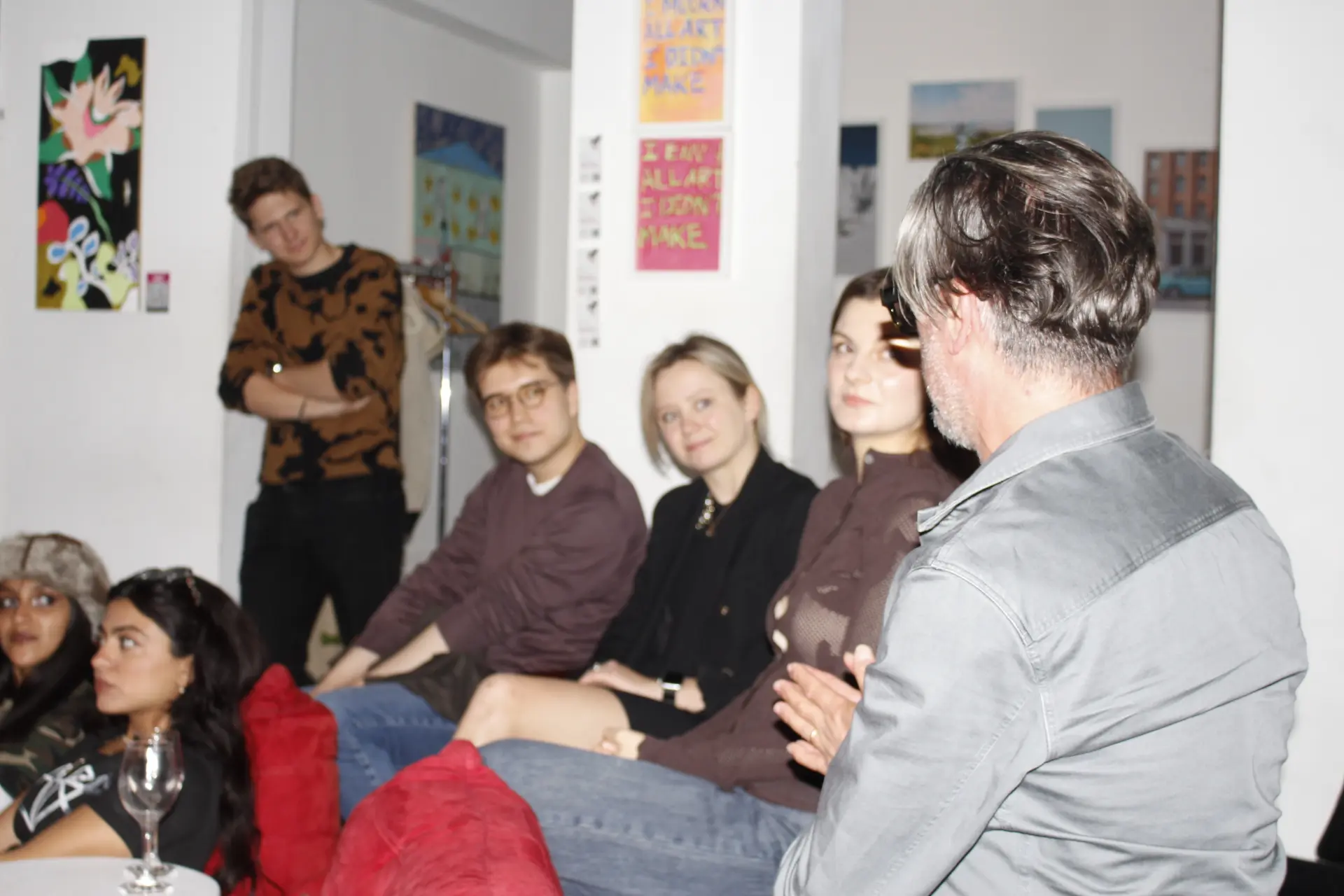
Then separate the display from the event. The display is ongoing; the opening night or artist talk is a moment that gives people a reason to come on a particular evening, meet the artist and see the work properly. At Sevente on Hackney Road, the café hosted an evening conversation with exhibiting artist Libby Hoffenberg and our Curatorial Director Olivia Abando on collecting art beyond the gallery, with free RSVP and one-night prices on selected works. More on that evening is in our September events round-up. If you are approaching artists, it helps to point them to our guides on exhibiting in cafés, hotels and shops and selling art in cafés and restaurants, so both sides start with the same expectations.
If curating and selling the work yourself sounds like more than you want to take on, PickArt places curated original artworks by local artists in cafés and other hospitality venues. Pieces arrive ready to hang and insured, and each carries a discreet QR label, so a customer who falls for a work can read about the artist and buy it on the spot. We handle the transaction and delivery, bring a replacement when a piece sells, and the café earns a commission. The events themselves stay yours to run.
Promote It, Measure It, Give People a Reason to Return
Your best audience is already in the café. Tell them at the till, on a chalkboard by the door and on table cards a fortnight ahead, then use your local partners — the artist, the roaster, the bookshop down the road — to reach their followers too. Online, list it on Instagram, your Google Business Profile and Eventbrite, and post again on the day.
Afterwards, look at more than headcount. Compare spend against what that slot normally takes, count how many faces were new, and note how many people signed up to hear about the next one. The single most useful habit is to announce the next date at the end of every event, so the people who enjoyed it already have it in their diary.
Where to Start
Pick one event that suits your room and your regulars, run it in your quietest slot, and repeat it before trying anything new. A small event that happens every month will do more for a café than a big one that happens once.
Thinking of bringing local art into your café? Explore how PickArt helps venues display original artwork and makes it easy for interested customers to buy, or read more of our writing on art in hospitality.