
Furnishing a holiday let is not the same job as furnishing a home. Everything in it will be used harder, by more people, with less care (unfortunately, that's just the truth!), and it has to look as good in the hundredth guest's photos as it did in yours. It also has to be cleaned between stays in a couple of hours.
That changes what good furnishing means. The right sofa isn't the most beautiful one you can afford; it's the one that's still comfortable, clean and intact in three years. This guide covers planning the budget, choosing pieces that last, a room-by-room checklist separating essentials from extras, and finishing the property with some character but without clutter. Hosting, welcome packs and amenities are covered separately in our guide to creating a premium Airbnb experience.
Plan Before You Buy Anything
Most furnishing mistakes are planning mistakes. Before ordering a single item, settle four things.
- Who the property is for. A cottage for families in the Lakes, a city flat for couples on a weekend, a coastal let for dog owners and a serviced apartment for contractors on a two-week job need different furniture. Pick the guest you most want and furnish for them, rather than for everyone.
- How many it sleeps (and be honest!). Every sleeping space needs matching seating, dining places, towels and storage. A sofa bed that takes a two-bedroom flat from four guests to six also means six dining chairs, six places on the sofa and enough hanging space for six people's luggage. We've learned that if the living room can't absorb that, the extra capacity will cost you in reviews.
- How the layout actually works. Measure every room, doorway and staircase before buying. Mark where sockets, radiators and windows are, and plan furniture around them rather than discovering on delivery day that the bed blocks the only radiator.
- Where the money goes first. Beds and mattresses, then seating, then everything guests touch daily — bedding, towels, kitchen basics. Decorative items come last, because they are the easiest to add later and the least likely to appear in a complaint.
As a rough guide, UK operators quote around £1,500–£2,200 to furnish a one-bedroom let to a budget specification, £2,800–£3,800 mid-range and £5,000 or more for a premium finish, rising to roughly £3,000–£4,500, £5,000–£7,500 and £9,000–£15,000 for a three-bedroom property. Those figures usually include bedding, kitchenware and small appliances but not white goods or fitted wardrobes.
One tax point worth knowing before you budget: since the furnished holiday lettings regime was abolished in April 2025, buying furniture for a holiday let no longer attracts capital allowances. Replacement of domestic items relief can cover like-for-like replacements later, but not the initial furnishing. It's worth confirming the details with your accountant, because it shifts the case towards buying durable pieces once rather than cheap ones twice.
How to Choose Furniture That Lasts
Holiday-let furniture is judged on four things at once: comfort, durability, how easily it cleans, and what it costs to replace. The best choices balance all four rather than maximising any one.
- Upholstery rated for commercial use. Ask for the Martindale rub count. Contract grade, the standard for hotels and restaurants, starts at around 40,000 rubs, well above the rating of many domestic sofas. For a sofa used by a different family every week, that difference shows within a season.
- Removable, washable covers. Loose covers on sofas and dining chairs turn a stain into a laundry job rather than a replacement. Mid-tone, textured fabrics hide wear far better than pale plains or dark solids.
- Hard surfaces that forgive. Solid wood or good veneer can be sanded and refinished; cheap foil-wrapped board chips and cannot be repaired. A sealed tabletop and a few coasters are definitely cheaper than a new table.
- Fire safety labels. Upholstered furniture, mattresses and cushions in a let must comply with the Furniture and Furnishings (Fire) (Safety) Regulations 1988, and should carry the permanent label to show it. Holiday lets also need a written fire risk assessment under the government's guidance for small paying-guest accommodation, in force since October 2023.
Second-hand furniture makes good sense for solid pieces: wooden tables, chairs, chests of drawers, sideboards and mirrors. They are often better made than new budget equivalents, and a mix of older pieces is one of the easiest ways to stop a let looking like a showroom. Be more careful with anything upholstered or slept on. Second-hand sofas and armchairs without an intact fire-safety label shouldn't go into a let at all, and mattresses should always be new.
Room-by-Room Holiday Let Furnishing Checklist
The essentials are what a guest will notice if they are missing. The extras are what they will notice if they are there.
Bedrooms
- Essentials: the best mattress you can afford with a waterproof protector; two pillows per guest plus a spare firm and soft option; at least three sets of bed linen per bed (one on, one in the wash, one in the cupboard); blackout curtains or blinds; a bedside table and reading light on each side; hanging space with enough hangers; somewhere to open a suitcase.
- Worth adding: a full-length mirror, a chair, a throw, a luggage rack, sockets or USB-C chargers within reach of the bed.
Living and Dining Areas
- Essentials: seating for every guest the property sleeps; a dining table and chairs for the same number; a coffee table; lamps at several heights so the room works in the evening without the overhead light; curtains; a television and reliable Wi-Fi.
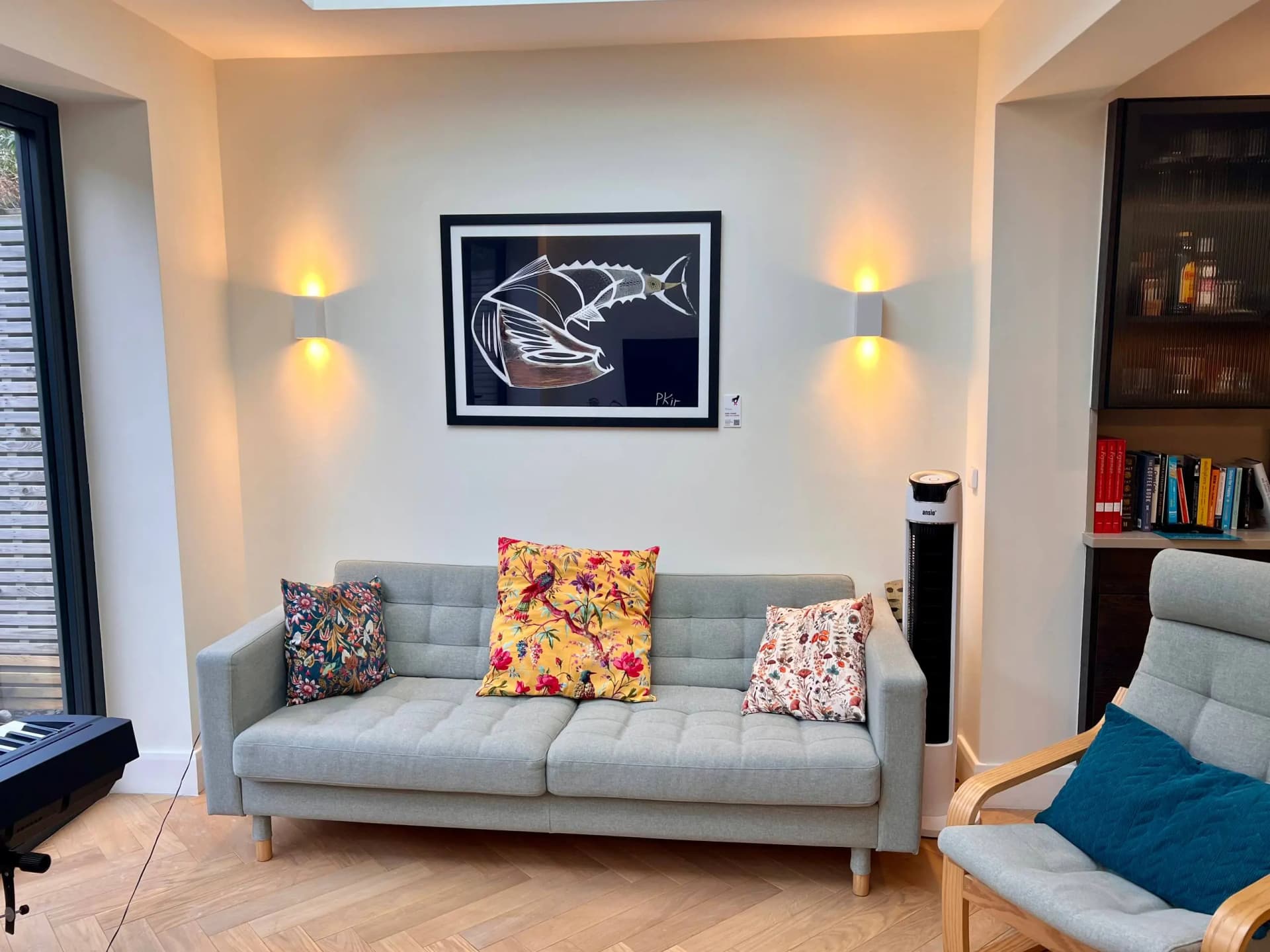
- Worth adding: a rug to soften noise and protect floors, an armchair by the window, a small shelf of books and local guides, board games for family lets, original art.
Kitchen
- Essentials: crockery, glasses and cutlery for at least the maximum number of guests (one and a half times is safer); a set of decent pans, a frying pan and a baking tray; sharp knives and a chopping board; kettle, toaster and a coffee maker; basic utensils, scissors, a corkscrew and a tin opener; bins with separate recycling.
- Worth adding: wine glasses, a cafetière or pod machine, a jug, a salad bowl, oven gloves that actually match the oven.
Bathroom
- Essentials: two towels per guest plus a bath mat, with a full spare set; hooks and a heated rail or enough rail space to dry towels; a shelf beside the basin; a mirror with good light; a bin with a lid; a hairdryer.
- Worth adding: a stool, a magnifying mirror, a second hook by the shower.
Entrance and Outdoor Space
- Essentials: a doormat, hooks for coats, somewhere to leave muddy boots or wet umbrellas, and a clear spot to put bags down on arrival.
- Worth adding: outdoor seating that can stay out or be stored easily, a boot tray in rural or coastal lets.
Lighting, Textiles, Colour and Art
Once the essentials are in, the remaining decisions are about making the property feel like somewhere rather than anywhere. The trick is to do it with a few strong choices rather than lots of small ones, because every ornament on a shelf is something for the cleaner to dust, move and replace.
- Light in layers. A single ceiling light makes any room feel like a rental. Two or three warm lamps per living space change the evening atmosphere more than any other single purchase.
- Textiles carry the colour. Keep walls and large furniture calm and durable, and put colour and pattern into cushions, throws, rugs and curtains. They are cheap to replace when they wear and easy to change if the look dates.
- Take cues from the place. A Cornish fisherman's cottage, a Georgian townhouse flat and a converted barn should not end up looking identical. Materials, colours and objects that belong to the area — local ceramics, wool from a regional mill, prints of the coastline — do more for character than anything bought for the purpose online. If your let is in the capital, our guide to Airbnb interior design for London hosts goes further into this.
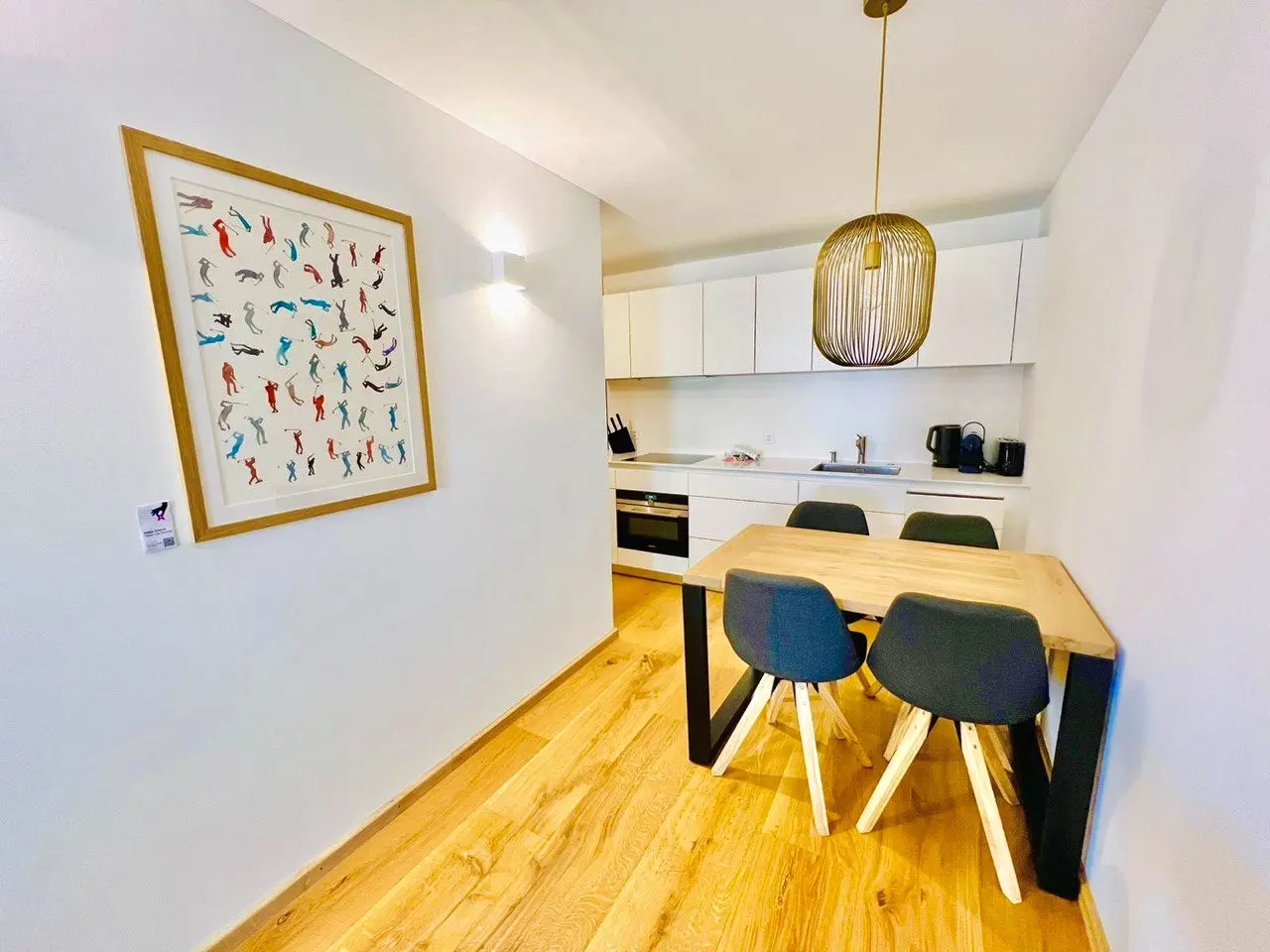
- Fewer, better pictures. One or two well-chosen original pieces will do more than a wall of generic prints, and plenty of rooms are better with none. If you are buying art yourself, a useful ceiling is that a standard piece shouldn't cost more than a week's stay at the property, and a statement piece for the main living space no more than a month's.
Original art is the finishing touch most owners leave until last and then fill with something generic, which is a shame, because it is the one decision that can give a property a genuine identity and something for guests to remember it by. We've written about why it works in art in your Airbnb.
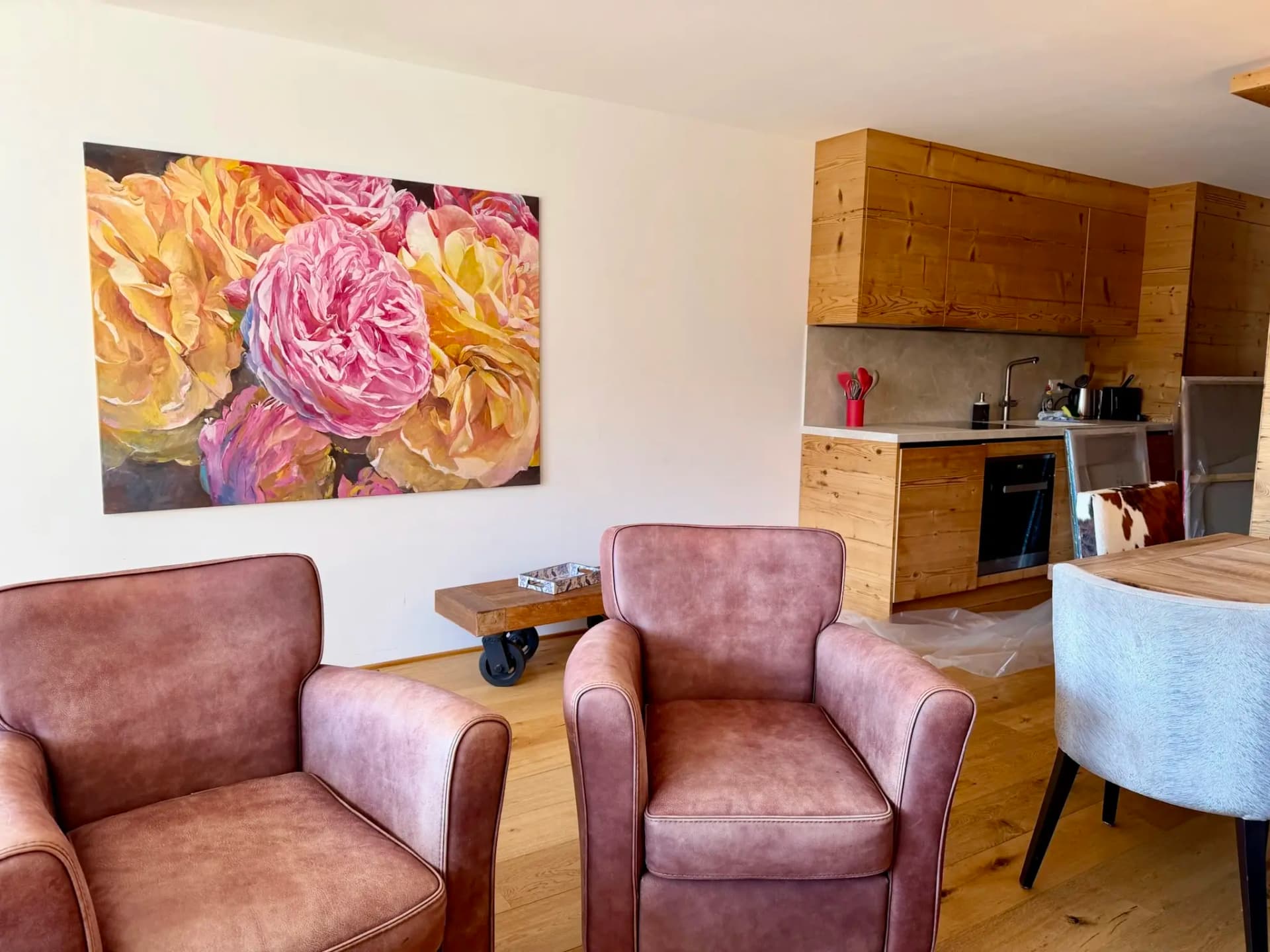
If sourcing and buying it yourself isn't appealing, PickArt offers another route. List your property with us and you gain access to a professionally curated collection of original work by local artists, selected from our catalogue to suit the property, its light and its location, without purchasing the artwork. We've been doing this with short-term rental apartments in the Engadin in Switzerland, including properties managed by Mountain Flair in St. Moritz, and are now bringing the same approach to the UK. Each piece carries a discreet label so a guest who falls for it can read about the artist and buy it. The approach for serviced and multi-unit portfolios is set out in more detail in art for serviced apartments.
Where to Start
Decide who the property is for and how many it really sleeps, then spend in order: beds, seating, the things guests touch every day, and only then the finishing touches. Buy durable once rather than cheap twice, keep the decoration to a few strong choices, and let the place itself supply the character.
Finishing your holiday let? Explore how PickArt can help you bring original art into your property without an upfront artwork purchase, or read more of our writing on art in hospitality.