
How much commission do art galleries take? In the UK, artists may encounter gallery commission rates of around 30% to 50% of the artwork's selling price, although some galleries charge more or less depending on their business model, services and relationship with the artist.
There is no fixed industry rate. A commercial gallery offering ongoing representation may charge differently from an artist-led exhibition, an online marketplace or a venue displaying artwork on consignment.
For artists, the important question isn't simply how much commission a gallery charges, but how much you'll actually receive from a sale and what the gallery provides in return.
This guide breaks down common commission structures, real UK examples, VAT considerations and alternative ways to sell your work.
What Is an Art Gallery Commission?
An art gallery commission is the percentage of an artwork's selling price that a gallery retains when it makes a sale on an artist's behalf.
For example, if your painting sells for £1,000 and the gallery charges 40% commission:
- The gallery receives £400.
- You receive £600.
This is before any additional charges, applicable VAT or expenses associated with producing and selling the artwork.
Commission helps galleries cover the costs of running their businesses. Depending on the arrangement, these might include exhibition production, staffing, marketing, collector relationships, sales administration and maintaining a physical space.
It's also important to distinguish commission from markup.
Commission is usually expressed as a percentage of the final selling price. Markup describes the amount added to an artist's original asking price.
For example, if you want to receive £600 and a gallery adds a 50% markup, the final price becomes £900. That isn't the same as charging 50% commission on the final price, which would leave you with £450.
Always clarify which calculation your gallery is using.
What Are Typical Gallery Commission Rates in the UK?
Although there is no universal standard, these are useful illustrative ranges when comparing different selling arrangements.
| Selling arrangement | Indicative commission |
|---|---|
| Artist-led or independent exhibition | 0–30%, sometimes with separate fees |
| Commercial gallery | Often around 40–50% |
| Online art marketplace | Varies by platform, often 30–50% |
| Gallery or dealer providing extensive representation | May exceed 50% |
These are broad, indicative reference points rather than fixed industry tariffs. Actual agreements can fall outside these ranges, particularly for artist-led and independent exhibitions, where arrangements vary considerably and may involve commission, exhibition fees or a combination of both.
Artquest, a UK resource supporting visual artists, emphasises that gallery commission is negotiable and should reflect the individual relationship. Its guidance also distinguishes between a gallery's percentage commission and the markup added to an artist's desired price.
The type of relationship matters. A gallery representing your work over several years may invest substantially more in developing your career than a venue hosting a short exhibition.
That doesn't automatically make a higher commission worthwhile, but it helps explain why rates differ.
How Much Do Artists Make from Gallery Sales?
Let's compare what an artist receives when selling an original artwork for £1,000 at different commission rates.
Gallery commission comparison: £1,000 artwork sale
| Gallery commission | Gallery receives | Artist receives |
|---|---|---|
| 20% | £200 | £800 |
| 30% | £300 | £700 |
| 40% | £400 | £600 |
| 45% | £450 | £550 |
| 50% | £500 | £500 |
Illustrative calculations before VAT, production costs, delivery charges or other fees.
The difference can be significant, particularly for artists selling multiple works.
For example, selling five paintings at £1,000 each would generate £3,000 for the artist at 40% commission, compared with £2,500 at 50%.
However, a higher percentage of a sale isn't necessarily better than a lower percentage of several sales.
A gallery charging 50% that consistently introduces your work to committed collectors may generate more income than a lower-commission venue where your work receives little attention.
It's worth considering the likely sales opportunities alongside the percentage.
Does VAT Affect Gallery Commission in the UK?
Yes, and it's one of the most important details to clarify before signing an agreement.
UK VAT is generally charged at 20% on standard-rated services, including many gallery commission services.
If a gallery quotes 40% commission plus VAT, that can mean a larger deduction than a simple 40% split.
For example, on a £1,000 artwork sale:
| Calculation | Amount |
|---|---|
| Artwork selling price | £1,000 |
| Gallery commission at 40% | £400 |
| VAT on commission at 20% | £80 |
| Total commission invoice | £480 |
| Artist receives after deduction | £520 |
This example assumes the artist is not VAT-registered, the £1,000 is the relevant commission calculation base and the gallery charges standard-rated VAT on its commission.
If the gallery instead quotes 40% including VAT, the total commission charge would be £400, rather than £480.
VAT-registered artists may be able to reclaim VAT charged on eligible business expenses, including gallery commission, subject to HMRC rules. They may also have their own VAT obligations on artwork sales.
The precise treatment depends on whether the gallery is acting as an agent, selling in its own name, or purchasing and reselling the work. Special VAT schemes can also affect certain transactions.
Before agreeing to a commission, ask whether the percentage includes VAT, whether VAT is charged on the artwork itself, and how the final artist payment will be calculated.
If you're unsure, it's worth checking with an accountant familiar with artists and creative businesses.
Real Examples of Gallery and Marketplace Commission Rates
Published terms can help artists understand how different selling models operate.
Mall Galleries
Some open exhibitions at London's Mall Galleries specify 45% commission plus VAT.
The relevant exhibition conditions also explain that artists should include commission within their submitted selling prices.
This is a useful example of why reading the individual exhibition terms matters, rather than assuming a single rate applies across every gallery or event.
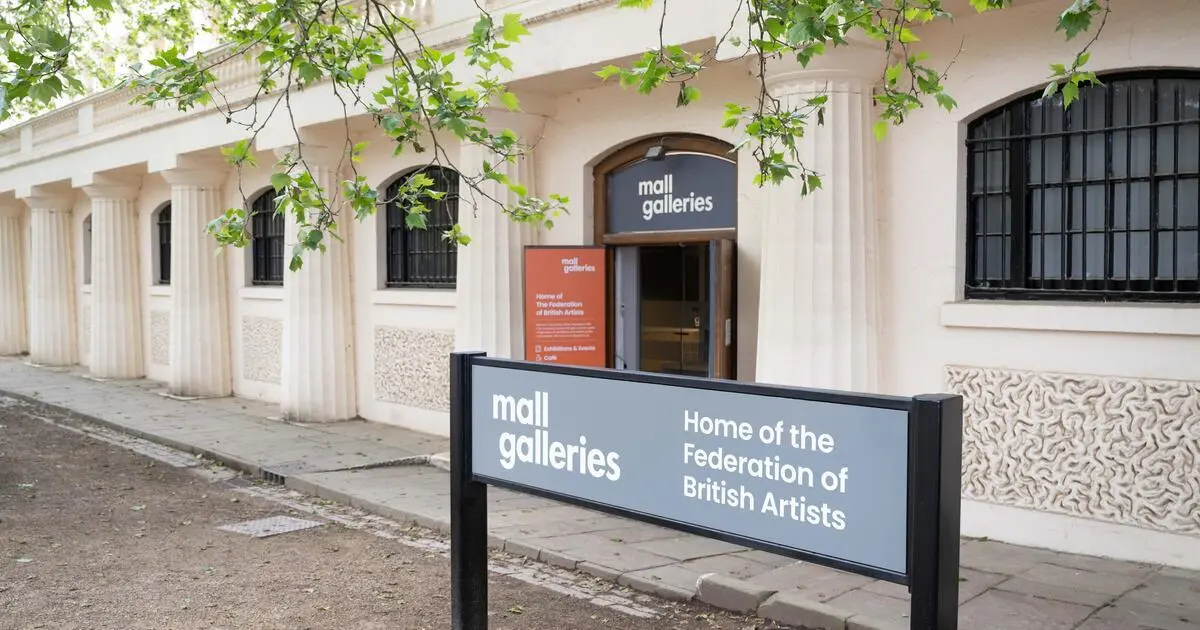
Mall Galleries, Home of the Federation of British Artists.
Saatchi Art
Online art marketplace Saatchi Art publishes a 40% commission on original artwork sales, leaving the artist with 60% of the applicable selling price before any other relevant deductions.
Its published terms also explain that promotional discounts can affect the final sale price used to calculate commission.
VAT note: For UK-based artists who are not VAT registered, Saatchi Art also charges 20% VAT on its 40% commission. For example, on a £1,000 artwork sale, the £400 commission attracts an additional £80 in VAT, leaving the artist with £520 rather than the headline £600, before any other applicable costs or discounts. VAT-registered artists may be treated differently.
Sources: Saatchi Art – Commission Rate | Saatchi Art – Indirect Taxes
Artfinder
Artfinder's published seller plans illustrate how commission rates can vary within a single platform:
- Starter: 50% commission.
- Core: 45% commission.
- Premium: 40% commission.
The lower-commission plans carry subscription fees, so artists should consider both the commission and the ongoing cost of maintaining their account.
These examples demonstrate that comparing commission percentages alone rarely tells the full story.
Artfinder - Making Art Work: Original art, from everywhere and for everyone
VAT note: Artfinder charges 20% UK VAT on its commission for UK-based sellers. On a £1,000 artwork sale, the illustrative amounts received would be:
- Starter (50% commission): £400 after £100 VAT on commission.
- Core (45% commission): £460 after £90 VAT on commission.
- Premium (40% commission): £520 after £80 VAT on commission.
These figures exclude any subscription fees, shipping-related costs or other adjustments. VAT-registered artists may be able to reclaim VAT charged on Artfinder's services.
Sources: Artfinder – Seller Plans | Artfinder – How Much Will I Be Paid?
What Do Galleries Provide in Exchange for Commission?
A good gallery relationship should offer more than simply a wall on which to hang your artwork.
Depending on the gallery, commission may contribute towards several services.
Curation and Presentation
Galleries select works, develop exhibitions and consider how individual pieces relate to one another. Thoughtful presentation can help collectors understand an artist's practice and engage more deeply with the work.
Marketing and Visibility
This may include professional photography, exhibition promotion, press outreach, mailing lists, social media and invitations to private views.
Collector Relationships
Established galleries may have long-standing relationships with collectors, interior designers, institutions and art advisers. These networks can be particularly valuable for artists who haven't yet developed their own buyer base.
Sales and Administration
Galleries may handle enquiries, negotiations, payments, invoices, certificates of authenticity and buyer communication.
Career Development
Some galleries also support artists with pricing strategies, introductions, exhibitions and longer-term professional development.
Not every gallery provides all these services. Before agreeing to a commission, ask what support is included and how actively the gallery intends to promote your work.
What Should Artists Check Before Signing a Gallery Agreement?
Commission is only one part of a gallery relationship. The wider agreement can have just as much impact on your earnings and independence.
Here are six questions worth asking:
- Is the commission inclusive or exclusive of VAT? Ask for a worked example showing exactly what you'd receive from a sale.
- Are there additional fees? Check for exhibition fees, framing, transport, installation, photography, storage or promotional costs.
- Is the agreement exclusive? Some galleries require exclusivity over particular artworks, while others may request wider representation rights. Understand whether you can continue selling independently.
- Who is responsible for insurance? Confirm whether artworks are insured during transport, storage and display, and what happens if something is damaged.
- When will you receive payment? Establish how soon the gallery pays you after a buyer completes a purchase.
- Who can approve discounts? Understand whether the gallery can negotiate below your listed price and how any discount affects your share.
It's also worth checking how long the agreement lasts, whether unsold artworks can be collected, and what happens if either party wants to end the arrangement early.
A clear written agreement protects both the artist and the gallery.
Are There Alternatives to Selling Through Traditional Galleries?
Absolutely. Traditional galleries can provide valuable representation and collector access, but they're not the only route to selling original artwork.
Different arrangements suit different artists, budgets and stages of practice.
Art Fairs
Art fairs can give artists direct access to collectors and other creative professionals.
However, participation may involve stand fees, transport, accommodation, display equipment and marketing expenses.
Even where you retain the full selling price, you'll need to account for these upfront costs.
Independent Exhibitions and Pop-Ups
Organising your own exhibition gives you greater control over the selection, presentation and pricing of your work.
You might collaborate with other artists to share costs or negotiate an exhibition arrangement with an independent venue.
Depending on the space, you may pay a hire fee, a commission on sales, or a combination of both.
Read our guide to how much artists should pay for exhibition space.
Online Art Marketplaces
Online platforms can help artists reach buyers beyond their immediate networks.
Some charge commission on each sale, while others use subscriptions, listing fees or transaction charges.
Before choosing a marketplace, consider its audience, marketing support, payment processing, shipping responsibilities and the time required to manage listings.
You can explore the best ways to sell art online.
Hospitality Venues and Alternative Spaces
Restaurants, hotels, cafés, studios and other hospitality spaces can also provide opportunities to display original artwork.
These environments allow people to encounter art outside conventional galleries, sometimes while spending longer periods in a space.
Arrangements vary. Some venues charge commission, others request a display fee, and some collaborate with curatorial partners to manage artwork selection and sales.
If you're interested in this approach, our guide explains how to exhibit art without a gallery.
Selling Independently with PickArt Indie
For artists who already arrange their own exhibitions, pop-ups or displays, managing sales can create additional administrative work.
PickArt Indie is designed to simplify this process.
Artists can create online artwork listings and generate QR codes linked to individual pieces. Visitors can scan the codes to view artwork information and purchase through the platform.
This can be useful when displaying work in cafés, independent venues, studios, exhibitions or other spaces where you manage the presentation yourself.
Unlike traditional gallery representation, Indie is a self-managed sales tool. Artists remain responsible for arranging their own opportunities and promoting their work.
For practical advice, read our guide to selling art in person.

JR Bateson PickArt Indie placement in Brixton.
How to Decide Whether Gallery Commission Is Worth It
The best commission arrangement isn't necessarily the one with the lowest percentage.
Instead, consider the overall value of the opportunity.
Ask yourself:
- Is the gallery reaching collectors I couldn't easily access independently?
- Does its audience align with my work and pricing?
- What marketing, curatorial and sales support will I receive?
- Are there additional expenses beyond commission?
- How much will I actually earn after all deductions?
- Does the agreement support my wider artistic and professional goals?
It can also help to compare the arrangement with your previous sales experience.
If you already sell successfully through your own network, you may prefer a more flexible approach. If you're looking to develop collector relationships or establish your practice in a new market, the right gallery partnership could justify a higher commission.
For further guidance, explore why pricing your art feels so difficult.
Final Thoughts
There is no single standard gallery commission rate in the UK. Artists may encounter different percentages depending on the gallery, exhibition format and services provided.
Understanding the full agreement is more useful than focusing on the headline percentage alone.
Calculate what you'll receive, clarify VAT and additional costs, and consider whether the gallery's support and audience justify its commission.
Traditional galleries, online marketplaces and independent selling arrangements can all play valuable roles in an artist's career. The right approach may involve combining several of them.
Considering selling outside traditional galleries? If you've arranged somewhere to display your work, explore PickArt Indie to create QR-linked artwork pages and give interested buyers a straightforward way to purchase.
Interested in consigning works for placement in hospitality venues? Check out our PickArt Consignment model.