Our most-read article for artists is How to Sell Art in Cafés and Restaurants. It explains why hospitality venues are such good places to sell work, and it has brought us more messages from artists than anything else we've published. Almost all of them ask the same follow-up question: fine, but how do I actually find a venue that will say yes?
This is our answer. For the past two years we've been placing original art in cafés, restaurants, bars, hotels and coworking spaces in London, York, other UK cities and across Switzerland, which means a lot of conversations with owners and managers, and a fairly clear picture of what makes them agree and what makes them hesitate. What follows is what we've learned, in the order you'll need it: where to exhibit art, how to approach a venue, and what to offer once you're in the conversation.
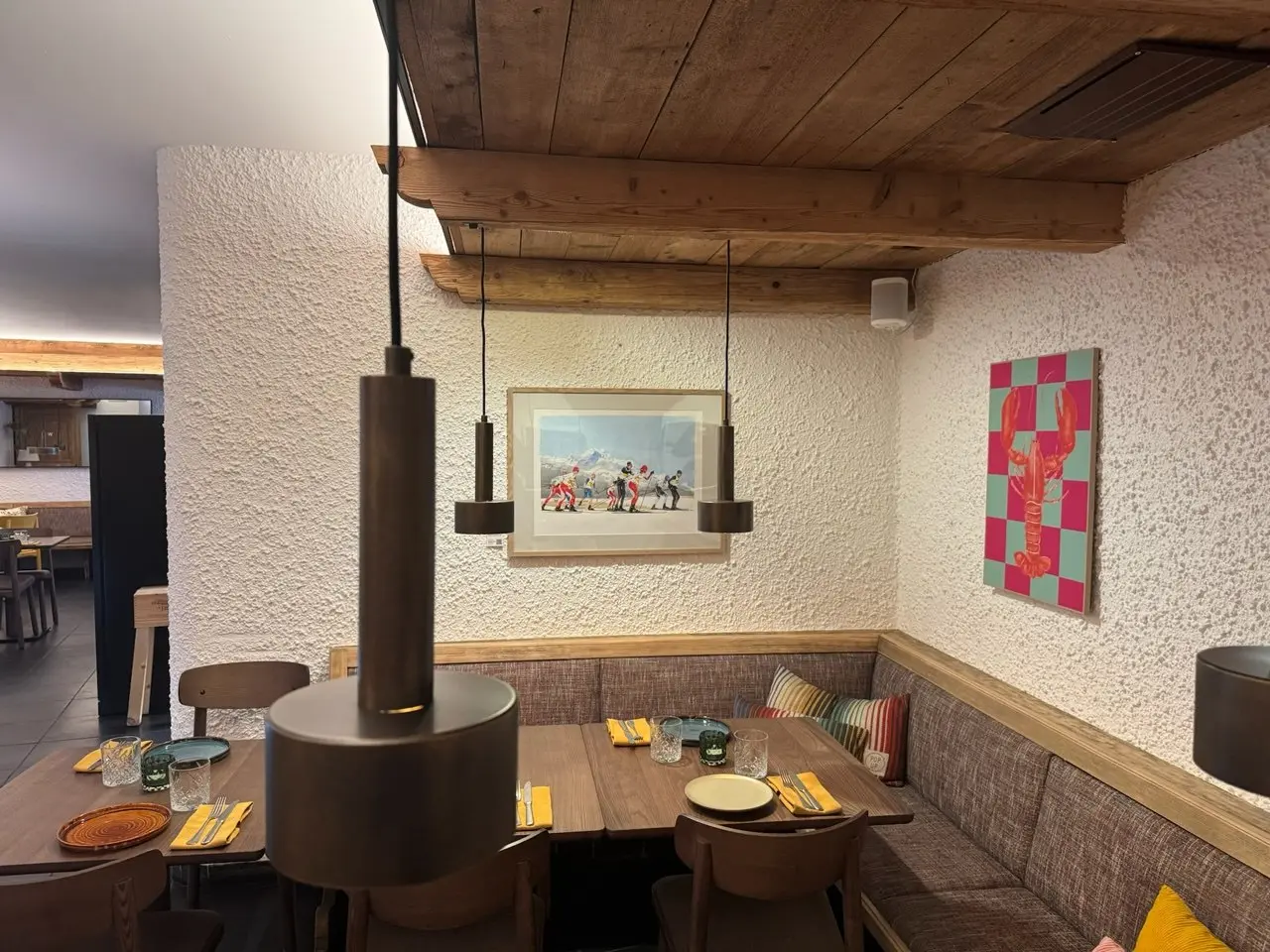
A watercolour by Tonya I that sold in a neighbourhood restaurant in Switzerland.
Where to Look for Places to Display and Sell Your Art
Look for empty walls
The best venue is one with a blank wall that nobody has got round to filling. It's the easiest yes you'll ever get: you're solving a problem the owner already knows they have, and there's nothing to take down first.
Walls full of cheap prints and miscellanea aren't a dead end though. Many owners put them up because they needed something, not because they love them, and will happily swap them for good original work. But replacing what's there is still extra work, and when an owner is weighing whether to work with you, every bit of extra work counts against you. Start with the empty walls.
Go independent
Chains have brand guidelines, head-office approval and interior designers who chose every wall piece. Independent cafés, restaurants and bars have an owner who can decide on the spot. That matters for speed, but it matters more for the kind of decision it is. An independent owner can say yes because they genuinely like your work and think it suits the place, not only because the numbers add up. That's the conversation you want to be having.
Go local
Independent venues are rooted in their neighbourhoods. They survive on regulars, they tend to feel grateful to the community around them, and they often see themselves as representing it. Showing work by an artist who lives nearby adds to that story, which makes a yes far more likely.
The reverse is true too. A venue on the other side of town may simply be less interested, not because of the work, but because you're not from here. When you're working out where to sell art locally, start with the streets you know, where you can honestly say you're a neighbour.
Build a shortlist before you go
You don't need to wander the high street hoping for the best. Spend an evening with Google Maps first: search for cafés, restaurants and bars within walking distance of where you live or work, and skip the chains. Then look through each venue's photos, especially the ones customers have uploaded, which tend to show the walls far more honestly than the venue's own. Instagram fills in the rest. A venue's feed and its location tag show you what the room looks like, who goes there and how much the owner cares about the look of the place.
Note down the ones that meet the criteria above (an empty wall, an independent owner, a neighbourhood you belong to) along with the colours and style of each room, which you'll need later when you decide what to offer. Ten or so places is plenty for a first round. If you can, plan them as a walking route and visit several in one afternoon.
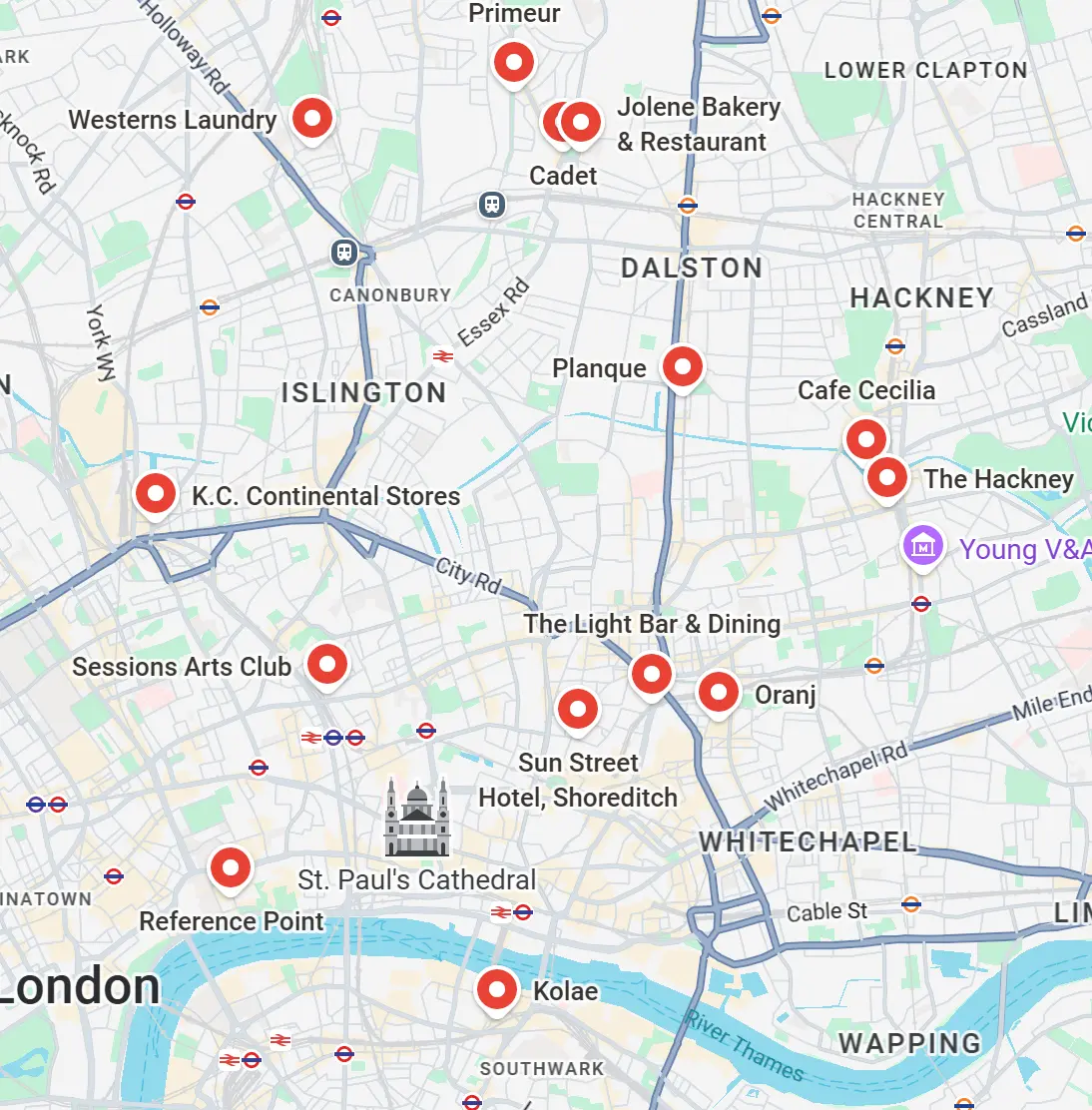
Google Maps shortlist.
How to Approach a Venue
Speak to them in person
Hospitality venues receive hundreds of emails a week, sometimes a day, and most of what isn't a booking goes unopened. Phone calls aren't much better: owners don't like making decisions on the phone, and you'll usually catch them mid-service.
Go in. Pick a quiet moment (mid-afternoon between lunch and dinner is usually best, never in the middle of a rush) and if you can, bring a piece with you. Art is always more convincing in person than on a screen, and an owner who can hold a painting against their own wall is more than halfway to imagining it there. Have the rest of your work on your phone or in a small printed portfolio, and know roughly which pieces you'd suggest for which wall.
Go to the decision-maker
Don't stop at the person behind the counter. It helps enormously if the staff are excited about your work and on your side, so be friendly and take the time to show them, but they almost never make the call. Ask to speak to the manager, or better still the owner.
This is another advantage of independent venues: the manager and the owner are often the same person, and they're often the one making your coffee. If they're not in, ask when they will be, and come back.
What to Offer
This is where most artists undersell themselves. They offer a commission and stop there. A commission matters, but it's rarely what persuades a venue. Here's what does.
Offer a commission
The simple part. Offer the venue 10% of any sale made from their walls. It's a fair, easy number, it shows you've thought about their side, and it means you won't need to negotiate.
Offer curation
By curation we mean offering work that fits the space, its design and its brand, rather than whatever you happen to have available. Match the colours, always. Then think about the place itself. If it's a wine bar, bring a still life with a glass of wine. A French restaurant might want your painting of a Provençal market. Or simply offer something local: a cityscape of the neighbourhood, a sketch of the landmark at the end of the street.
This matters far more to a venue than the commission. Do the arithmetic from their side: if you sell a £500 painting in a restaurant, their 10% is £50. That might be their margin on a good bottle of wine they sell three of every day. A commission alone is a small reason to say yes. Work that makes their room look and feel better is a big one, and if you bring art that really belongs there, some owners won't care about the commission at all.
It also sells better. Who goes to wine bars if not people who love wine? And who is most likely to buy a still life with a glass of wine in it if not people who love wine? Work matched to the venue is matched to its customers, which is exactly the audience you're trying to reach.
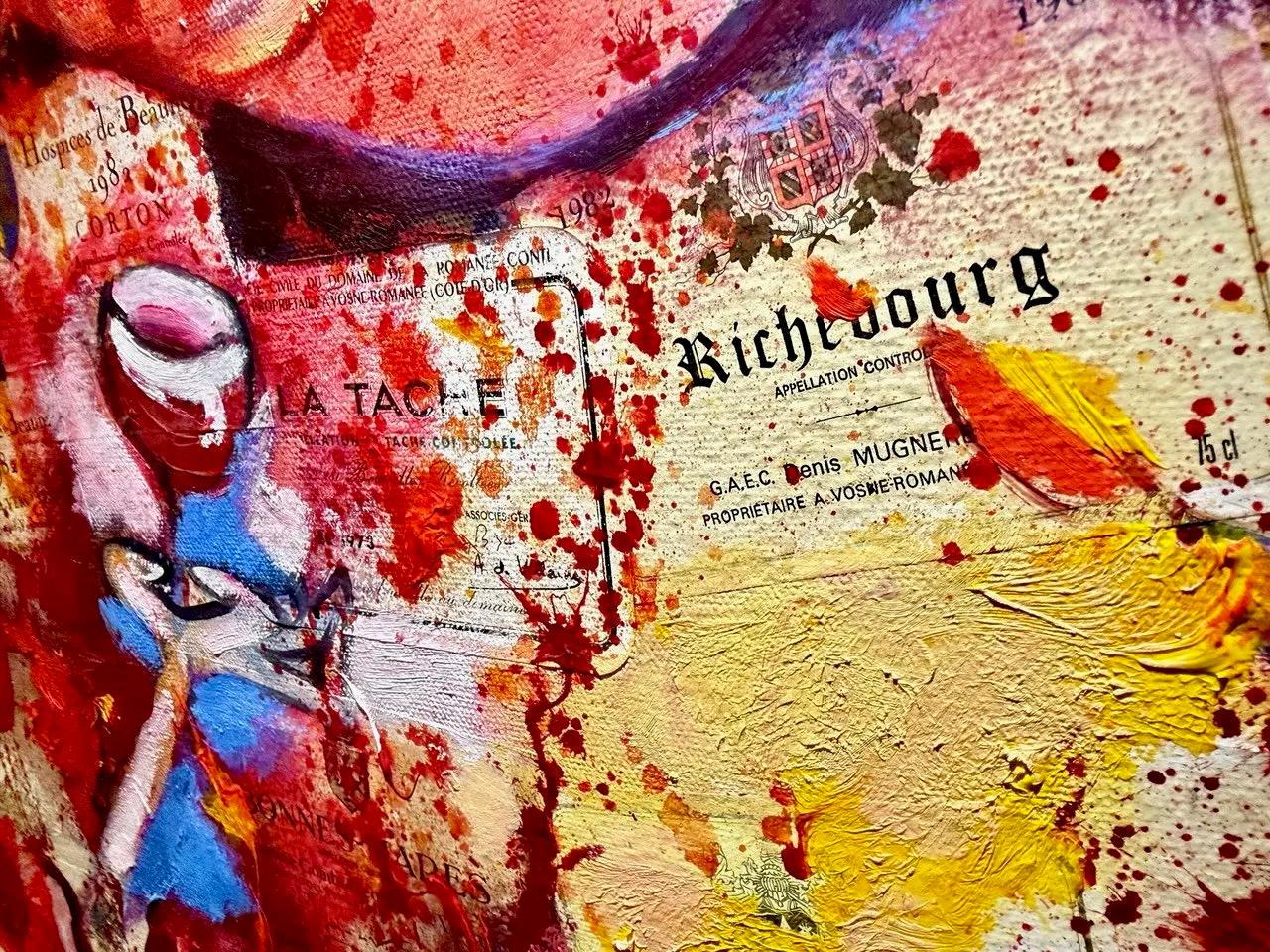
Peter Denier's mixed media artwork featuring iconic wine labels.
Offer events and promotion
Hospitality runs on getting people through the door, and venues are always interested in anything that helps. Once again, this is worth more to them than a commission.
- Promote the placement. Offer an Instagram post when the work goes up, tag the venue, and list it on your website as a place to see your work. It costs you nothing and it's free marketing for them.
- Offer an event. A live painting session on a weekend morning before lunch service, an artist talk, a small opening evening on a quiet weeknight. Either split the ticket sales, or make the case that they'll get a larger bar spend on what is usually a slow day.
Take the work off their hands
The last thing an owner wants is a new job. Showing your work shouldn't mean their staff have to learn about your practice and every piece on the wall, answer questions about prices, or handle payments and arrange collection. The less the venue has to do, the easier it is to say yes, and the more likely they are to keep saying yes.
Make It Easy to Say Yes
This last point is exactly why we built PickArt Indie. Working on Indie is also how we refined most of the advice in this article. Every work gets a smart label with a QR code, linked to an artwork page that tells the guest about you and the piece. A guest who falls for something can read the story, see the price and buy it straight off the wall, without having to find a member of staff.
- No staff training. The label and the artwork page answer the questions staff would otherwise be asked (and most likely be unable to answer). Your page can tell your story and link to your website and socials.
- No payments for the venue. Checkout happens on the guest's phone, so the venue never handles the money.
- Your delivery terms. You decide whether you deliver the work, or whether a buyer can take it home there and then.
- Built-in protection. When a work is bought to take away, the buyer receives an artwork release voucher that staff can verify before the piece leaves the wall.
Two of our other guides will help you get the most from it. A good label is what turns a passer-by into an interested buyer, which we cover in Artwork Labels: How to Label Your Art for an Exhibition. And the artwork page is only as good as what you write on it, which is where How to Write an Artwork Description comes in.
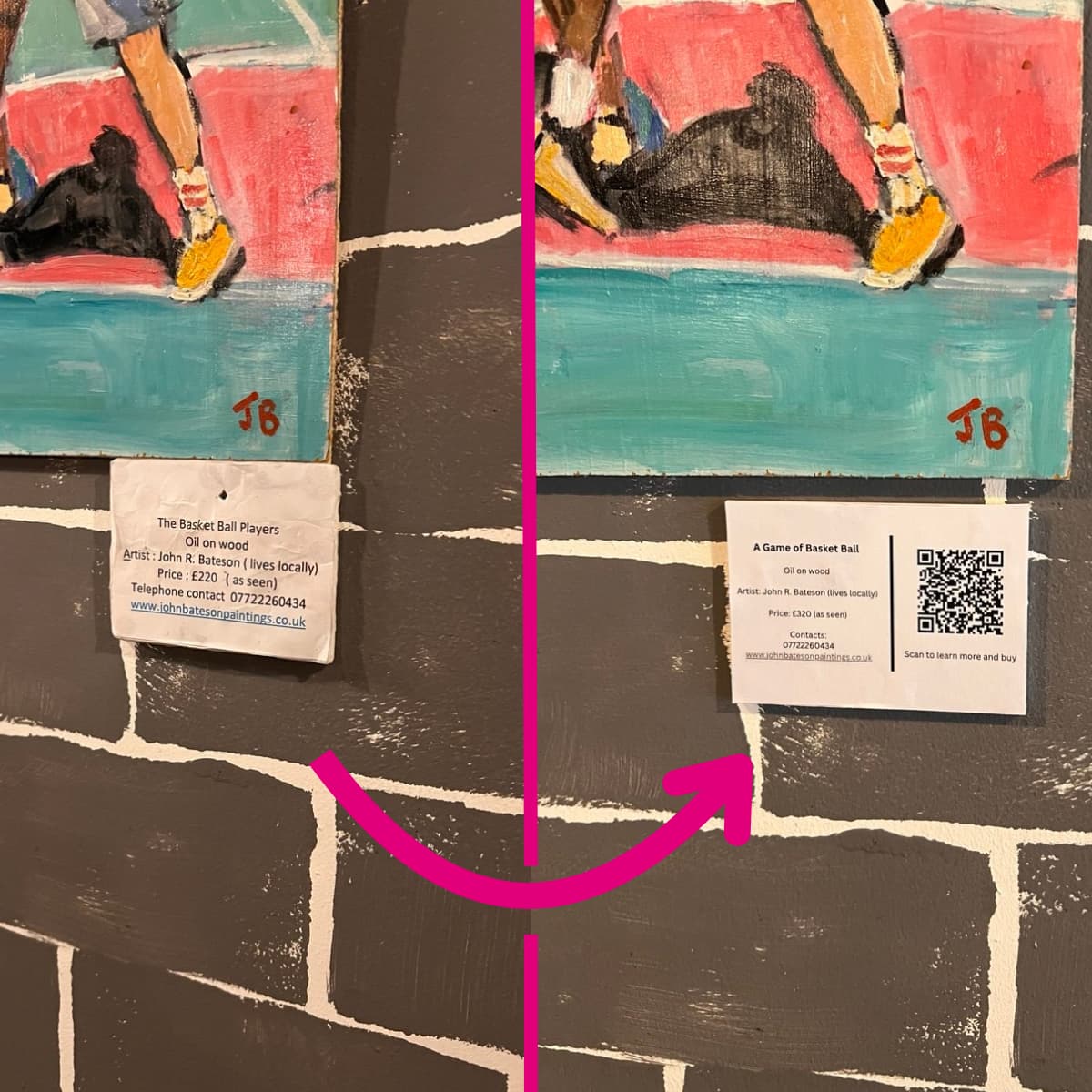
Upgrade to a smart label: guests can learn about you, the art and buy all without disturbing the staff. Who most likely can't be bothered anyways.
If You Would Rather We Found the Venue
Walk in with the right work, talk to the owner, offer more than a commission and make it easy for them, and you'll be surprised how often the answer is yes. Set up your labels and artwork pages with PickArt Indie, and the venue has nothing extra to manage when a guest wants to buy. However, finding venues still takes time, and it's not every artist's idea of a good afternoon.