
Selling art in London can feel both full of possibility and difficult to navigate. There are galleries, art fairs, markets, open studios, cafés, hotels, artist-led exhibitions and increasingly, alternative spaces where artists can put their work in front of new audiences.
The challenge is not simply finding somewhere to show your work. It is finding the right route for your practice, understanding the costs involved and making sure that when someone connects with your work, there is a clear way for them to actually buy it.
This guide looks at some of the different ways independent artists can sell art in London, from established exhibition opportunities to creating your own.
Choose Where to Sell Based on Your Practice
Before applying to every opportunity you find, think about what you actually want from it.
Are you primarily trying to sell work? Build your exhibition history? Meet collectors? Reach people who do not usually visit galleries? Test a new body of work? Or simply get your work seen?
The right opportunity will depend on your work, price point, audience, career stage and budget.
A £150 edition, for example, may perform very differently at a busy design market than a £4,000 original painting. Equally, an exhibition that results in no immediate sales could still be worthwhile if it introduces your practice to curators, collectors or collaborators.
Being selective can save you both money and time. Before committing to an opportunity, consider who is likely to encounter your work there, what participation will actually cost and what you hope to gain from it.
Sell at London Art Fairs and Markets
Art fairs and markets can give independent artists direct access to buyers without relying on traditional gallery representation.
London has everything from major artist-led fairs to smaller local makers' markets. Some allow artists to apply directly, while others are curated or require participation through a gallery.
The Other Art Fair is particularly relevant for independent and emerging artists looking to sell directly to collectors. Artists apply individually with information about their practice and images of their work, with applications reviewed by a selection committee. Applications for the October 2026 London edition are now closed, but artists can register for updates on the next London application round.
For artists, illustrators and makers selling work at more accessible price points, Greenwich Market is another route worth exploring. The market prioritises creative, original and independently made products, and prospective traders can apply online. Successful applicants may then be invited for a trial trading day, where their work, presentation and overall stall are assessed.
Before applying, look carefully at the audience. Ask yourself whether people attending are actually likely to buy work at your price point and whether the other artists and exhibitors feel relevant to your practice.
Also calculate the full cost of participating. The stand fee is only one part of it. You may also need to budget for framing, transport, packaging, card fees, accommodation, promotional materials and your own time.
For artists selling affordable originals, prints or editions, fairs can be particularly useful because visitors arrive already expecting to discover and potentially purchase work.
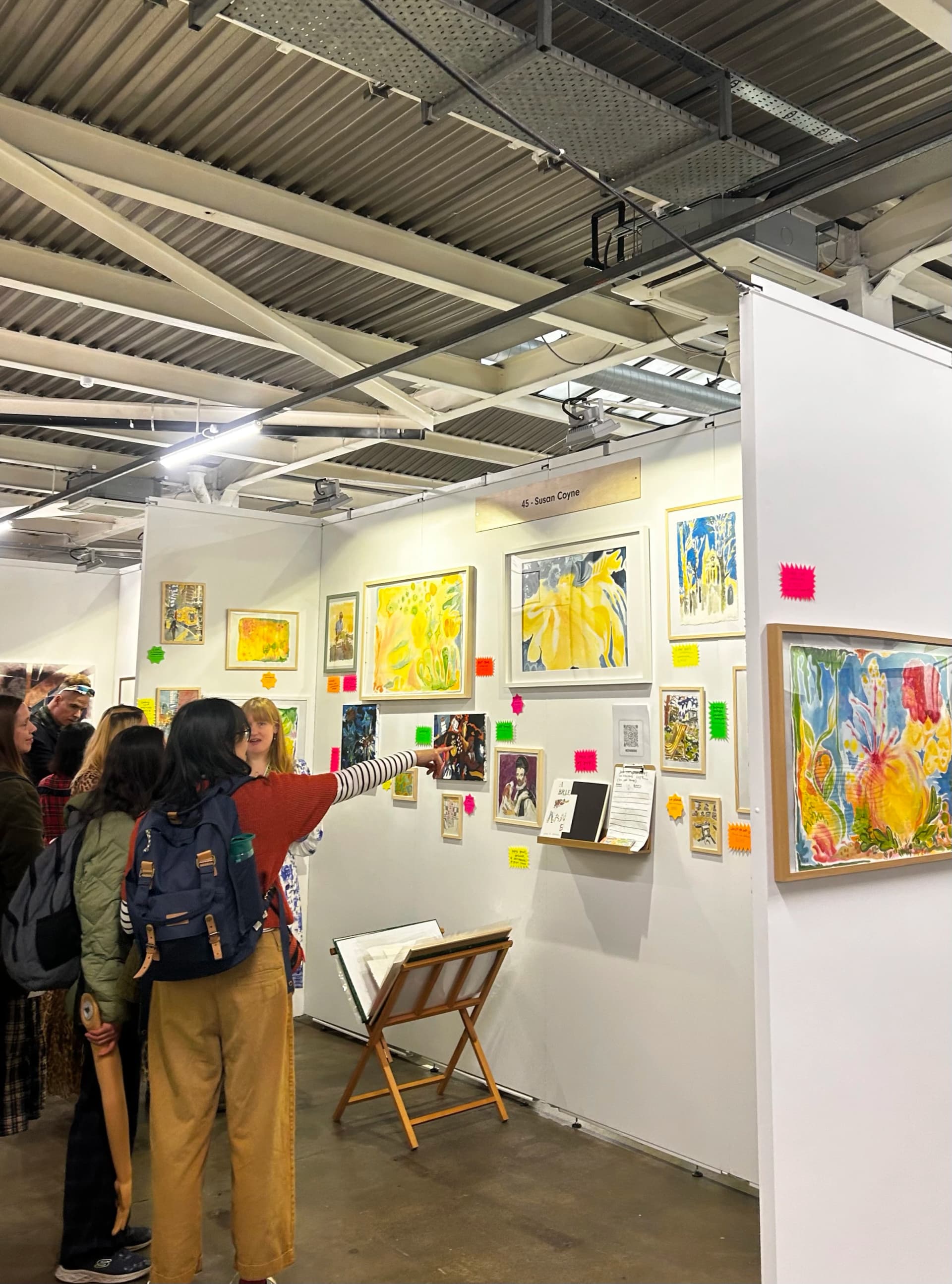
For more practical advice on preparing for these kinds of opportunities, read How to Sell Art in Person.
Look for Open Exhibitions and Gallery Opportunities
You do not necessarily need gallery representation to exhibit in a London gallery.
Many institutions, societies and independent galleries run open calls or annual exhibitions that artists can enter directly. These can be useful for building exhibition history and putting work in front of established art audiences.
Organisations such as Mall Galleries host open exhibitions through different art societies, while other London galleries periodically invite submissions from independent artists. There are also artist-led exhibitions, prizes and temporary opportunities appearing throughout the year.
Mall Galleries runs a number of open exhibitions through the Federation of British Artists. One current opportunity is the Royal Society of British Artists Annual Exhibition 2027, which is open to artists aged 18 and over internationally. Artists can submit up to six works online, with up to four selected, and submitted works must not have previously been exhibited in London. Applications are currently open until 8 January 2027 through Mall Galleries' online submission system.
For artists working specifically in pastel, pencil, chalk and other dry media, the Pastel Society Annual Exhibition 2027 is also currently accepting submissions through Mall Galleries until 20 November 2026.
Artists looking for a contemporary commercial gallery route can also research galleries accepting direct submissions. RHODES Contemporary Art in central London currently accepts artist submissions by email. Artists are asked to send a CV, two to four examples of their strongest work, pricing information and details of where they currently sell their work. This route is better suited to artists whose practice already aligns with the gallery's contemporary programme, so research the artists they represent before submitting.
Always check the terms before applying. Look at entry and exhibition fees, commission on sales, eligibility requirements, delivery and collection arrangements, insurance and whether the work needs to be framed or prepared in a particular way.
An opportunity being in a gallery does not automatically make it the right opportunity.
If the cost of entering, producing and transporting the work is high, think realistically about what you would need to gain from the exhibition for it to feel worthwhile.
You can explore this further in How Much Should Artists Pay for Exhibition Space?
Open Your Studio to Buyers
Open Studios can be one of the most natural ways to sell art because visitors encounter the work in the context in which it was made.
Rather than seeing a single artwork in isolation, they can meet you, understand your process and see a wider body of work. That context can create a much stronger connection between artist, artwork and potential buyer.
Bow Arts is one example of a London studio network that runs Open Studios and other public-facing opportunities across its sites. These events are primarily for artists based within the relevant Bow Arts studio communities, so the route starts with becoming a studio holder rather than applying separately to exhibit at an Open Studio. Bow Arts works with a broad range of practices, including painters, printmakers, photographers, sculptors, illustrators, filmmakers and designers, and lists available studios online.
If you take part, think beyond simply putting prices beside artworks. Make it easy for visitors to understand what is available, how much it costs and how they can purchase it.
Not everyone will buy while standing in your studio either. Someone might discover you during an Open Studio, follow your work afterwards and come back to purchase months later. Make sure visitors also have an easy way to find your website, profile or available works after the event.
Read more in How to Sell Art in Person.
Approach Cafés, Restaurants and Hospitality Spaces
Galleries are not the only places where people buy art.
Cafés, restaurants, hotels, members' clubs, workspaces and other hospitality venues can introduce artwork to people who may rarely visit galleries or art fairs.
For independent artists, this can create an entirely different kind of visibility. Instead of asking someone to deliberately enter an art space, your work becomes part of somewhere they already spend time.
If you are approaching venues yourself, research them properly first. Think about whether your work suits the interior, audience and identity of the space. A personalised proposal explaining why your work belongs there will usually be stronger than sending the same portfolio to dozens of venues.
You should also agree practical details before installing anything, including duration, insurance, commission, responsibility for installation and what happens if something sells.
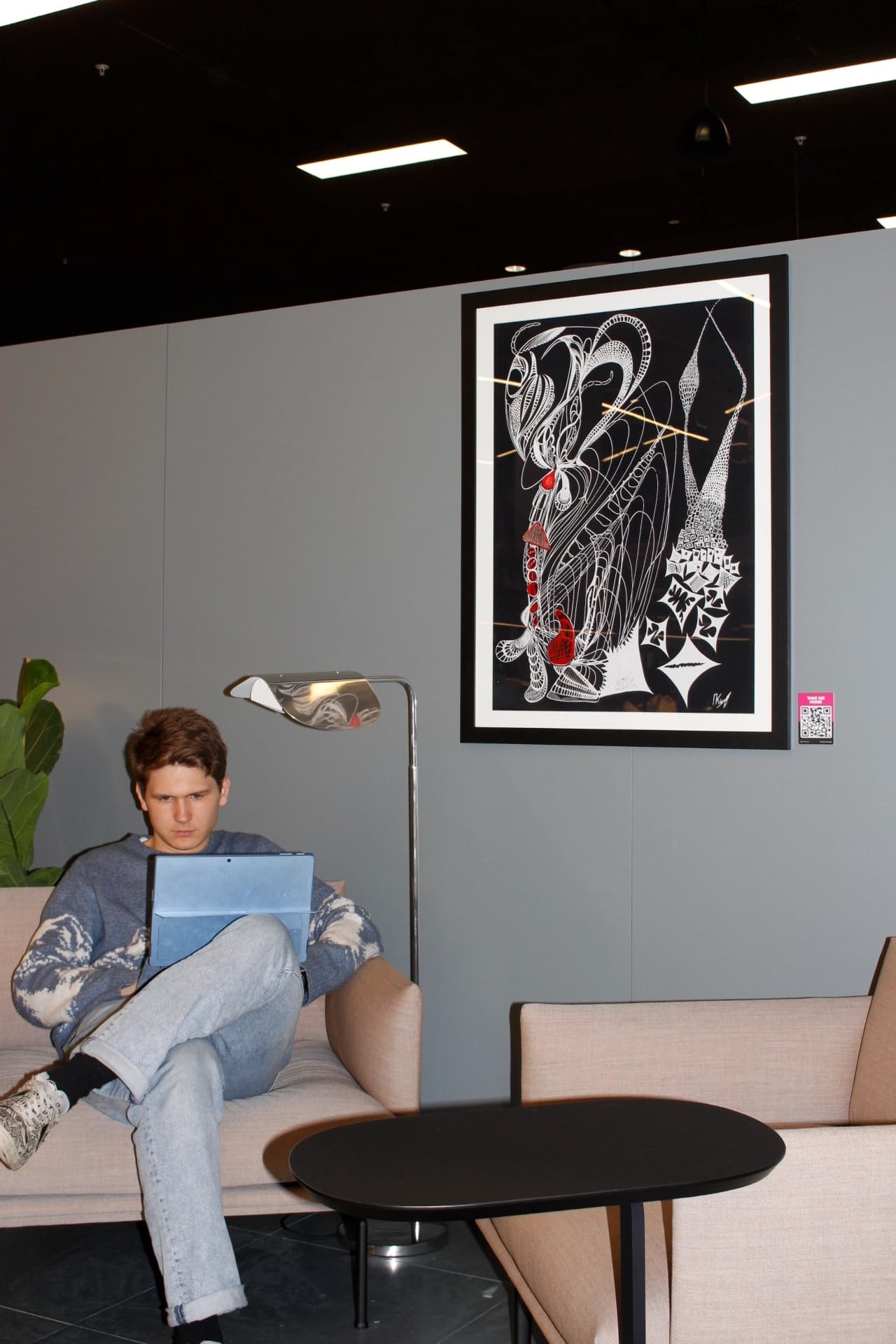
One challenge with selling art in these environments is that there may not be a gallerist standing nearby to explain the work or facilitate a purchase.
This is where digital tools can help bridge the gap. For example, PickArt allows an artwork displayed in a café, hotel or workspace to connect directly to a digital artwork page, so someone interested in the piece can immediately see information about the artist and artwork, explore further and access the purchasing journey without relying on venue staff to manage the enquiry.
PickArt works with independent artists through curated Consignment placements in hospitality and other non-traditional spaces. For artists who secure their own café, hotel, workspace, exhibition or other opportunity, PickArt Indie can instead help streamline the selling process through digital artwork pages and QR labels.
The distinction is important. PickArt's curated placements involve us matching selected works with partner venues, while Indie is designed to support opportunities an artist has created themselves.
Read How to Sell Art in Cafés and Restaurants. You can also explore How Does Art in Short-Term Rentals Work?
Create Your Own Exhibition
You do not have to wait for somebody to offer you an exhibition.
Artist-led exhibitions can happen in project spaces, temporary retail units, cafés, studios, community venues and other unconventional locations.
Organising your own exhibition gives you much more control over the artists involved, curatorial concept, pricing, marketing and sales process.
The trade-off is that you are also taking responsibility for producing it.
Before committing to a space, calculate what you need to sell simply to cover the cost. A £500 venue might initially sound affordable, but framing, printing, transport, installation, marketing, staffing and event costs can quickly change the equation.
Think about the sales process before opening night too. If you are producing the exhibition yourself, who will handle enquiries and payments? Will visitors be able to buy when you are not physically present? What happens if somebody discovers a work but wants to think about it and return later?
Having this infrastructure in place beforehand means you are not trying to invent a sales process once somebody is already interested.
For more on alternative exhibition routes, read Can I Exhibit My Art Without a Gallery?
Make It Easy for Somebody to Buy
Getting your work onto a wall is only half the job.
Wherever you exhibit, make the next step obvious. Can someone immediately find the title and price, learn about you, check whether the work is available and purchase it?
This is particularly important in spaces without a dedicated salesperson. A simple artwork label, QR code or digital artwork page can turn a moment of interest into a route to more information and purchase without distracting from the experience of encountering the work itself.
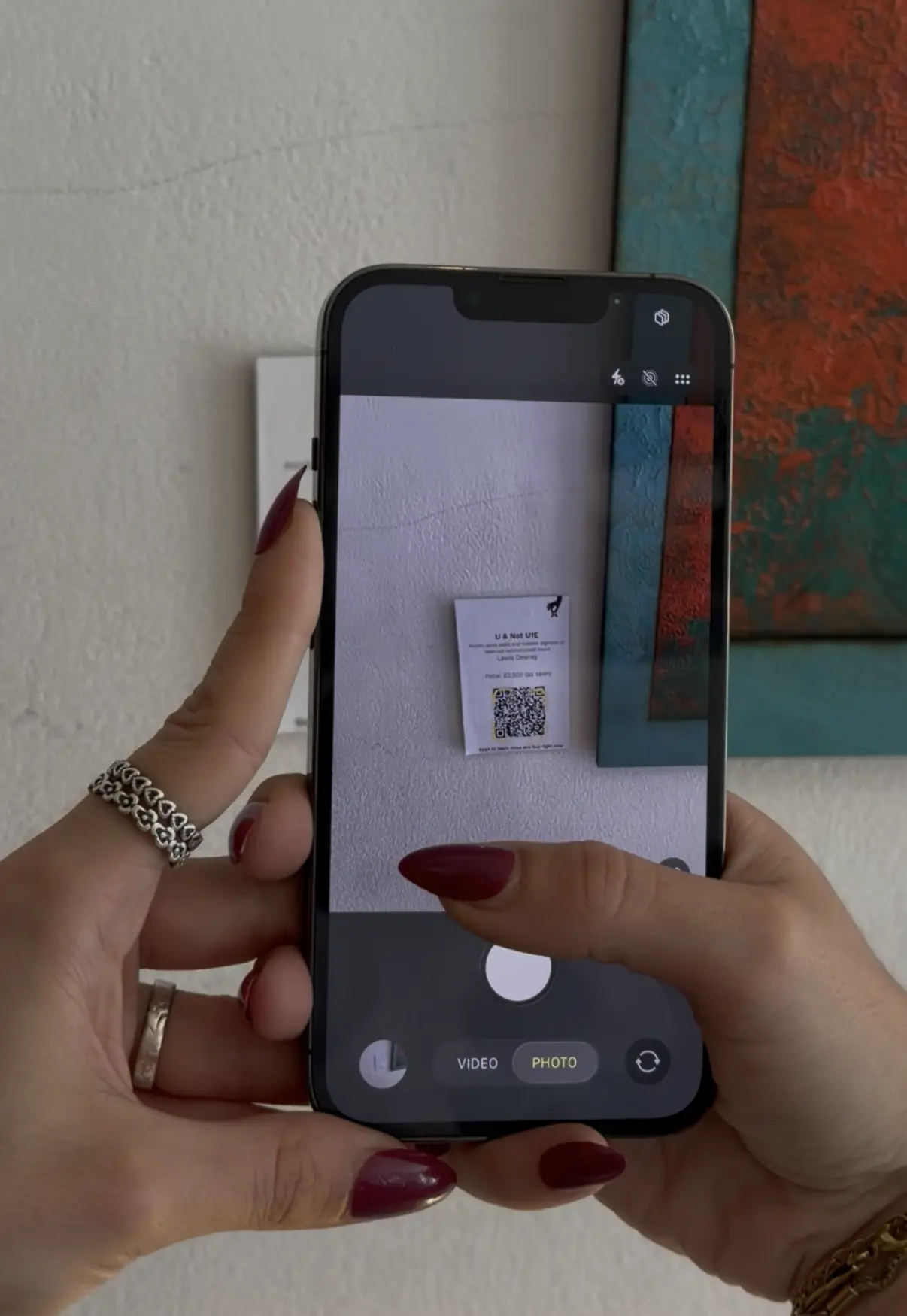
For more on combining physical opportunities with digital selling, read Best Ways to Sell Art Online.
Where Can I Sell My Art in London?
There is no single best place to sell art in London. The better question is: where is your work most likely to meet the right audience?
For one artist, that could be a Mall Galleries open call or a contemporary gallery submission. For another, Greenwich Market, an Open Studio, an independent exhibition or an art fair may generate much stronger connections.
You can also combine these routes. Someone might discover you at an Open Studio, follow your work online and purchase six months later. Another person might encounter a painting in a hotel or workspace and go on to explore your wider practice.
Building a sustainable practice often means developing several ways for people to encounter and buy your work rather than relying on one perfect gallery or exhibition. Start with opportunities that make sense for your practice, understand the terms before committing and make sure that when somebody does connect with your work, there is a simple way for them to continue discovering it and purchase.
Found somewhere to show your work in London? PickArt Indie can help streamline the buying journey through digital artwork pages and QR labels, allowing visitors to discover more about the work and purchase. Explore PickArt Indie.
Still looking for somewhere to show your work? Through PickArt Consignment, we curate selected works by independent artists for placement opportunities in hospitality, workspaces and other non-traditional spaces. Submit your work for PickArt Consignment.